 blog
blog
Alternatives to Chemical Drain Cleaners for Home Use
Table of Contents
- Why Homeowners Are Moving Away from Chemical Drain Cleaners
- How to Unclog a Drain Without Chemicals: A Step-by-Step Approach
- Using a Plunger for a Blocked Sink: Technique Matters
- Baking Soda and Vinegar Drain Cleaner: What It Can and Cannot Do
- Choosing and Using a Drain Snake for Home Use
- Enzyme Cleaners and Other Biological Alternatives
- When DIY Methods Fail: Professional Drain Cleaning in East Sussex, West Sussex, and Kent
- Conclusion: Choosing the Right Alternative for Your Home
- Frequently Asked Questions
Last Updated: October 5, 2026
Why Homeowners Are Moving Away from Chemical Drain Cleaners
Chemical drain cleaners are caustic or acidic products that dissolve blockages with a strong chemical reaction, and a growing number of homeowners are choosing to avoid them. The reasons are practical rather than sentimental: these products can damage older pipework, they carry real safety risks in the home, and they rarely fix the underlying cause of a blockage.
At Pro Drain Experts, we clear blocked drains across East Sussex, West Sussex, and Kent every week, and we see the same pattern repeatedly. A homeowner pours a bottle of caustic cleaner down a slow sink, the water runs away for a fortnight, then the blockage returns worse than before. The chemical has burned a channel through the clog rather than removing it.
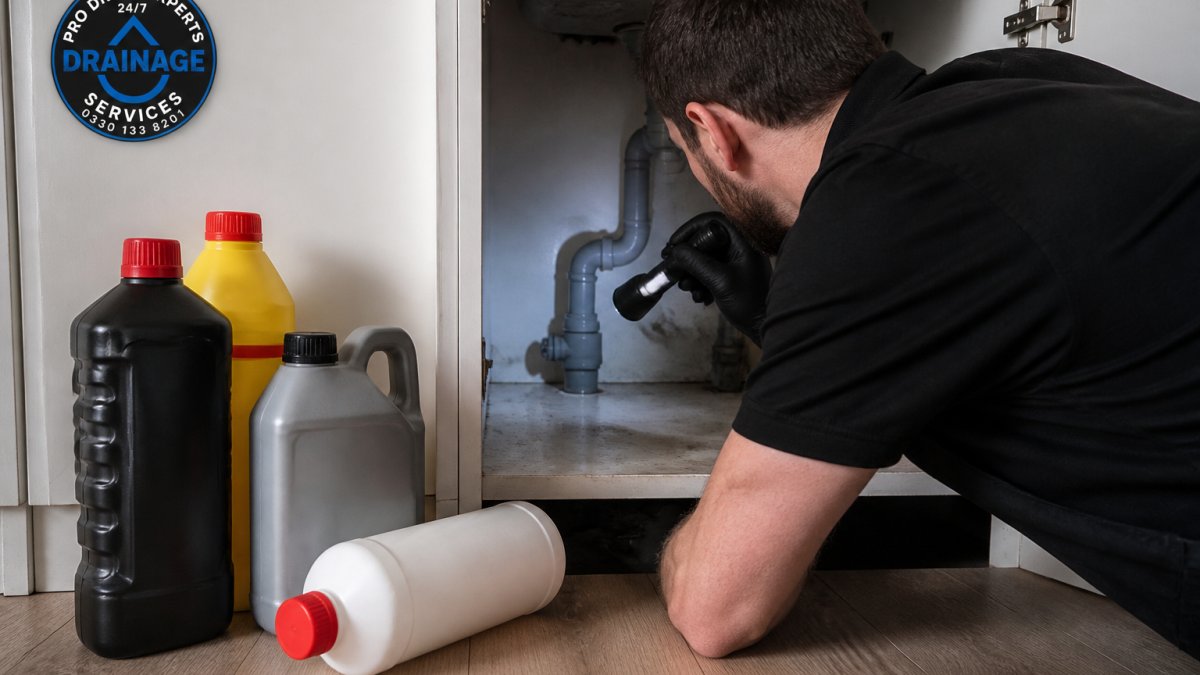
The safety case is just as important. Caustic soda and sulphuric acid-based cleaners can cause serious burns if they splash onto skin or eyes, and they react badly if they mix with other cleaning products already sitting in the trap. For households with young children or pets, storing them adds another risk.
There is also a structural problem. Older properties, including many period homes around Ringmer and the wider Sussex and Kent area, often have clay or ageing metal waste pipes. Repeated chemical exposure can accelerate corrosion and, in the worst cases, lead to leaks inside walls or under floors.
None of this means a blocked drain has to become an emergency. The alternatives below work, and most of them cost nothing but a little time.
How to Unclog a Drain Without Chemicals: A Step-by-Step Approach
Unclogging a drain without chemicals follows a simple escalation: start with the gentlest method, then move to mechanical tools only if the water still will not clear. This order protects your pipework and saves you from buying equipment you may not need.
Work through these stages in sequence:
- Remove any standing water with a cup or jug so you can see the drain opening.
- Lift out visible debris from the strainer or trap with gloved hands or a bent wire.
- Try boiling water (see below) if the pipe is suitable.
- Move to a plunger if water still drains slowly.
- Use a drain snake if the blockage sits further down the pipe.
- Call a professional if none of the above clears it.
The logic is straightforward. Each step is more forceful than the last, so you only apply the force you actually need.
Start with Boiling Water (When It Is Safe)
Boiling water is the simplest first move for a slow-draining kitchen or bathroom sink, and it works well on grease and soap residue. Pour it slowly down the drain in two or three stages, pausing between each, and give it a few minutes to act.
It is not safe for every drain, though. Do not use boiling water on PVC waste pipes, on a toilet, or on any drain where you have already poured a chemical cleaner. Hot water on a caustic product can cause it to splash back violently.
If the water drains freely after the first pour, repeat it once more to flush the pipe. If it backs up immediately, stop. That is your signal the blockage is solid, not greasy, and you need a mechanical method.
When to Stop and Call a Professional
Stop and call a professional when water backs up into other fixtures, when you smell sewage, or when the same drain blocks repeatedly within a few months. These point to a problem deeper in the system, not a simple local clog.
Recurring blockages usually mean one of three things: a build-up of scale and grease further along the pipe, a partial collapse, or root intrusion from nearby trees. None of these respond to a plunger or a bottle of soda crystals.
If you are seeing water rise in a shower or bath when you flush a toilet, the blockage is in the shared drain rather than a single fixture. That is a job for a CCTV survey, not a DIY fix. For homeowners in Ringmer and the surrounding villages, we can usually attend the same day and confirm exactly what is happening inside the pipe.
Using a Plunger for a Blocked Sink: Technique Matters
A plunger for a blocked sink works by creating a vacuum that pulls the blockage loose, and technique matters more than force. Most failed plunging attempts happen because the seal is poor, not because the plunger is weak.
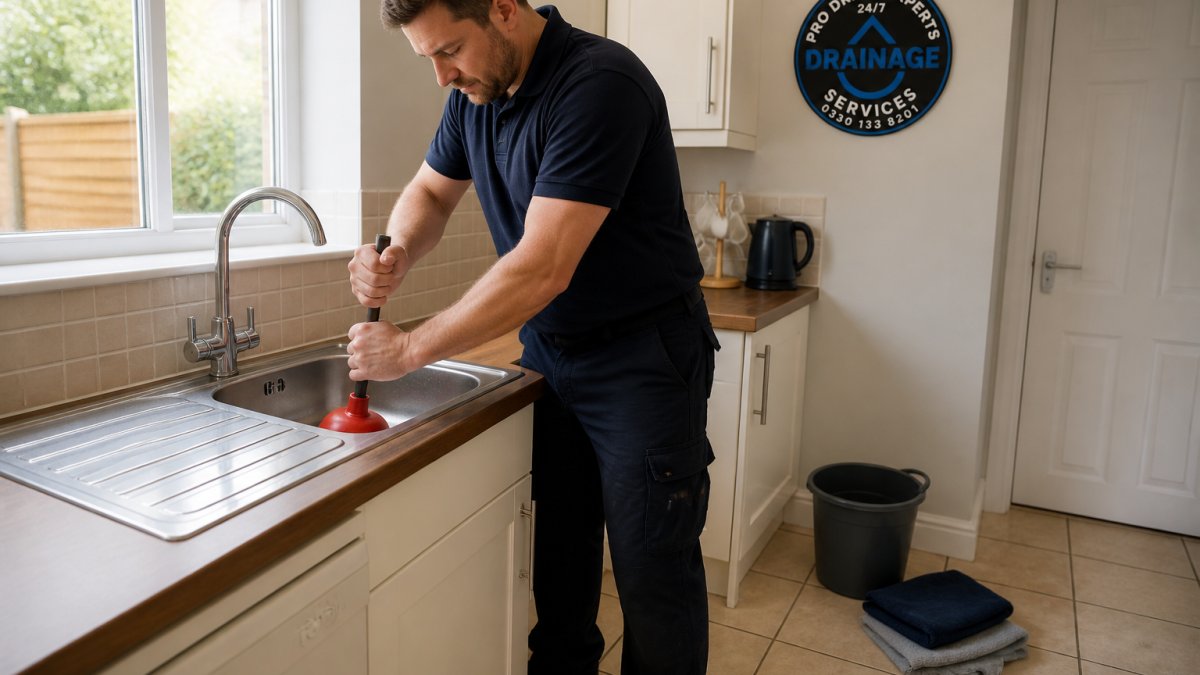
Before you start, block any overflow opening with a wet cloth. If air can escape through the overflow, the vacuum never forms and the plunger does nothing.
Then follow this method:
- Use a cup plunger for sinks and a flange plunger for toilets.
- Add enough water to cover the rubber cup completely.
- Seat the cup over the drain and press down gently to expel air.
- Push and pull in firm, steady strokes, keeping the seal intact.
- Repeat 10 to 15 times, then test with hot water.
The pull stroke is doing the real work, so resist the urge to only push. A common mistake is plunging too fast and breaking the seal on every stroke.
If the sink has a removable trap underneath, place a bucket below it and unscrew it. You will often find the blockage sitting right there, and clearing it by hand takes seconds.
Baking Soda and Vinegar Drain Cleaner: What It Can and Cannot Do
A baking soda and vinegar drain cleaner is a mild, non-corrosive option that loosens light grease and freshens the drain, but it is not a cure for a solid blockage. It works best as maintenance, not as a rescue.
The method is simple. Pour half a cup of bicarbonate of soda down the drain, follow it with half a cup of white vinegar, and cover the opening. Let it fizz for 15 to 20 minutes, then flush with hot water.
What it cannot do is cut through hair, soap scum, or a fat build-up that has hardened further along the pipe. The reaction is mostly mechanical, and it simply does not have the strength to dissolve a dense clog.
Used once a month, this combination helps keep a healthy drain flowing and reduces odour. Used as a last resort on a fully blocked pipe, it will disappoint you.
Choosing and Using a Drain Snake for Home Use
A drain snake for home use is a flexible metal cable that you feed into the pipe to break up or hook out a blockage, and it is the most effective DIY tool for clogs beyond the trap. For most household sinks and baths, a manual snake of around 5 to 8 metres is more than enough.
Feed the cable in slowly by hand. When you feel resistance, that is the blockage. Turn the handle clockwise to let the tip grip, then pull the cable back out, bringing the debris with it.
A few practical points:
- Wear gloves; what comes back out is rarely pleasant.
- Work the cable in short pushes rather than forcing it.
- Clean the cable after use and store it dry.
- Never force it past a hard stop, which usually means a bend or a joint.
For showers and baths, remove the drain cover first so the cable can enter cleanly. For toilets, use a toilet-specific auger rather than a sink snake, since the trap shape is different.
If the snake meets firm resistance that will not clear, stop. Forcing it can damage the pipe, and that turns a simple blockage into a repair job.
Enzyme Cleaners and Other Biological Alternatives
Enzyme cleaners are biological products that use bacteria and enzymes to break down organic matter such as grease, food waste, and soap residue over time. They are gentle on pipework and safe for septic systems, which makes them a good fit for older properties.
The trade-off is speed. An enzyme treatment works over hours or days, not minutes, so it suits slow drains and routine maintenance rather than a fully blocked pipe. For best results, apply it last thing at night when the drain will not be used for several hours.
Other low-impact options include:
- A drain strainer to catch hair and food before it enters the pipe.
- A monthly hot water flush to keep grease moving.
- A mechanical hair catcher in showers, cleared weekly.
Used consistently, these habits reduce how often you face a blockage at all. That is the real win. Prevention costs nothing and avoids the whole question of which cleaner to reach for.
When DIY Methods Fail: Professional Drain Cleaning in East Sussex, West Sussex, and Kent
Professional drain cleaning is the right call when DIY methods have failed twice, when multiple fixtures are backing up, or when you need to know what is actually happening inside the pipe. At that point, guesswork costs more than a call-out.
This is where we come in. Pro Drain Experts has over 20 years of experience clearing domestic and commercial drains across East Sussex, West Sussex, and Kent, and we run a 24/7 emergency service with a same-day response promise. If you are searching for drain cleaning near me in Ringmer or the surrounding area, our fully equipped vans carry the tools to clear most blockages on the first visit.
For anything more than a simple clog, we use CCTV surveys to see inside the pipe and identify the real cause, whether that is root intrusion, a displaced joint, or a build-up that has been growing for years. You get a detailed report and clear recommendations, so you are not paying for the same fix twice.
We also work with commercial clients, including restaurants and retail units where a blocked kitchen drain means lost trading hours. Same-day attendance matters most in those situations.
Every job comes with up-front pricing and no hidden fees. If we find something worse once we are on site, you hear about it before any work continues, not on the final invoice.
Conclusion: Choosing the Right Alternative for Your Home
The best alternative to chemical drain cleaners depends on what is actually blocking your drain, not on which product has the loudest label. Boiling water and a plunger handle most simple clogs, a drain snake reaches the ones further down, and enzyme treatments keep a healthy drain that way.
What none of them fix is a recurring blockage with a structural cause underneath. That is a diagnostic job.
If you have tried the methods above and the water still will not clear, or if the same drain keeps blocking, get in touch with Pro Drain Experts. We offer 24/7 emergency call-outs, same-day response, CCTV surveys with detailed reports, and up-front pricing with no hidden fees. Get started with Pro Drain Experts and get your drainage system flowing properly again.
Frequently Asked Questions
What can I use instead of chemical drain cleaner?
Mechanical methods work best for most household blockages. A plunger for a blocked sink creates pressure to shift the clog, while a drain snake for home use reaches deeper into the pipe. For slow drains, a baking soda and vinegar drain cleaner can help break down grease and soap scum. Boiling water is effective for some blockages but can damage older pipes or seals, so check your pipe material first. If these methods fail, a professional drainage company can clear the line safely.
Does baking soda and vinegar clear a blocked drain?
It can help with minor blockages caused by grease, soap, or food particles. The fizzing action loosens some debris, but it will not dissolve solid objects like hair or scale. For best results, pour half a cup of baking soda down the drain, follow with half a cup of vinegar, wait 15 minutes, then flush with hot water. This method is safe for most pipes and avoids the corrosive effects of chemical cleaners.
Can boiling water damage pipes or clear a drain?
Boiling water can clear grease and soap scum in metal pipes, but it can soften PVC joints or crack older ceramic pipes. If your home has modern plastic waste pipes, use hot but not boiling water. For older properties, especially those with original clay or cast iron drains, avoid boiling water and try a plunger or drain snake instead. If you are unsure about your pipe material, a drainage specialist can advise.
When should I stop trying to clear a drain myself?
If you have tried a plunger, a drain snake, and natural methods without success, or if water backs up in multiple fixtures, the blockage is likely deeper in the system. Repeated blockages can signal a structural issue like root ingress or a collapsed pipe. At that point, call a professional drainage company. They can use CCTV surveys to identify the cause and clear the line without damaging your pipes.