 listicle
7 Ways to Prevent Blocked Drains in East Sussex
Table of Contents
- Why Prevention Beats an Emergency Call-Out
- 1. Know What Not to Put Down the Drain
- 2. Fit a Sink Strainer and Empty It Every Day
- 3. Learn How Often to Clean Drains in Your Home
- 4. Watch for the Early Signs of a Blocked Drain
- 5. Deal With Tree Roots Before They Crack the Pipe
- 6. Know Who Owns the Drain Before You Call Anyone
- 7. Book a CCTV Survey and Annual Maintenance Check
- When to Call a Drainage Professional
- Conclusion
- Frequently Asked Questions
Last Updated: October 14, 2026
Why Prevention Beats an Emergency Call-Out
A blocked drain rarely announces itself politely. Most homeowners in East Sussex discover the problem when water backs up through a shower tray at 7am, or when a restaurant kitchen sink refuses to drain during Friday service. At Pro Drain Experts, we have cleared blockages across East Sussex, West Sussex and Kent over more than 20 years, and the pattern is always the same: the emergencies we attend are almost never sudden. They build slowly, over months, from habits nobody thinks twice about.
That is the case for prevention in one sentence. The seven steps below show you how to prevent blocked drains in East Sussex without special tools or trade knowledge. Most take under five minutes a week.
Here is the part most guides get wrong: they tell you to "be careful what you flush" and stop there. Careful habits matter, but they will not save a drain that is already half-choked with grease or root-damaged clay pipe. Prevention means knowing what your drains can take, how often they need attention, and when to call in a professional before a slow drain becomes a flood.
1. Know What Not to Put Down the Drain
The single most common cause of blocked drains we see is fat, oil and grease poured down kitchen sinks. These substances leave the pan as liquid and set hard as they cool inside the pipe.
The Kitchen Sink: Fats, Oils and Grease
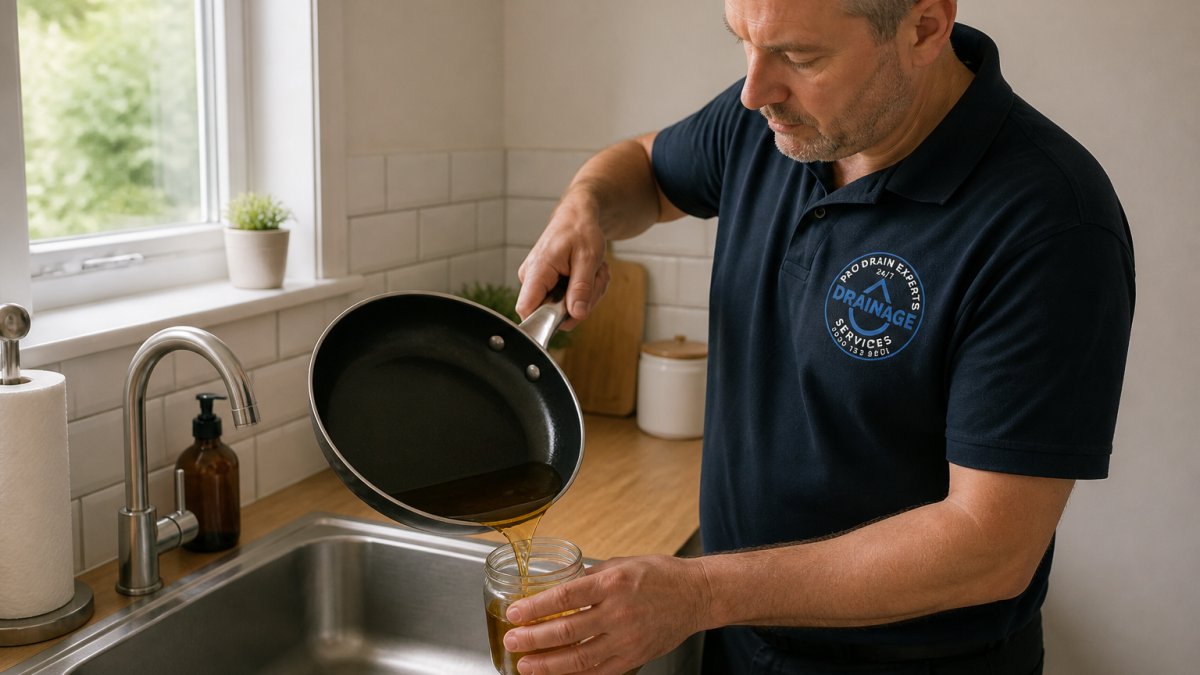
Cooking oil, butter, meat fat and even milk residue coat the inside of pipework. Over time that coating traps food particles, and the pipe narrows until water barely passes. Pour cooled fat into a container and bin it. Wipe greasy pans with kitchen roll before washing. For everyday items, remember these rules for what not to put down the drain:
- Cooking oil, fat and grease of any kind
- Coffee grounds, which settle and compact
- Rice and pasta, which swell with water
- Eggshells, flour and starchy food scraps
- Wet wipes, even those labelled "flushable"
The Bathroom: Wipes, Hair and Cotton Buds
Bathroom blockages follow a different pattern. Hair binds with soap scum to form a rope-like mass, while wipes and cotton buds snag on pipe joints and collect everything behind them. The Water UK fine to flush guidance is blunt on this point: only the three Ps, pee, poo and paper, belong in the toilet. Everything else goes in the bin.
2. Fit a Sink Strainer and Empty It Every Day
A sink strainer is the cheapest drain insurance you can buy, costing a few pounds from any hardware shop in Ringmer or Lewes. It catches food scraps, hair and debris before they enter the pipe.
The catch is that a strainer only works if you empty it. A full strainer simply overflows into the drain and does nothing. Make emptying it part of your washing-up routine, every single day. In kitchens, use a fine mesh strainer rather than a slotted one; mesh catches coffee grounds and small particles that slotted versions let through. In bathrooms, a hair catcher over the shower waste does the same job.
3. Learn How Often to Clean Drains in Your Home
How often to clean drains depends on how heavily each one is used. A busy family kitchen sink needs attention weekly. A guest bathroom used twice a month can go far longer.
A simple routine works well:
| Drain | Frequency | Method |
|---|---|---|
| Kitchen sink | Weekly | Hot water flush, then bicarbonate of soda and vinegar |
| Bathroom basin | Fortnightly | Hot water flush, remove and clean the plug |
| Shower waste | Monthly | Lift the grate, clear hair, flush with hot water |
| Toilet | Monthly | Hot water and a mild cleaner, never harsh chemicals routinely |
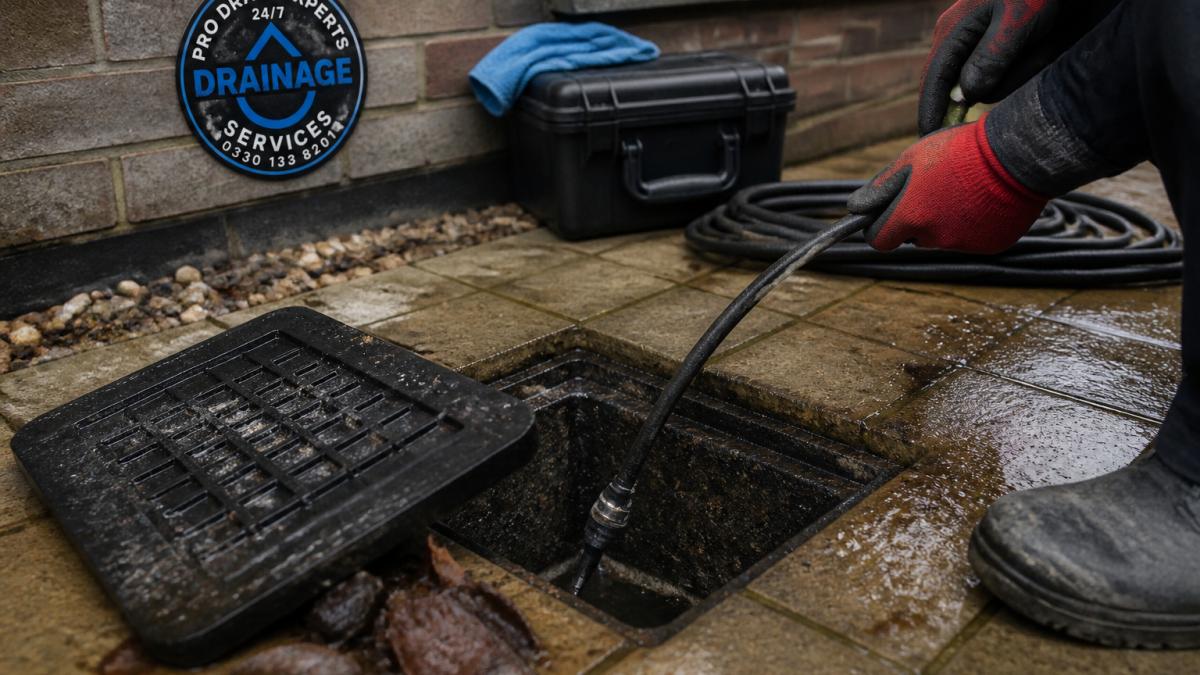
| Outside gully | Quarterly | Lift the grate, clear leaves, check flow |
Pour a full kettle of hot, not boiling, water down each drain after the cleaning step. Boiling water can soften some plastic waste pipes, so let the kettle rest for a minute first.
4. Watch for the Early Signs of a Blocked Drain
The signs of a blocked drain appear long before water backs up. Learning to read them is what separates a quick fix from an emergency call-out.
Watch for these warning signals:
- Water draining more slowly than it used to
- A gurgling sound from the plughole or toilet after use
- Unpleasant smells rising from the drain, especially in warm weather
- Water pooling around an outside gully or manhole cover
- Toilets that need two flushes to clear
Any one of these means the pipe is narrowing. Two or more together mean you should act now. Slow drainage is the drain telling you it is already part-blocked; the blockage has simply not sealed the pipe yet.
5. Deal With Tree Roots Before They Crack the Pipe
Tree roots are the leading cause of serious underground damage we find in older properties around Ringmer and the wider county. Roots seek moisture, and a hairline crack in a clay pipe is an open invitation.
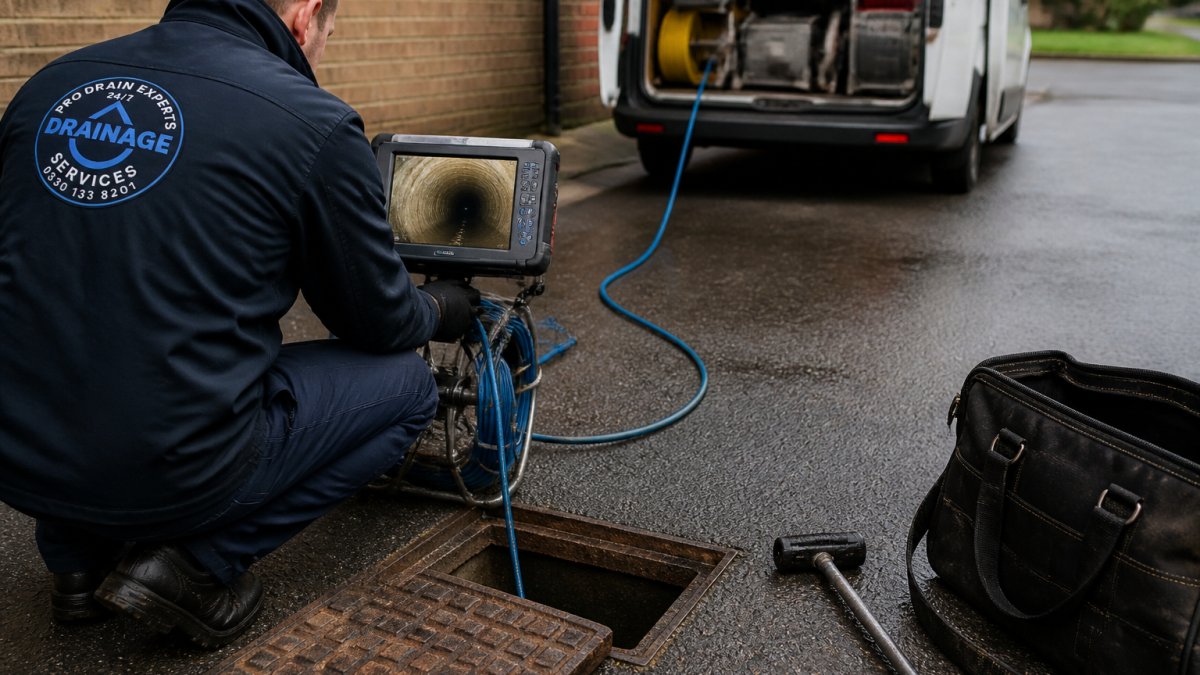
Willow, poplar, sycamore and oak are the worst offenders, but any mature tree within a few metres of a drain run is a risk. You cannot see root intrusion from above ground. The only reliable way to detect it is a CCTV drain survey, which we carry out with a camera pushed along the pipe to record its condition on video. Left alone, roots widen cracks, let in soil, and eventually collapse the pipe. At that point you are looking at excavation, not clearance.
6. Know Who Owns the Drain Before You Call Anyone
Drain ownership in Ringmer determines who pays and who you call. Get this wrong and you can spend hours chasing the wrong organisation.
The rule is straightforward in most cases. Drains inside your property boundary that serve only your home are your responsibility. Once a drain is shared with a neighbour, or runs beyond your boundary, it is usually the water company's responsibility. Roadside gullies and highway drainage belong to the local highway authority; in East Sussex, problems there can be reported through East Sussex Highways.
Check your deeds or ask your water company if you are unsure. Knowing this before a blockage happens saves confusion at the worst possible moment.
7. Book a CCTV Survey and Annual Maintenance Check
An annual maintenance visit catches problems while they are still cheap to fix. This is the step most homeowners skip, and it is the one that pays for itself.
A maintenance check typically includes a flow test on each drain, a CCTV survey of the main runs, and a written report with recommendations. For commercial premises, from a Ringmer shop to a multi-unit residential block, we recommend a survey every year. For older properties with clay pipework, annual is safer.
When to Call a Drainage Professional
Call a professional when water backs up faster than it drains, when more than one fixture in the property is affected, or when you smell sewage indoors. These point to a blockage in the main run, not a local trap.
You should also call if you have tried hot water and a plunger with no improvement, or if you suspect root damage or a collapsed pipe. Repeated blockages in the same spot are a red flag; the cause is structural, and clearance alone will not solve it. For anyone searching for blocked drain help near me in Ringmer or across East Sussex, a same-day response matters. We offer up-front pricing with no hidden fees, so you know the cost before we start.
Conclusion
The challenge with drain care is that the reward for doing it well is invisible: nothing happens, and nothing is exactly what you want. A blocked drain rarely gives you a second warning, though. The habits above take minutes a week, and they are the difference between a quiet home and a flooded kitchen.
If prevention has slipped and you need help now, Pro Drain Experts is here around the clock. We offer 24/7 emergency call-outs, same-day response, CCTV surveys with detailed reports, and up-front pricing with no hidden fees, backed by over 20 years of experience across East Sussex, West Sussex and Kent. Get started with Pro Drain Experts and put your drainage system back in safe hands.
Frequently Asked Questions
What causes drains to become blocked?
Most household blockages build up slowly from fats, oils and grease in the kitchen, plus hair, soap scum and wet wipes in the bathroom. Wet wipes are a common culprit because they do not break down like toilet paper, even when labelled flushable. Tree roots entering cracked pipes and historic scale inside older clay pipework also narrow the flow over time. In East Sussex, heavy rainfall can wash silt and leaves into gullies, adding to the problem.
What should you never put down a drain?
Never pour cooking oil or fat down the sink, and never flush wet wipes, cotton buds, nappies, sanitary products or dental floss down the toilet. Coffee grounds, eggshells, rice and pasta expand in water and settle in the pipe. Paint, plaster, cement and motor oil should go to a household waste recycling centre, not the drain. Even small amounts of these items accumulate and create a solid mass that water cannot pass.
How often should household drains be cleaned?
For most homes, a routine clean every six to twelve months keeps pipes flowing freely. If you have a busy kitchen, a large household or mature trees near the drain run, aim for every six months. A simple routine of pouring hot water down kitchen and bathroom plugholes weekly helps, and booking a professional clean annually catches build-up before it becomes a blockage.
Who is responsible for a blocked drain in East Sussex?
You are usually responsible for drains inside your property boundary that serve only your home. If the drain is shared with neighbours or runs under a public highway, the water company typically handles it. In East Sussex, highway gullies and roadside drainage fall to East Sussex Highways, who take reports online or by phone for emergencies. If you are unsure which applies, a CCTV survey confirms the layout and ownership before you spend money.
When should I call a drainage professional about a blockage?
Call a professional if water backs up in more than one fixture, if the drain smells foul after repeated hot water flushes, or if a blockage returns within a few weeks. Slow drainage across several outlets usually means the problem sits deeper in the run, beyond what a plunger can reach. A CCTV survey from a qualified team identifies the cause, whether that is roots, scale or a collapsed pipe, so the fix lasts rather than patching the symptom.