 blog
blog
Rapid Resolution of Drainage Emergencies: Commercial Kitchen Guide
Table of Contents
- What Counts as a Drainage Emergency in Commercial Kitchens
- Why Commercial Kitchen Drainage Emergencies Demand Immediate Action
- Commercial Kitchen Drainage Maintenance: Preventing Emergencies Before They Start
- Emergency Commercial Drain Unblocking: What the Process Involves
- Commercial Drainage Emergency Response Time: What to Expect
- Commercial Drain Maintenance Costs UK: Understanding Your Investment
- Steps to Take While Waiting for Emergency Drainage Support
- Choosing a Reliable Emergency Drainage Service Provider
- Frequently Asked Questions
Last Updated: October 10, 2026
What Counts as a Drainage Emergency in Commercial Kitchens
Drainage emergencies commercial kitchen situations occur when water cannot flow freely through your drainage system, creating an immediate risk to operations, hygiene, or safety. This includes blocked sinks that back up during service, overflowing grease traps, sewage surfacing on the kitchen floor, or complete loss of drainage to multiple fixtures simultaneously.
The distinction matters because commercial kitchens operate under strict health and safety standards. A slow drain in a home might be inconvenient; a blocked drain in a restaurant is a shutdown event. Water pooling on the kitchen floor becomes a slip hazard. Grease backing up into sinks contaminates food preparation areas. Sewage exposure violates environmental protection regulations and forces immediate closure.
Pro Drain Experts handles these situations as genuine emergencies because they are. A commercial kitchen that cannot drain cannot operate. The financial impact escalates by the hour: lost revenue, staff standing idle, potential food waste, and regulatory fines if health inspectors discover the problem.
Common triggers include sudden blockages from accumulated grease, food debris, or foreign objects lodged in pipes. Older commercial kitchens sometimes experience root intrusion into underground drainage lines, or structural failure of clay pipes installed decades ago. High-volume operations can overwhelm drainage capacity if systems haven't been upgraded to match demand.
Why Commercial Kitchen Drainage Emergencies Demand Immediate Action
Drainage emergencies in commercial kitchens escalate faster than in domestic properties because of the volume and nature of what flows through them. A home kitchen produces occasional grease and food debris. A restaurant kitchen produces litres of grease daily, concentrated food solids, and high-temperature water that accelerates buildup.
When drainage emergencies commercial kitchen situations occur, you lose the ability to operate. Health regulations prohibit food preparation without functional drainage. Environmental protection rules require immediate reporting of sewage discharge. Insurance policies may impose penalties if you operate with known drainage failures. The financial exposure compounds hourly.
Beyond the operational shutdown, there's the safety dimension. Standing water on kitchen floors creates slip hazards for staff. Backed-up sewage poses biological contamination risks. In Ringmer and across the region, local environmental health officers can issue improvement notices that force closure until drainage is restored to standard.
The cost of delayed action is disproportionate. A drainage blockage caught early might require a few hours of professional unblocking. Left untreated, it can cause pipe damage that demands excavation, structural repair, and weeks of downtime. A small investment in emergency response prevents exponentially larger repair bills.
Commercial Kitchen Drainage Maintenance: Preventing Emergencies Before They Start
The most cost-effective approach to drainage emergencies is preventing them entirely. Commercial kitchens in Ringmer and surrounding areas that maintain regular drainage servicing experience far fewer crisis situations than those that ignore their systems until failure occurs.
A preventative maintenance programme typically includes quarterly grease trap cleaning, annual CCTV surveys to identify early signs of blockage or structural damage, and regular high-pressure water jetting to clear buildup before it becomes an obstruction. This approach identifies problems at the inspection stage rather than during an operational crisis.
CCTV drain surveys are particularly valuable for commercial kitchens because they reveal what's actually happening inside pipes without excavation. You can see grease accumulation, root intrusion, pipe degradation, or structural defects that will eventually cause failure. Armed with that information, you can plan repairs during planned downtime rather than during service hours.
Grease management is the foundation of commercial kitchen drainage health. Install and maintain grease interceptors that separate fats and oils before they enter the main drainage system. These devices require regular emptying, typically every two to four weeks depending on kitchen volume. Many commercial kitchen emergencies stem from neglected grease traps that have reached capacity and begun overflowing into the drainage system.
Staff training matters too. Kitchen teams should understand what can and cannot go down drains. Solid food waste belongs in bins, not the sink. Cooking oils should be cooled and disposed of separately, not poured down drains. Small prevention habits compound into significant drainage reliability.
Pro Drain Experts recommends that commercial kitchens schedule maintenance during lower-traffic periods, early mornings before service, late evenings after closing, or designated maintenance days. This allows thorough work without disrupting operations. Many commercial clients build quarterly or semi-annual drainage inspections into their standard maintenance calendar.
Emergency Commercial Drain Unblocking: What the Process Involves
When a commercial kitchen drainage emergency strikes, the unblocking process follows a structured approach designed to restore function quickly while identifying the underlying cause.
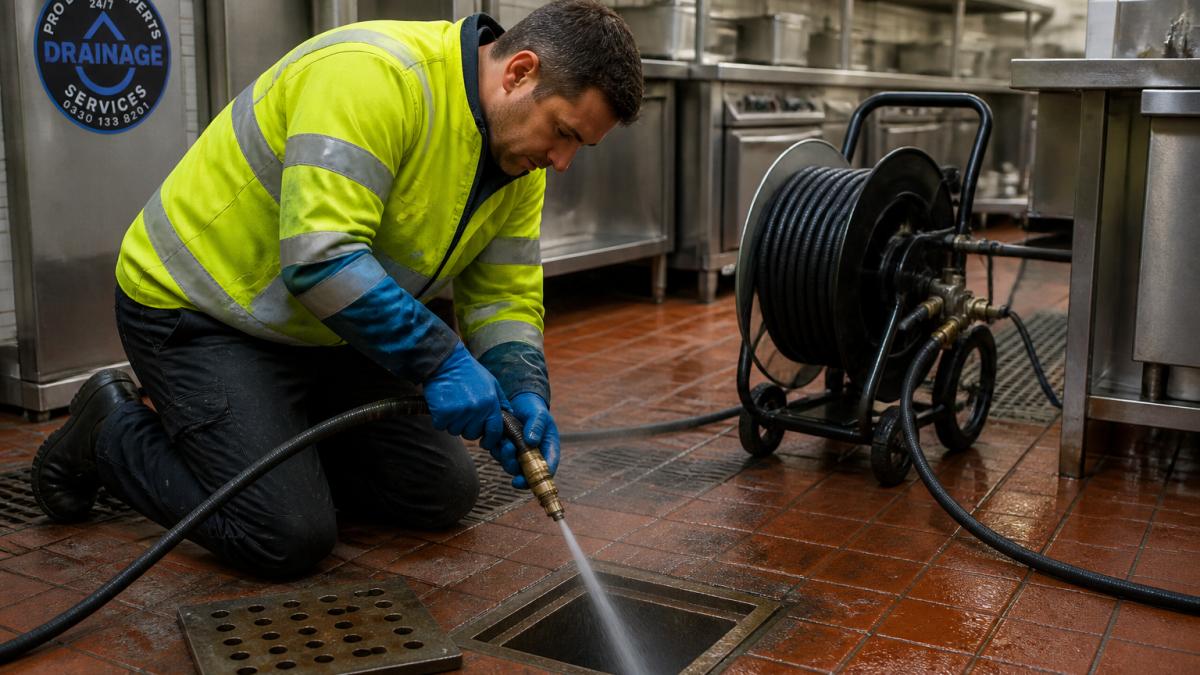
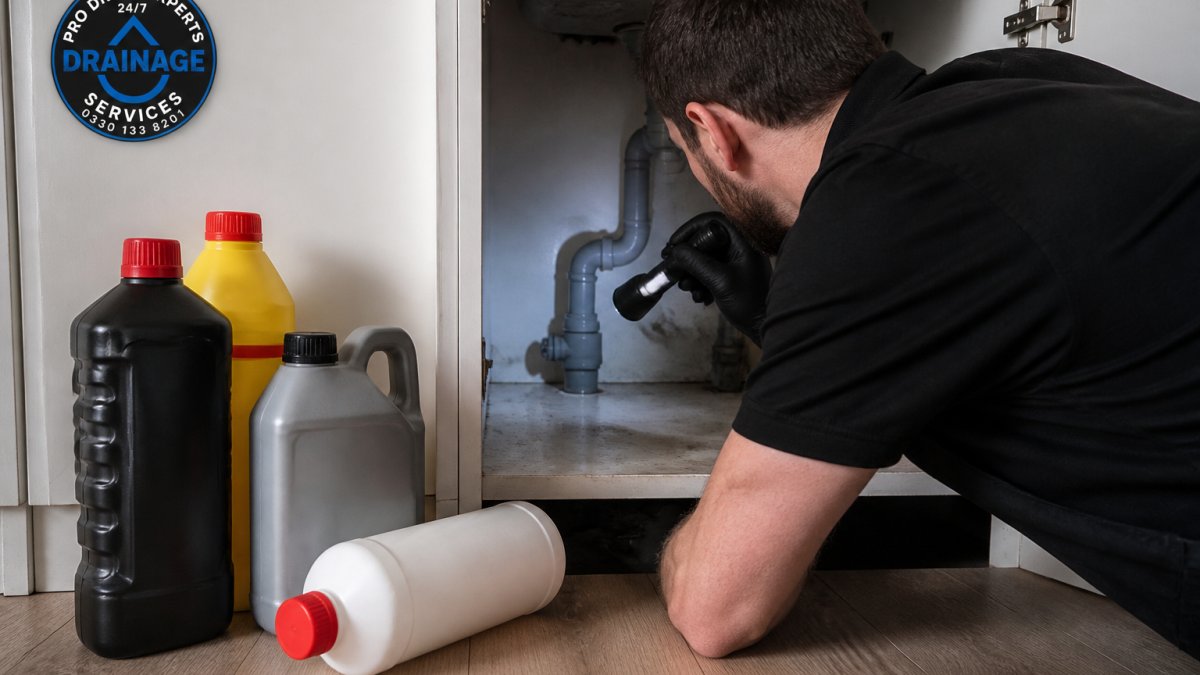
The first step is assessment. A drainage professional will locate the blockage, determine its nature (grease, debris, structural damage), and establish the safest unblocking method. This might involve opening access points to inspect the blockage directly, or using CCTV to visualise the problem if the blockage is deeper in the system.
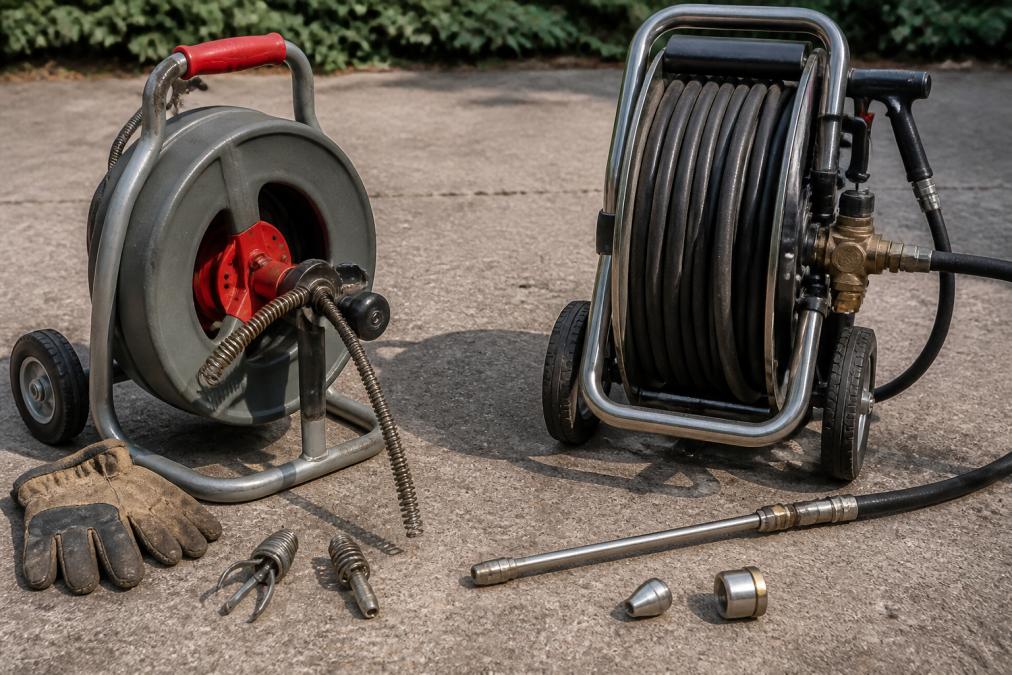
High-pressure water jetting is the standard method for clearing commercial kitchen blockages. This technique uses water at pressures between 1000 and 4000 PSI to break apart grease, food debris, and accumulated buildup. It's effective because it clears the entire pipe diameter, not just punching a hole through the blockage. For commercial kitchens, this matters because a partial clear often leads to rapid re-blockage.
For blockages caused by structural damage, cracked pipes, collapsed sections, or root intrusion, water jetting alone won't solve the problem. The assessment phase identifies these situations so that appropriate repairs can be planned. Sometimes this means excavating and replacing a section of pipe. Sometimes it means relining the pipe internally without excavation.
The timeline depends on blockage severity. A straightforward grease blockage in accessible pipes might clear within an hour. Complex blockages or those requiring excavation take longer. This is why immediate professional response matters: early intervention typically means faster resolution.
Pro Drain Experts approaches emergency unblocking with the goal of not just clearing the immediate blockage but understanding why it occurred. This prevents rapid re-blockage and helps inform your maintenance strategy going forward.
Commercial Drainage Emergency Response Time: What to Expect
Response time is critical in a commercial kitchen emergency. Every minute the drainage is non-functional is revenue lost and regulatory exposure increasing. Understanding what "emergency response" actually means helps you choose a service provider wisely.
True 24/7 emergency drainage services in Ringmer and the surrounding region operate around the clock, meaning calls are answered at any hour and engineers are dispatched immediately. This doesn't mean every call is answered within five minutes, it means the service is available and responds within a defined timeframe, typically one to two hours for genuine emergencies.
Some drainage companies advertise "emergency" services but operate limited hours, taking calls only during business hours or with significant surcharges for after-hours work. For a commercial kitchen that might fail at 9 PM on a Friday, this distinction matters enormously.
Pro Drain Experts offers same-day response to emergency calls, which means your situation is prioritised and an engineer is dispatched to assess and begin work the same day. For commercial kitchens where every hour of downtime translates to lost revenue and regulatory risk, this commitment to rapid response is fundamental.
Response time also depends on the complexity of the job. A straightforward blockage in accessible pipes might be cleared on the first visit. A blockage requiring excavation or structural repair might require multiple visits to plan, obtain necessary permissions, and complete the work. A professional service provider will communicate these timelines clearly so you understand what to expect.
The cost of rapid response is justified by the cost of inaction. A commercial kitchen shutdown costs far more per hour than the fee for emergency drainage support. Quick professional intervention prevents escalation to regulatory involvement, structural damage, and extended closure.
Commercial Drain Maintenance Costs UK: Understanding Your Investment
Drainage maintenance costs depend on the type of work, frequency of service, and complexity of your system. Rather than quoting specific figures that may not reflect current pricing or your particular situation, it's important to understand the factors that determine cost and how to get accurate quotes.
Routine maintenance, quarterly grease trap emptying or annual CCTV surveys, costs significantly less than emergency unblocking or structural repair. Preventative work is the most cost-effective investment because it prevents the expensive emergency scenarios.
CCTV surveys provide detailed information about your drainage system's condition, which allows you to plan repairs strategically rather than reactively. This information is valuable for budgeting and for identifying which areas need attention first.
Emergency unblocking costs more than scheduled maintenance because it requires immediate dispatch, often outside normal business hours, and because the urgency limits time available for cost-effective planning. However, the cost of emergency unblocking is still significantly less than the cost of a commercial kitchen forced to close for days or weeks due to structural drainage failure.
For accurate pricing on drainage maintenance and emergency services, contact Pro Drain Experts directly for a quote. They provide up-front pricing with no hidden fees, so you understand exactly what you're paying for before work begins.
Steps to Take While Waiting for Emergency Drainage Support
When you've called for emergency drainage support and an engineer is on the way, there are specific steps to take that protect your kitchen, your staff, and the drainage system itself.
Stop using the affected drainage. If one sink is blocked, isolate it if possible. If multiple fixtures are affected, cease kitchen operations to prevent further backup and water damage. This simple step prevents contamination spreading and protects your staff from exposure to backed-up sewage.
Do not attempt to clear the blockage yourself using chemical drain cleaners or improvised methods. Chemical cleaners can damage pipes, create hazardous reactions with existing water and debris, and often fail to clear commercial-scale blockages. Improvised methods like plunging or rodding risk pushing the blockage deeper into the system, making professional clearing more difficult.
If water is pooling on the kitchen floor, ensure it's clearly marked and cordoned off to prevent staff slip hazards. Place wet-floor signs and, if necessary, close the affected area entirely.
Document the situation if you can do so safely. Note when the blockage started, what you observed, and any relevant history (recent heavy use, previous blockages in the same area). This information helps the engineer diagnose the problem more quickly.
If the blockage has caused sewage backup or environmental contamination, document this and be prepared to report it to the local environmental health authority if required. In Ringmer and across the region, certain types of drainage failure must be reported to the local council.
Prepare access for the engineer. Ensure they can reach the drainage system, access points, and any external pipes without obstruction. Clear the area around the blockage so work can begin immediately upon arrival.
Choosing a Reliable Emergency Drainage Service Provider
Selecting the right emergency drainage service provider matters because you're choosing who will respond when your commercial kitchen is in crisis. This decision should be made before an emergency occurs, not in the panic of a shutdown.
Key criteria include 24/7 availability and documented response times. A provider that claims same-day response should have evidence of actually achieving that. Check reviews and ask for references from other commercial clients in Ringmer and the surrounding area who can speak to real response times.
Experience with commercial kitchens specifically is valuable because commercial drainage is different from domestic drainage. High-volume grease management, larger pipe systems, and regulatory compliance requirements demand different expertise than a standard residential blockage.
Transparency in pricing is essential. You should receive a clear quote before work begins, with an explanation of what's included and what might trigger additional charges. Hidden fees discovered mid-job create stress when you're already dealing with a kitchen shutdown.
Equipment matters. A provider with high-pressure water jetting capability, CCTV survey equipment, and properly maintained vehicles can handle a wider range of problems without delays. Ask what equipment is available and what situations they can address.
Pro Drain Experts meets these criteria: 24/7 emergency availability with same-day response, over 20 years of experience with commercial and domestic drainage, up-front transparent pricing, and fully equipped vans with the latest technology. For commercial kitchens in Ringmer and across East Sussex, West Sussex, and Kent, this combination of experience, equipment, and commitment to rapid response provides the reliability that commercial operations depend on.
Drainage emergencies in commercial kitchens are genuine crises that demand immediate professional response. The cost of rapid, expert intervention is far less than the cost of extended downtime, regulatory fines, or structural damage from delayed action. When your commercial kitchen's drainage fails, Pro Drain Experts provides the 24/7 emergency support, same-day response, and transparent pricing that keeps your operation running. Contact Pro Drain Experts for emergency drainage support and discover why commercial kitchens across the region trust our team with their most critical infrastructure.
Frequently Asked Questions
What counts as a drainage emergency in a commercial kitchen?
A drainage emergency occurs when water backs up into sinks, grease traps overflow, or sewage surfaces on the kitchen floor. These situations halt food preparation, create health and safety hazards, and risk closure by environmental health officers. Complete blockages, foul odours, and visible flooding all require immediate professional attention to prevent business interruption and regulatory violations.
How quickly should emergency commercial drain unblocking be handled?
Commercial kitchen blockages should be addressed within hours, not days. The longer a blockage persists, the greater the risk of equipment damage, health code violations, and forced closure. Many drainage emergencies in food service settings worsen rapidly due to grease and food debris accumulation. Same-day response services ensure minimal downtime and prevent secondary damage to your drainage infrastructure.
How much does commercial drain maintenance cost in the UK?
Commercial drain maintenance costs depend on the severity of the issue, the size of your drainage system, and whether CCTV surveys are needed. Emergency call-outs typically cost more than routine maintenance. For accurate pricing tailored to your kitchen's specific needs, contact a local drainage specialist for an up-front quote. Preventative maintenance programmes often cost less overall than repeated emergency repairs.
What should a kitchen do while waiting for an emergency drainage engineer?
Stop using all drains immediately to prevent further blockage or overflow. Clear visible debris from sink strainers and grease traps if safe to do so. Redirect water to alternative areas if possible. Place wet floor signs around affected areas for safety. Keep staff away from backed-up water due to contamination risk. Document the situation with photos for your insurance claim. Communicate the situation to your environmental health officer if closure is imminent.