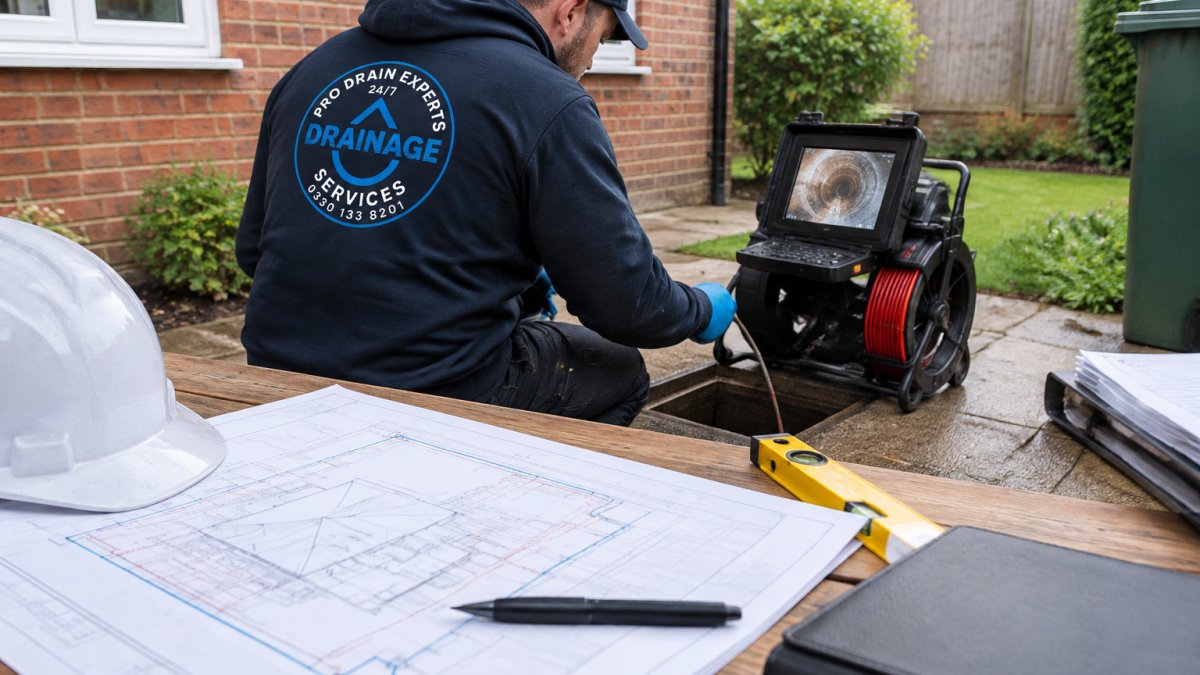
 How-to
How Do You Resolve Drainage Planning Permission Issues?
Last Updated: November 8, 2026
Quick Summary
To resolve a drainage planning permission issue, first identify who raised the objection and why, then answer each consultee point with matching evidence. Work through the Lead Local Flood Authority's comments in a fixed sequence, commission any missing tests or surveys, and submit a numbered response that cites revised drawings and calculations.
- Read every consultee comment in full and sort each into an information request, objection or condition.
- Build a table mapping each comment to the evidence and document reference that answers it.
- Make the drainage layout drawing and the calculation report agree on pipe diameters and storage volumes.
- Keep foul capacity evidence separate from surface-water evidence, since each is reviewed by a different consultee.
- Confirm permission is needed before starting any work, as starting without it can lead to enforcement action.
Table of Contents
- Identifying Why Your Drainage Plan Was Challenged
- Working Out Whether Your Scheme Needs Planning Permission
- Responding to a Lead Local Flood Authority Objection
- Building a Drainage Strategy the Planning Officer Can Approve
- Using a CCTV Drain Survey as Planning Evidence
- Preparing a Drainage Report for the Planning Application
- Dealing with Wastewater Capacity and Sewer Connection Problems
- Booking Your Drainage Evidence Review With Pro Drain Experts
- Frequently Asked Questions
Identifying Why Your Drainage Plan Was Challenged
Homeowners and developers often ask the same question: why did the council push back on a drainage plan that looked fine? A drainage planning permission issue is rarely a single mistake. It is usually a gap between what the scheme proposes and what the reviewing authority needs to see before it can say yes.
The first step is to work out who raised the problem and why. Most challenges come from one of a few places, and each one needs a different response.
- The local planning authority, which decides the application
- The Lead Local Flood Authority, which reviews surface-water drainage
- Statutory consultees such as the Environment Agency or the water company
- Neighbours or other interested parties
Pinpointing the source tells you whether you are fixing a calculation, a missing document, or a policy argument.
Reading the Council's Consultee Comments
Consultee comments are the most useful thing you will receive. They usually sit on the council's planning portal under the application record. Read every comment line by line and sort each point into one of three groups: a request for more information, an outright objection, or a condition the scheme must meet.
Our advice is to build a simple table with the consultee, the comment, and the document that answers it. Gaps show up quickly this way. If a comment asks for infiltration test results and your file has none, you know exactly what to commission.
Common Reasons Drainage Strategies Are Rejected
Drainage strategies tend to fail for the same handful of reasons. Common reasons drainage plans fail council approval include inadequate surface-water management, a failure to show Sustainable Drainage Systems (SuDS) compliance, and incomplete flood-risk assessments.
Other frequent problems include discharge rates that are not justified, no maintenance plan for SuDS features, and calculations that do not match the site layout drawings.
Working Out Whether Your Scheme Needs Planning Permission
Before you fix a planning problem, confirm that you actually need permission for the work. Some drainage works fall under permitted development, while others require a full or householder application. The rules depend on the scale of the work, its location, and whether the site is in a flood risk zone.
Check the Planning Portal and the local authority's guidance first. A quick call to the planning department can also save weeks. If your site sits in Flood Zone 2 or 3, or is larger than the thresholds set for flood risk assessments, expect the council to ask for detailed drainage evidence (Flood risk assessments: applying for planning permission).
Check before any excavation begins, as starting work without confirmed permission can lead to enforcement action.
Responding to a Lead Local Flood Authority Objection
When the Lead Local Flood Authority (LLFA) objects, it means the surface-water drainage proposal does not yet meet its standards. The objection is a request for better evidence, not a final verdict. Treat it as a checklist of the points the LLFA needs answered, and work through it in a fixed order so nothing is missed.
Who the LLFA Is and What They Check
The LLFA is the county-level body responsible for local flood risk (Bolder leadership for surface water flooding). The relevant LLFA depends on the county in which the site sits, and each county council fulfils that role for its own area. Its officers typically check the drainage hierarchy, the discharge rate, the attenuation volume, and whether the SuDS design will be maintained over the life of the development.
Understanding this helps you target your response. The LLFA cares most about whether surface water is managed on site without increasing flood risk elsewhere.
A Step-by-Step Objection-Resolution Workflow
Objections are generally easier to resolve when the response follows a consistent sequence:
- Obtain the objection and every consultee comment in full. Download the LLFA response, the planning officer's case notes and any Environment Agency or water company comments from the council's planning portal. Do not rely on a summary in an email.
- Map each concern to a piece of evidence. Build a table with three columns: the consultee's exact wording, the evidence that answers it, and the document reference. If a comment asks for infiltration test results and your file has none, that row is your commission list.
- Commission the missing work. Infiltration testing, revised attenuation calculations, a CCTV survey or a maintenance schedule may need a specialist. Ask for the output in the format the LLFA expects, not a general report.
- Revise the drawings and calculations together. Reviewers lose confidence quickly when the drainage layout drawing and the calculation report disagree on pipe diameters or storage volumes.
- Submit a numbered response that mirrors the objection. Quote the LLFA's wording exactly, give a direct answer in one or two sentences, point to the revised drawing, calculation or report that proves it, and note any design change you have made.
- Track the decision and follow up. Record the date of submission and check the planning portal for the LLFA's re-consultation response. A short, factual chase to the case officer is normal if no update appears within the council's published timescale.
Watch out: responding point by point but attaching a completely new drainage strategy can restart the review, because the LLFA will treat it as a fresh submission rather than a clarification.
Writing a Revised Response That Answers Each Point
Write your response as a numbered reply that mirrors the LLFA's own objection points. For each point, state the concern, then the answer, then the document reference.
- Quote the LLFA's wording exactly
- Give a direct answer in one or two sentences
- Point to the revised drawing, calculation or report that proves it
- Note any change you have made to the design
Keep the tone factual. A clear, complete reply often resolves an objection without a second round of review. If the LLFA maintains its objection, ask the case officer whether the remaining point is a genuine technical disagreement or a missing document, because the two need different escalation routes.
The article sets out the LLFA response workflow as a sequence of steps, each with a timing or check to track.
| Step | What to do | Time or frequency |
|---|---|---|
| Obtain the objection | Download the LLFA response and all consultee comments in full | Before any reply is drafted |
| Map concerns to evidence | Build a table of comment, answering evidence and document reference | Before commissioning work |
| Commission missing work | Get infiltration tests, calculations, CCTV or maintenance schedule | As needed for gaps |
| Revise drawings and calculations | Make drawings and calculation report match | Before submission |
| Submit numbered response | Quote objection, answer briefly, cite revised document | Single submission |
| Track the decision | Record submission date and check the portal | Within the council's published timescale |
Building a Drainage Strategy the Planning Officer Can Approve
A strong drainage strategy tells a clear story from rainfall to outfall. It should explain how surface water is collected, slowed, stored and released, and show that each step meets local policy.
Start with a site investigation that includes infiltration testing where ground conditions allow. Use the results to choose between soakaways, infiltration basins, or a controlled discharge to a watercourse or sewer. Then produce drainage calculations that show the chosen system copes with the design storm, including an allowance for climate change.
Finally, include a maintenance plan that names who looks after each feature and how often it is inspected. Planning officers look for this closely, because a drainage system that nobody maintains can fail after the development is finished.
Using a CCTV Drain Survey as Planning Evidence
A CCTV drain survey gives planners and drainage engineers direct evidence of the condition of existing pipes. It is especially useful when the proposal connects to an existing sewer, or when the council questions whether old drains can take the extra flow.
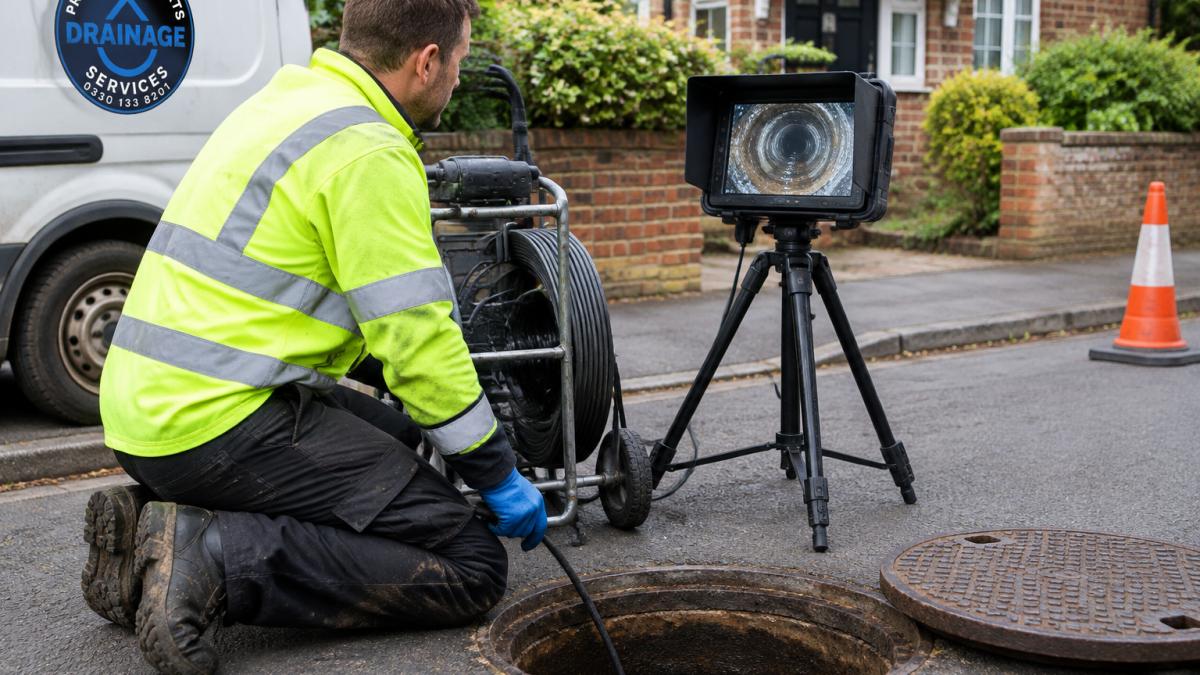
The survey records the pipe route, diameter, material, and any defects such as cracks, root intrusion or displaced joints. Ask for a report that includes the footage, a defect log, and a recommendation. A clear report is far more persuasive than a general statement that the drains are fine.
Preparing a Drainage Report for the Planning Application
A drainage report is the document that ties your evidence together. It should be written so that a planning officer or LLFA reviewer can follow the logic without needing to call you.
A strong report usually includes the following sections:
- A site description and existing drainage features
- Ground investigation and infiltration results
- The proposed drainage hierarchy and chosen system
- Drainage calculations and the design rainfall used
- Discharge rates and the point of connection
- A SuDS maintenance and ownership plan
- Any CCTV survey findings relevant to existing pipes
Check that every figure in the report matches the drawings submitted with the application. Mismatched numbers are one of the quickest ways to lose a reviewer's confidence.
Dealing with Wastewater Capacity and Sewer Connection Problems
Sometimes the planning problem is not surface water at all. Foul drainage and wastewater capacity are reviewed separately from the LLFA's surface-water concerns, and mixing the two in one response is a common reason applications stall. The water company may say the local sewer does not have capacity for the proposed foul flows, or it may refuse a connection until an upgrade is made. This can hold up an application for months.
Separating Foul Capacity from Surface-Water Objections
A surface-water objection is about runoff, attenuation and flood risk, and it is answered with drainage calculations and SuDS evidence. A foul capacity objection is about whether the receiving sewer or treatment works can accept the additional wastewater, and it is answered with the water company's own capacity response. Keep the two evidence sets in separate sections of your drainage report so the planning officer and each consultee can see which point is being addressed.
Who to Contact and What Evidence to Request
For a Ringmer site, the sewerage undertaker is the first call. Request a formal pre-development enquiry, which should state whether capacity exists, the point of connection, and what, if anything, must be upgraded. Ask specifically for:
- The modelled capacity of the receiving sewer and any known hydraulic constraints
- The permitted point and rate of foul connection
- Any upgrade scheme already programmed for the catchment
- The conditions the water company would expect the council to attach
Use that written response in your drainage strategy rather than paraphrasing it. If an upgrade is needed, the council may attach a condition requiring it before occupation, and the wording of that condition should match what the water company has asked for.
Proving the Connection Is Viable
Professional drain mapping and a CCTV survey of the existing sewer often show whether the connection is viable, particularly where the site relies on an old private drain or a shared connection. Gather this evidence early, before the council asks for it. A defect log showing cracks, root intrusion or displaced joints lets you propose a repair or a new connection with evidence rather than assertion.
Watch out: assuming a surface-water objection also covers foul drainage can leave the water company's capacity point unanswered, which is enough on its own to delay determination.
Costs, Timelines and Escalation
Consultant input for a capacity response, CCTV survey and revised drainage report varies with site size, so ask for a fixed scope in writing before work begins. Timescales for a pre-development enquiry and a revised submission depend on the water company and the council, so confirm them with each. If the water company's position is unclear, ask the case officer for clarification in writing, and use the council's published complaints or appeal route only once the technical points have been answered. No outcome can be guaranteed, so plan the programme around the longest realistic timescale rather than the shortest.
Booking Your Drainage Evidence Review With Pro Drain Experts
If your drainage planning permission issue has stalled, an independent review of your evidence can show exactly what is missing. A specialist review of your consultee comments, drainage strategy and survey results can show which points need new work and which only need a clearer response.
Before you call, check your site for slow drainage, gurgling sounds, bad smells or overflowing gullies. Noting these now helps the review and can prevent costly damage if a defect is already present.
To arrange a review, contact Pro Drain Experts using our emergency call-out line, which is available 24/7, or check the website for current prices and a quote.
Frequently Asked Questions
Why might a council object to a drainage strategy?
Councils and the Lead Local Flood Authority most often object when a drainage strategy does not show how surface water will be managed without increasing flood risk elsewhere. Common gaps include no evidence of infiltration testing, missing calculations for the discharge rate, unclear maintenance responsibilities for Sustainable Drainage Systems, and no demonstration that the sewer connection has capacity. Identifying which of these applies to your objection is the first step in resolving it.
How do I respond to a Lead Local Flood Authority drainage objection?
Read the objection letter and list each point separately. For every point, provide the missing technical evidence, such as drainage calculations, a revised layout or a maintenance plan, and reference the drawing or document where the change is made. Keep the response in the same order as the objection so the officer can check each item quickly. If an objection cannot be met in full, explain the mitigation proposed and why it is acceptable.
Can a CCTV drain survey help resolve a planning drainage issue?
Yes. A CCTV drain survey shows the actual condition, gradient, diameter and connection points of existing drains, which can answer questions about capacity or where a new connection can safely be made. Pro Drain Experts provides CCTV surveys with detailed reports and recommendations that can be submitted as supporting evidence.
What should a drainage report for a planning application include?
A drainage report usually sets out the existing drainage, the proposed surface-water and foul drainage arrangements, calculations for flows and storage, the discharge point and the maintenance responsibilities. Where existing drains are relevant, a CCTV survey and its findings should be attached. For current prices, check the Pro Drain Experts website or request a quote.