 How-to
How to Thaw Frozen Water Pipes Safely at Home
Last Updated: November 18, 2026
Quick Summary
To thaw a frozen pipe, first turn off the water supply and open the affected tap. Then warm the pipe slowly and evenly from the tap end, using warm towels, hot-water bottles or a hairdryer on low, and never use a naked flame. The phrase how to thaw frozen water pipes safely starts with cutting the water supply before any heat is applied.
- Turn off the stop tap before applying any heat to the pipe.
- Open the affected tap so pressure has somewhere to go as the ice melts.
- Warm the pipe slowly, working from the tap end toward the frozen section.
- Never use a naked flame, blowtorch or heat gun on a pipe.
- Check the open tap every 15 to 20 minutes to see if water is flowing.
Table of Contents
- How to Tell a Pipe Is Frozen and Not Just Slow
- How to Find a Frozen Water Pipe in Your Home
- Turning Off the Water Supply and Opening the Taps
- Safe Ways to Thaw Frozen Pipes
- How Long Does It Take to Thaw a Frozen Pipe?
- Thawing a Pipe That Is Hidden or Hard to Reach
- What to Do If a Frozen Pipe Bursts
- Booking Emergency Help in Ringmer if the Pipe Will Not Thaw
- Frequently Asked Questions
How to Tell a Pipe Is Frozen and Not Just Slow
Panicked calls on cold mornings usually start with the same question: is the pipe frozen, or is something else wrong? Getting this right matters, because the fix for each is different.
Learning how to thaw frozen water pipes safely starts with spotting the signs: a frozen pipe usually shows up as a tap that gives a trickle or nothing at all, while the rest of the house still has normal pressure. Slow drainage, gurgling and bad smells point to a blockage instead, so the same thawing steps will not help.
Watch out: if a frozen pipe is also dripping or bulging, treat it as a burst pipe and cut the water off before doing anything else.
How to Find a Frozen Water Pipe in Your Home
Frozen pipes almost always sit where the cold gets in. Start with the spots that take the most cold air, and work outwards from there.
- Pipes against outside walls
- Pipes in lofts, garages and under-floor voids
- Pipes near open windows, airbricks or external doors
- Pipes in cupboards that back onto an exterior wall
Run your hand along the pipe if you can reach it. A section that feels noticeably colder than the rest is often the frozen one. Frost or a frosted-looking pipe is another clear sign.
If you cannot see the pipe at all, the hidden-pipe section below covers how to work around that.
Turning Off the Water Supply and Opening the Taps
Knowing how to thaw frozen water pipes safely means cutting the water supply before applying any heat. Find your stop tap, usually under the kitchen sink, in the understairs cupboard or where the mains enters the house, and turn it clockwise until it stops.
Next, open the affected tap. Water that cannot flow can expand as it thaws, and an open tap gives the pressure somewhere to go. It also lets you check the flow as the ice melts.
Some homeowners wait to open the tap until they are sure the pipe is clear. Open it first. A tap that is already running is the best sign that the thaw is working.
Safe Ways to Thaw Frozen Pipes
Heat the pipe slowly and evenly. Fast or intense heat can crack the pipe, distort plastic fittings or damage soldered joints, and it can also thaw ice faster than the water can escape. Start gently at the tap end and work along the pipe as the ice melts, so melted water always has a route out.
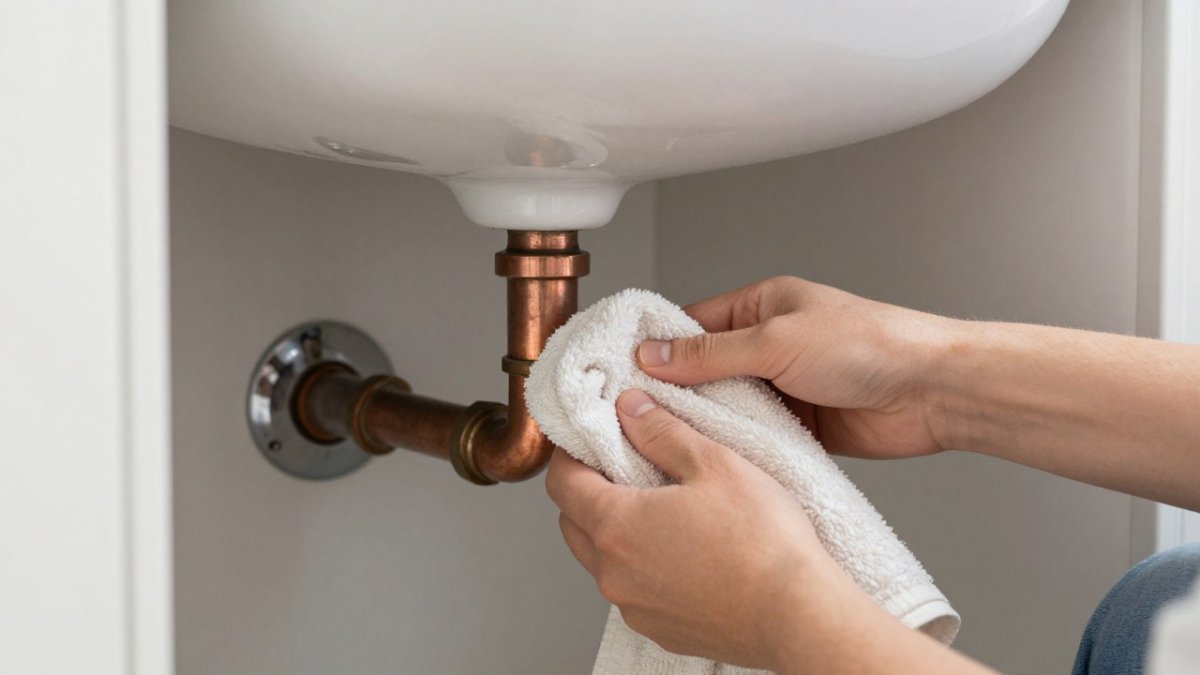
Warm Towels and Hot-Water Bottles
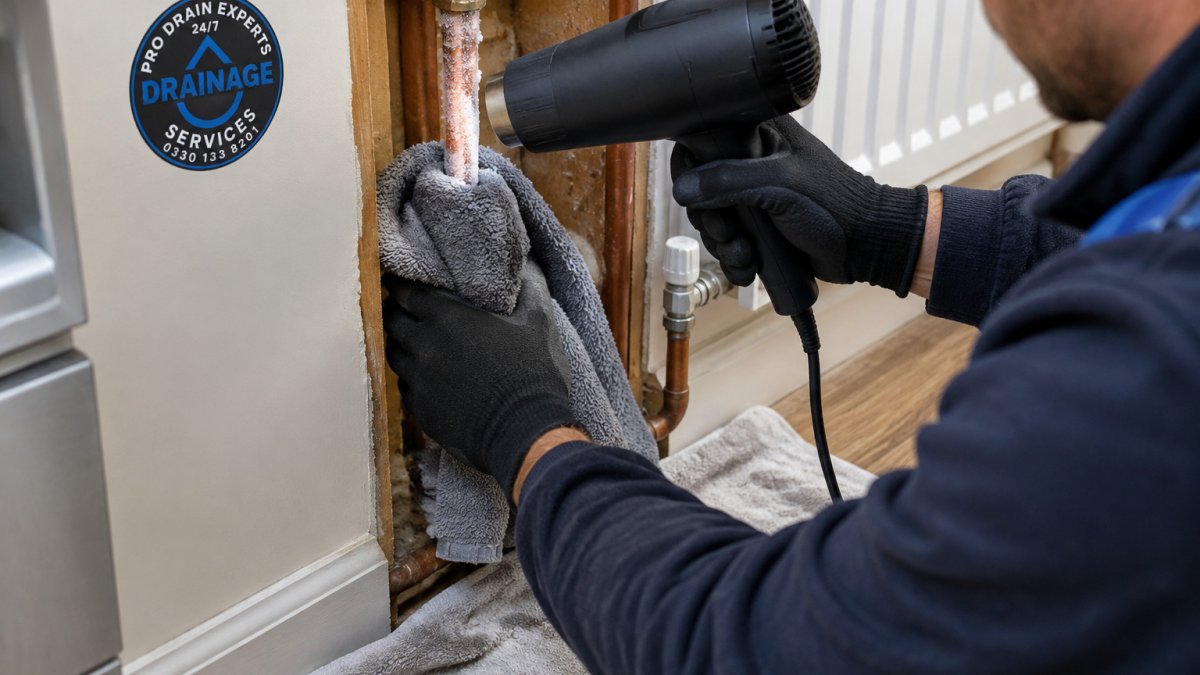
These are the safest options for most homes. Soak a towel in hot water, wring it out so it is damp rather than dripping, and wrap it around the frozen section. Replace the towel as it cools. A hot-water bottle filled with warm (not boiling) water works the same way and can reach tight spots behind a cupboard or beside a joist. Work from the tap end toward the frozen section. Melted water then has a route out, and you can feel the pipe warm gradually rather than in one sharp burst.
Hairdryers and Portable Heaters
A hairdryer on a low or medium setting is a useful option. Keep it moving along the pipe and do not hold it in one place, because a concentrated stream of hot air can soften plastic pipe or overheat a fitting. Keep the dryer and its cable well away from water, and do not use it while standing in a puddle or with wet hands. Plug it into a socket that is not close to the damp area, and keep the cable clear of the pipe you are warming.
A portable heater can warm the air around the pipe. Keep it at least a metre from the pipe and anything flammable, and never leave it running unattended. Do not use a fan heater in a confined cupboard where the airflow is blocked, and do not place it on a wet floor. If the room is damp, dry the area around the socket and heater first.
Watch out: never use a naked flame, a blowtorch or a heat gun on a pipe. These can burn through pipework, set fire to nearby materials and cause serious injury. They also heat too fast and too locally, which is the opposite of what a frozen pipe needs.
Electrical and Fire Safety Around Water
Water and electricity are a serious combination, so treat every thawing job as a damp job. Keep extension leads out of puddles, do not run a hairdryer or heater from a socket that shows scorch marks or feels loose, and switch off the appliance at the wall before you move it. If water is already near sockets, lights or appliances, turn off the electricity at the consumer unit before you start heating, and do not turn it back on until the area is dry and checked by a qualified electrician. Never leave a heater or hairdryer running while you leave the room, even for a few minutes.
What Not to Do
Do not pour boiling water directly onto a pipe. The sudden temperature change can crack plastic or fracture a joint, and it can also splash back. Do not use a hammer, chisel or screwdriver to break ice inside a pipe. Do not run a tap at full pressure straight after thawing; open it gradually and watch for leaks along the pipe route.
How Long Does It Take to Thaw a Frozen Pipe?
Most frozen pipes thaw within a few hours of gentle, steady heat, though some take longer. The time depends on how cold the pipe got, how thick the insulation is and how much heat you can apply safely.
A simple test: check the open tap every 15 to 20 minutes. Once water flows steadily, keep the heat on for a short while longer to clear the rest of the ice.
If nothing changes after several hours of careful heating, stop and call for help rather than pushing the heat higher.
Thawing time varies with how cold the pipe got and how carefully heat is applied, so the table below sums up the main points from this section.
| Check | What to look for | Action |
|---|---|---|
| Tap flow | Steady flow from the open tap | Keep heat on briefly to clear the rest of the ice |
| Time check | Every 15 to 20 minutes | Look for change at the tap |
| No change | Nothing after several hours | Stop heating and call for help |
Thawing a Pipe That Is Hidden or Hard to Reach
Pipes inside walls, under floors or behind boxed-in panels need a different approach. You cannot apply heat directly, so work from the outside instead, and treat the job as a process of warming the space around the pipe rather than the pipe itself.
- Warm the room the pipe runs through with a portable heater, keeping it at a safe distance from walls and furniture, and leave the room door open so warm air can circulate
- Open cupboard doors and remove access panels only if it is safe to do so and you know what is behind them
- Leave the affected tap open, and consider leaving a second tap dripping slightly to keep water moving
- Check the surrounding floor and walls for damp patches, soft plaster or water staining, which can mean a pipe has already split rather than simply frozen
Frozen or Burst? A Simple Decision Tree
Before you warm a hidden pipe, decide what you are dealing with. A frozen pipe usually gives no water or a trickle at one tap while other taps in the house still run normally, and there is no damp patch. A burst pipe often shows as water where it should not be: a damp patch spreading on a ceiling, water running down a wall, a bulge in plaster, or a tap that runs briefly and then stops as pressure is lost. If you see any of those signs, turn off the stop tap straight away, open the taps to drain down, and call a plumber rather than applying heat. Heating a split pipe can make the leak worse as the ice melts.
Why Not to Apply Heat Blindly
Do not cut into walls or floors to reach a pipe unless you are sure of its position and have the right tools and skills. Blind heat is risky for three reasons: you cannot see how hot the pipe is getting, you may heat a cable or a gas pipe that runs alongside it, and you may thaw ice into a section that is already split. A professional can locate and access the pipe with far less risk to the building, using pipe-locating equipment and controlled heat.
What to Do Immediately After Water Flow Returns
When water starts to run steadily, do not assume the job is finished. Turn the tap down gradually rather than snapping it shut, and watch the pressure for a few minutes. Walk the pipe route and check for leaks, damp patches or bulges, especially at joints and where the pipe passes through a wall or floor. Dry any affected areas, and keep an eye on the same spot for the next day or two, because a delayed leak can appear once the pipe has warmed through and pressure has built up. If you had turned off the electricity, do not restore it until the area is dry and checked.
If the pipe still will not run after several hours of careful warming, stop and call a qualified plumber rather than pushing the heat higher.
What to Do If a Frozen Pipe Bursts
A burst pipe is an emergency. Act quickly to limit water damage.
- Turn off the stop tap straight away.
- Turn off the electricity at the consumer unit if water is near sockets, lights or appliances.
- Open the taps to drain the pipe and reduce pressure.
- Catch water with buckets and towels, and move valuables out of the way.
- Call a plumber or emergency drainage service to make the repair.
Do not turn the power back on until the area is dry and checked by a qualified electrician (Electrical safety after a flood). Water and electricity together are a serious shock and fire risk.
Booking Emergency Help in Ringmer if the Pipe Will Not Thaw
If the pipe still will not run after careful heating, or if you find a burst, get professional help. Pro Drain Experts offers 24/7 emergency call-out services across East Sussex, West Sussex and Kent, with same-day response and fully equipped vans.
Before you call, note where the frozen section is, whether the pipe is visible, and whether you have seen any leaks. This helps the engineer arrive prepared. For guidance on early signs of trouble, see the checklist for slow drainage and bad smells before you call.
Pro Drain Experts also explains the signs of hidden leaks in the guide on leaking pipes behind walls. If a burst has already caused damage, our emergency drain repair guide covers the immediate steps to take. You can also browse our drainage blog for examples of similar local work in Ringmer.
Frequently Asked Questions
How do you safely thaw a frozen water pipe?
Turn off the water at the stop tap and open the affected cold tap. Then apply gentle, gradual heat to the frozen section using a warm towel soaked in warm water, a hot-water bottle, or a hairdryer on a low setting. Work from the tap end towards the blockage so meltwater has somewhere to drain. Never use a naked flame, blowtorch or heat gun, as these can damage pipework and create a serious fire risk. Keep checking the tap for flow, and stop if you see any leak or bulging pipe.
Can you use a hairdryer to thaw a frozen pipe?
Yes, a hairdryer on a low or medium setting is one of the safer options for thawing a frozen pipe. Keep it moving along the pipe rather than pointing it at one spot, and keep it away from water to avoid electrical risk. Use it in short bursts and check the tap regularly. Only use a hairdryer with a working residual current device (RCD) plugged into a socket, and never use electrical equipment while standing in water. If the pipe does not respond after a sustained period, stop and call a professional.
How long does it take to thaw a frozen water pipe?
The time varies widely depending on the length of the pipe, how cold the room is, how thick the ice is and which heat method you use. Some pipes begin to run within 15 to 30 minutes of gentle heating, while others can take several hours. Patience matters more than speed, because rushing the process with high heat increases the risk of cracks. If the pipe has not started to run after a few hours of careful, steady heating, it is time to call an emergency plumber.
What should you do if a frozen pipe has burst?
Turn off the water at the main stop tap straight away to limit flooding, then switch off electrics in the affected area if water is near sockets or fittings. Open the taps to drain the system and catch water with buckets and towels. Do not try to repair a burst pipe with makeshift fixes if you are unsure. Contact Pro Drain Experts for emergency call-out, with 24/7 response and up-front pricing, so a qualified team can assess the damage and repair the pipe.