 How-to
How Are Professional Drain Cleaning Methods Used in 2026?
Quick Summary
Professional drain cleaning methods in 2026 are matched to the cause of the blockage, not chosen by habit. Drain rods suit soft localised blockages, high-pressure jetting clears grease and scale, and a CCTV survey confirms the result.
- Drain rods suit localised blockages in sinks, basins and short branch pipes.
- High-pressure jetting clears heavy grease, lime scale and compacted silt, but pressure must suit the pipe.
- Chemical cleaners cannot shift solid objects or tree roots and can damage pipes if used repeatedly.
- A CCTV survey should follow cleaning to confirm the pipe is clear and show any defect.
- Never pour cooking fat down the sink; pour it into a container and throw it away.
Table of Contents
- Why Blockages Need the Right Method
- Diagnosing a Blockage Before Choosing a Method
- Drain Rods for Blockages: How Manual Clearing Works
- High-Pressure Water Jetting: When It Is the Right Choice
- Chemical and Enzyme Cleaners: Limits and Risks
- CCTV Drain Survey: Confirming the Cause and Condition
- What Happens During a Professional Visit and What It Costs
- Preventing Blocked Drains After Professional Cleaning
- Booking Your Drain Clearance With Pro Drain Experts
- Frequently Asked Questions
Why Blockages Need the Right Method
Last Updated: November 17, 2026
Choosing the right drain cleaning methods in 2026 starts with understanding the blockage, not reaching for the nearest bottle of chemical cleaner. A homeowner often tries a quick fix, the water still drains slowly, and the problem returns within weeks. The method matters as much as the effort.
A blockage is rarely just one thing. Hair and soap scum can form a sticky layer inside a bathroom waste pipe. Cooking fat can cool and harden in a kitchen run. Tree roots, silt and collapsed pipe sections can block an outside drain or main sewer line. Each cause responds to a different approach, and a method that clears one can do nothing for another.
Using the wrong method has real costs. A cleaner that works on grease may do little against roots. Pushing a rod through a fragile clay pipe can crack it. Jetting water into an old, damaged line can force debris further along the run. Matching the method to the cause protects the pipework and gives a lasting result.
This guide explains the main professional drain cleaning methods, how to tell which one suits a given blockage, and what to expect from a visit. The aim is to help you make an informed decision before you pay for work or spend money on products that may not solve the problem.
Diagnosing a Blockage Before Choosing a Method
The first question is where the blockage sits. A single slow sink usually points to a branch pipe, while several fixtures backing up at once suggest a problem further down the main drain. Gurgling noises and water rising in a lower fixture when you run another tap are common signs of a main-line restriction.
Next, consider how the problem developed. A sudden stop often means a solid object or a heavy grease plug. A gradual slowdown over months usually means a build-up of soap, hair or sludge along the pipe walls. Recurring blockages in the same place can point to a pipe fault, a bad fall in the pipe, or roots entering through a joint.
Some quick checks help narrow things down:
- Run the tap for a minute and note whether the water drains slowly or not at all.
- Check whether other fixtures on the same line also drain poorly.
- Look for damp patches or unusual smells outside, which can signal a leak.
- Note whether the problem appears after heavy rain, which may point to surface water entering the system.
These observations do not replace a professional inspection, but they help you describe the problem accurately when you call for help. They also show whether a home remedy is worth trying first or whether the blockage needs more than a simple clear.
Drain Rods for Blockages: How Manual Clearing Works
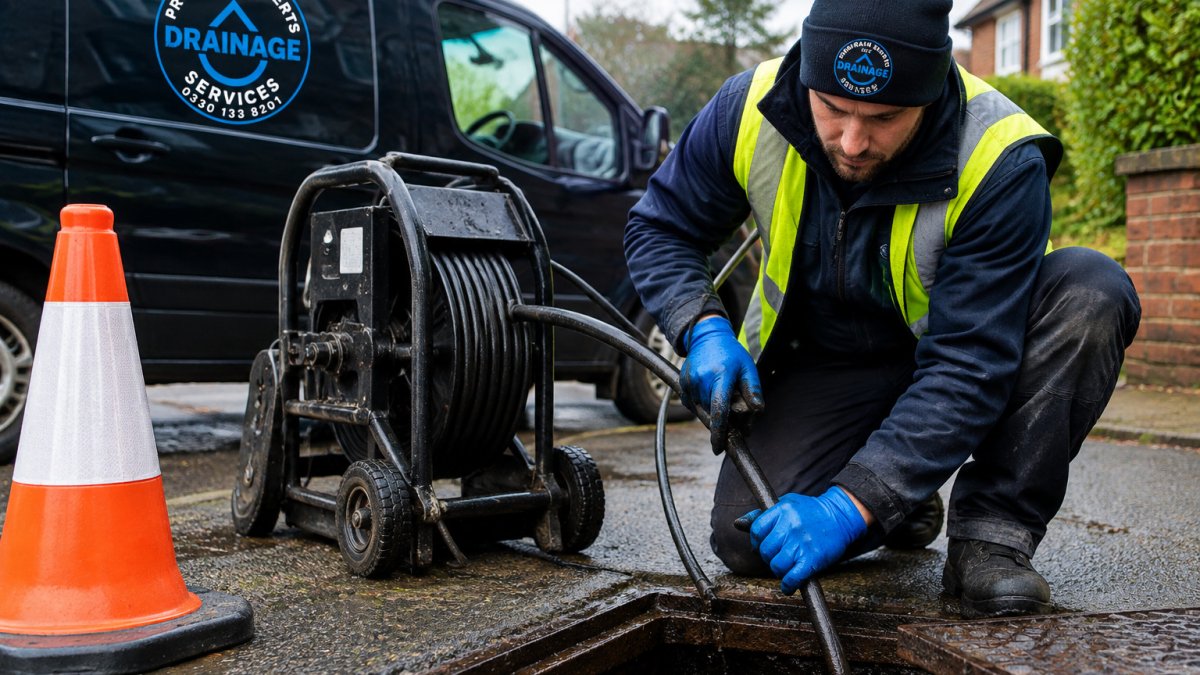
Drain rodding uses a flexible steel rod, often with a cutting head, pushed down the pipe by hand or with a powered drive. The operator rotates the rod to break through soft obstructions such as hair mats, soap build-up and small debris. Once the blockage is loosened, flow usually returns quickly.
Rodding is well suited to localised blockages in kitchen sinks, basin traps and short branch pipes. It is quick, relatively low cost and does not rely on chemicals. Many blockages in domestic bathrooms clear in a single visit using this method.
Rods have limits. They can struggle with dense grease, compacted sludge or large objects. Using too much force on an old or cracked pipe can cause further damage. A skilled operator will stop and reassess if the rod meets resistance that does not clear, rather than pushing harder. If a blockage returns soon after rodding, the cause may lie further down the line, and a camera survey is usually the next step.
High-Pressure Water Jetting: When It Is the Right Choice
High-pressure water jetting sends a jet of water through a hose fitted with a nozzle that forces water forward and backward. You can compare jetting and rod methods side by side to see which suits your blockage. The force scours the pipe walls, removing grease, silt, scale and root fragments. Because it cleans the full diameter of the pipe, jetting often gives a more thorough result than rodding alone.
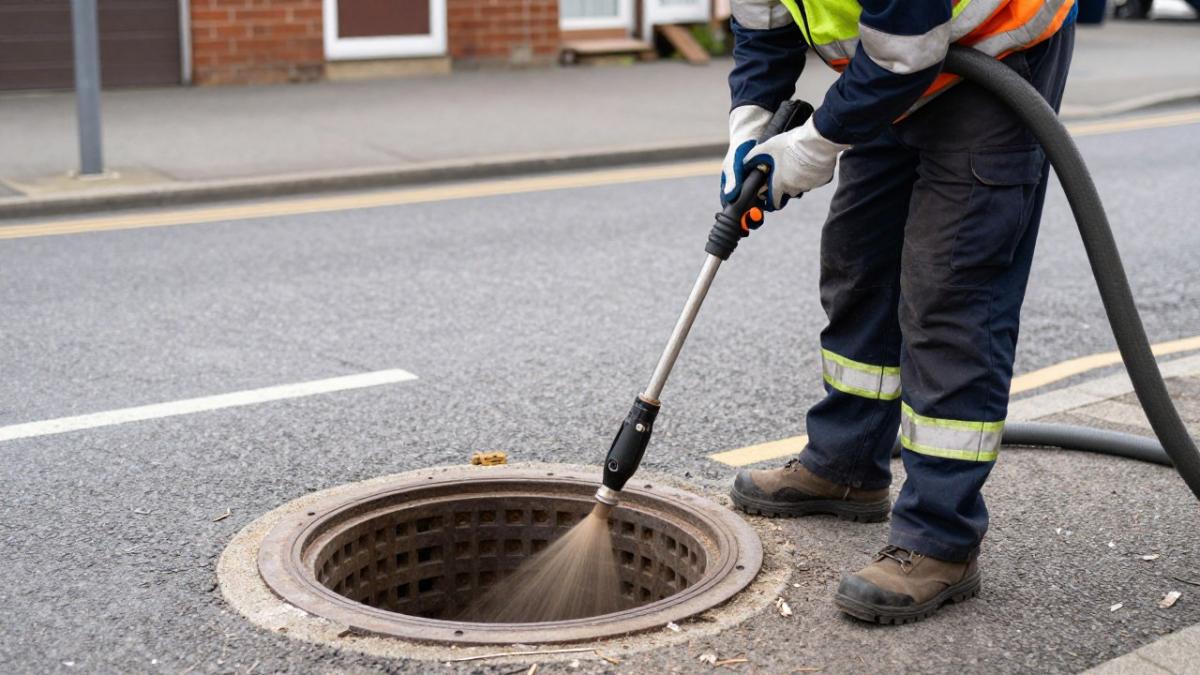
Jetting suits heavy grease, lime scale, compacted silt and the lining build-up common in older drains. It is also useful for clearing mainline and drainage runs where a rod might only punch a narrow hole through the blockage. Many professionals use jetting after a survey to clean the full length of a run.
It is not always the right choice. Jetting can damage fragile or already cracked pipework if the pressure is set too high for the pipe material. The operator needs to select the correct nozzle and pressure for the pipe type and condition. Where the pipe is known to be collapsed or badly deteriorated, jetting may push debris into a worse position. A camera survey first helps the operator decide whether jetting is safe.
Jetting also produces a large volume of wastewater and dislodged debris, which must be handled and disposed of properly rather than left to wash into the surrounding ground.
Chemical and Enzyme Cleaners: Limits and Risks
Chemical drain cleaners, often caustic or acidic, work by reacting with grease, hair or organic matter. If you want safer options, see alternatives to chemical drain cleaners for home use. They can clear minor blockages in some cases, but they have clear drawbacks. They do not remove solid obstructions or tree roots, and they can damage plastic and older pipe joints if used repeatedly. Many manufacturers warn against using them in pipes already partly blocked, because the heat or pressure of the reaction can cause problems.
Enzyme-based cleaners are gentler. They use biological agents to break down organic material over time. They suit routine maintenance and slow drains caused by organic build-up, but they work slowly, often needing several hours or overnight contact. They are unlikely to clear a fully blocked drain.
Home remedies such as baking soda and vinegar produce fizzing, but the reaction does little to shift a real blockage. Boiling water can help soften grease in some cases, though it should not be poured into plastic pipes or a drain that already has standing water. For a serious or recurring problem, these remedies are a poor substitute for professional clearing.
Always read the product label, never mix different cleaners, and ventilate the area when using any chemical product. Anything you pour into a drain eventually reaches the wider sewer network, so use products sparingly.
The table below sums up the main methods covered in the article and where each one fits.
| Method | Best for | Key limit |
|---|---|---|
| Drain rods | Localised blockages in sinks, basins and short branches | Can damage a fragile or cracked pipe if forced |
| High-pressure jetting | Heavy grease, lime scale and compacted silt | Can damage fragile pipework if pressure is too high |
| Chemical cleaners | Minor blockages caused by grease or hair | Cannot shift solid objects or tree roots |
| Enzyme cleaners | Routine maintenance and slow organic build-up | Works slowly and rarely clears a full blockage |
CCTV Drain Survey: Confirming the Cause and Condition
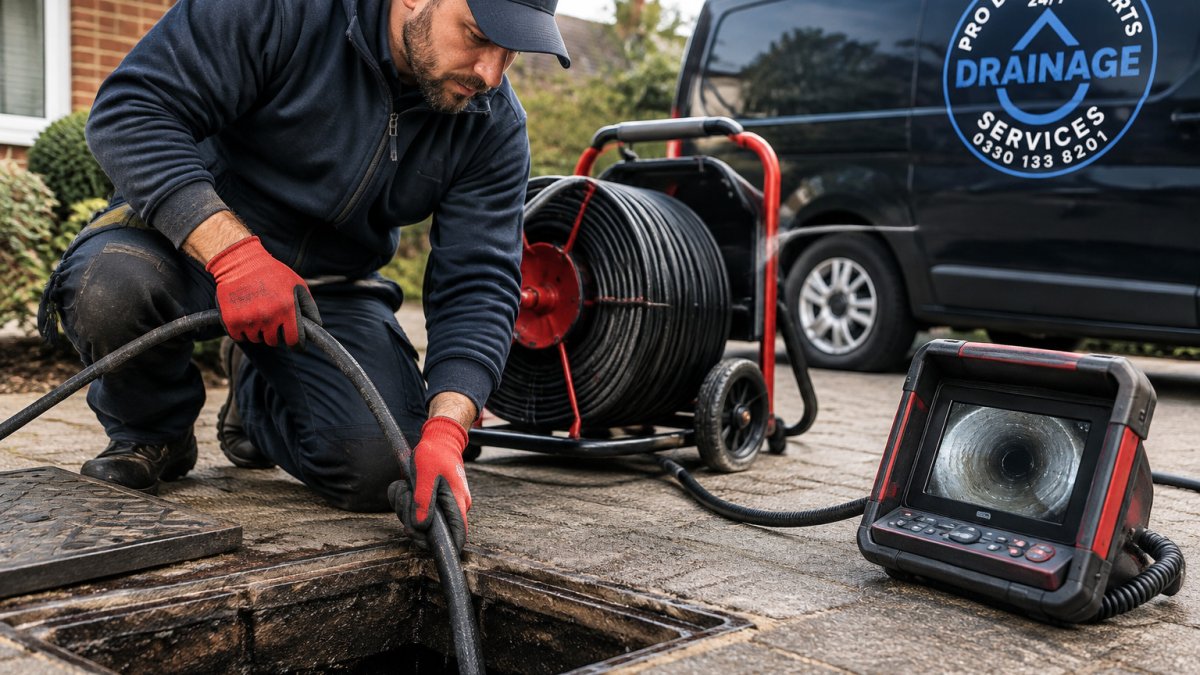
A CCTV drain survey is the step that turns a drain clean from a guess into a verified result. You can read how a camera survey differs from a manual inspection before deciding. It uses a small waterproof camera on a flexible cable, pushed through the pipe from an access point, to film the inside of the run. The operator watches the footage live and records it, noting the distance from the access point to each feature along the way.
The survey answers two different questions. The first is diagnostic: what is causing the blockage, and where exactly is it? The second is verification: after cleaning, is the pipe actually clear, and is there an underlying defect that will cause the problem to return?
What a survey shows
A trained operator looks for specific defects, not just a general impression of the pipe:
- Root ingress, roots entering through joints or cracks, which rodding can cut back but not remove permanently.
- Displaced or open joints, sections where the pipe has moved, allowing soil and silt to enter.
- Cracks and fractures, which may be stable or may be allowing water to escape into the surrounding ground.
- Scale and grease build-up, hard deposits on the pipe wall that reduce capacity even when the drain appears to run.
- Sagging or backfall, sections where the pipe has lost its gradient, so water and debris pool rather than drain away.
- Collapsed sections, where the pipe has failed and clearing alone will not solve the problem.
How a survey verifies a clean
After rodding or jetting, a survey run through the cleared section should show an open pipe with the blockage removed and the pipe walls visible. If the camera still shows standing water, debris or a defect, the clean is not complete. This is the evidence that separates a proper job from a quick one. Ask for the footage and a written report, not just a verbal assurance that the drain is clear.
What a useful report contains
Survey reports vary widely in quality. A report worth paying for should include:
- Video or still images of each defect
- The distance from the access point to each problem, so the location can be found again
- A description of each defect and its severity
- A clear recommendation: monitor, clean again, repair or replace
A report that lists defects without distances or recommendations is hard to act on and hard to compare against a second quote.
When a survey is worth the cost
A survey is most valuable in four situations: when a blockage keeps returning in the same place, when the cause is unclear, before choosing between rodding and jetting on an older pipe, and before buying a property. In each case the survey either prevents a repeat call-out or informs a repair decision that would otherwise be made blind. For a one-off blockage in a modern pipe that clears fully and stays clear, a survey is optional rather than essential.
Watch out: A survey carried out before cleaning can be misleading, because debris and standing water obscure the pipe wall. The most useful sequence is usually clear first, then survey to confirm the result and check for defects.
Pro Drain Experts provides detailed reports and recommendations from its CCTV surveys.
What Happens During a Professional Visit and What It Costs
A professional drain cleaning visit in 2026 should follow a predictable sequence, and knowing it helps you judge whether a contractor is working properly. The exact steps vary with the blockage, but most reputable firms in Ringmer and the wider East Sussex area work through the same broad stages.
1. Pre-visit triage. When you call, the office should ask which fixtures are affected, whether the problem is a single slow drain or multiple backing up, whether there is standing water, and whether any chemical cleaner has already been used. This determines whether the job is routine or an emergency, and whether the technician needs jetting or survey equipment on the van.
2. On-site assessment. The technician should confirm the access points, check the inspection chamber if there is one, and establish the likely location of the blockage before starting. They should explain the proposed method and any alternatives, and confirm the price before work begins.
3. Access and protection. Floor coverings, sheeting and containment are standard on internal work. Where the blockage is in a kitchen or bathroom, the technician should protect surfaces and keep chemical or wastewater contact away from food preparation areas.
4. Clearing. Rodding, jetting or a combination is carried out according to the pipe material, blockage type and access. The technician should stop and reassess if resistance suggests a damaged pipe rather than a soft blockage.
5. Flow test and verification. After clearing, the drain should be flow-tested, typically by running water through the affected fixtures and observing the inspection chamber. A drain that runs freely is the minimum evidence of success. Where the cause was unclear or the blockage recurring, a CCTV survey should follow to confirm the pipe is clear and to identify any defect that would cause the problem to return.
6. Reporting and handover. A useful visit ends with a short explanation of what was found, what was done, and any recommendations. Where a survey was carried out, ask for the footage and a written report. Keep both, as they are useful for insurance claims, landlord records and comparing future quotes.
Watch out: A contractor who clears the drain but does not flow-test it, or who cannot explain what caused the blockage, may be leaving a defect in place that will block again within weeks.
What drives the cost
Drain cleaning prices depend on the job, so pricing will vary with the specific circumstances of each visit. The factors that move the price are consistent: you can also see how CCTV survey reports are priced before committing to a visit.
- Access. A blockage reachable through an external inspection chamber is quicker and cheaper to clear than one requiring internal access or excavation of a buried chamber.
- Method. Manual rodding is generally the least costly method. High-pressure jetting takes longer and uses more equipment. A CCTV survey is an additional service on top of the clear.
- Depth and length of run. A shallow branch pipe is straightforward. A deep main line, a long lateral run, or a blockage beyond a boundary chamber takes more time and equipment.
- Cause. Grease and soft debris clear quickly. Root ingress, scale, silt or a displaced joint take longer and may need jetting plus a survey.
- Timing. Emergency and out-of-hours call-outs carry a premium over planned weekday work. If the blockage is not causing flooding or a health risk, a planned visit is usually cheaper.
- Disposal. Jetting produces wastewater and debris that must be disposed of responsibly. A quote should state whether disposal is included.
Ask for an up-front quote before work begins. Any additional work should be quoted and agreed before it proceeds, not added to the bill afterwards.
Preventing Blocked Drains After Professional Cleaning
Clearing a blockage is only part of the job. Keeping the pipe clear is what stops the problem coming back. Simple habits make a large difference over time.
In the kitchen, scrape plates into the bin before washing, and never pour cooking fat down the sink. Pour cooled fat into a container and throw it away. Use a mesh strainer over the plughole to catch food scraps. In the bathroom, fit a hair catcher in the plughole and clean it regularly.
Periodic flushing with hot water can help move soft build-up through the system. Avoid using strong chemical cleaners as a regular habit, because they can weaken pipe joints over time.
If you have had repeated blockages, consider a planned maintenance schedule with a drainage specialist. A periodic jetting or survey can catch developing problems early, before they become emergencies. This is particularly useful for commercial properties, rental portfolios and older homes with mature trees nearby.
Booking Your Drain Clearance With Pro Drain Experts
Choosing the right method starts with an accurate diagnosis. A quick call to a qualified team can save time, money and damage to your pipework. Pro Drain Experts provides 24/7 emergency call-out services, with same-day response available for urgent blockages across East Sussex, West Sussex and Kent.
Our vans are fully equipped. We have over 20 years of experience in drainage work. Every quote is up front, with no hidden fees.
If your drain is blocked now, call our emergency team and we will tell you what to expect before we arrive. For planned work or a pre-purchase survey, contact us to arrange a convenient time. Either way, you will get a clear recommendation for the method that suits your drain.
Frequently Asked Questions
What methods do professionals use to clear a blocked drain?
Professionals most often use drain rods or augers for simple blockages, high-pressure water jetting for grease and debris build-up, and CCTV inspection to confirm the cause before work starts. The right method depends on the blockage type, the pipe material and how far the obstruction sits from the access point. For a current quote, contact Pro Drain Experts directly.
Is high-pressure water jetting safe for household drains?
High-pressure water jetting is generally safe for sound pipework, but it is not suitable for every drain. Old, cracked or fragile pipes can be damaged by excessive pressure, so an engineer should check the pipe condition first, often with a CCTV survey. Jetting works well on grease, sludge and root-free debris.
Can a CCTV drain survey find the cause of a recurring blockage?
Yes. A CCTV drain survey uses a small camera fed through the pipe to show the blockage, cracks, displaced joints, root ingress or sagging sections that cause repeat problems. Clearing a blockage without finding its cause often leads to the same problem returning within months. Pro Drain Experts provides detailed reports and recommendations from its CCTV surveys.
When should I call a professional for a blocked drain?
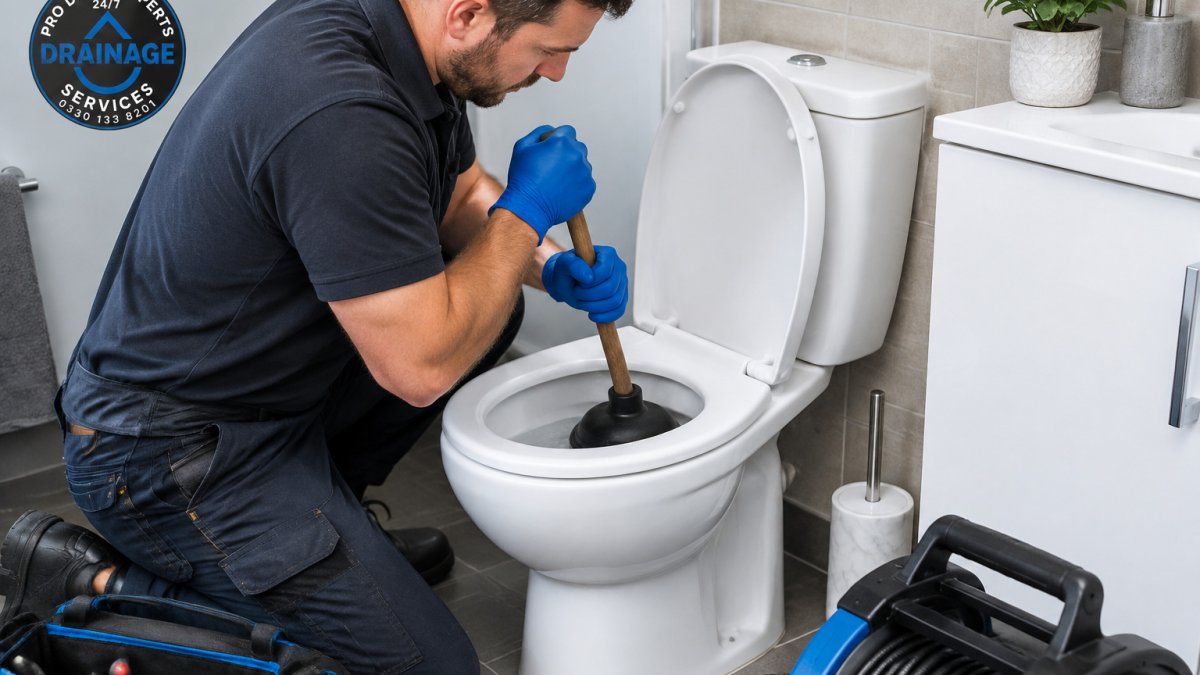
Call a professional if a blockage persists after using a plunger or drain cleaner, if several fixtures back up at once, if there is a smell of sewage or water is rising in lower fittings, or if flooding has already occurred. Chemical cleaners can damage pipes and make later professional work harder, so it is best to avoid repeated use. Pro Drain Experts offers a 24/7 emergency call-out service and a same-day response across East Sussex, West Sussex and Kent.