 how-to
How to Clear Recurring Drain Blockages
Table of Contents
- Why Your Drains Keep Blocking
- Step 1: Identify What's Causing the Blockage
- Step 2: Clear the Blockage Using Proven Methods
- Drain Maintenance Tips for Homeowners
- Signs of a Collapsed Drain and When to Seek Help
- How a CCTV Drain Survey Ringmer Prevents Future Blockages
- Common Mistakes to Avoid When Clearing Blockages
- When to Call a Professional Drainage Company
- Frequently Asked Questions
Last Updated: October 1, 2026
Why Your Drains Keep Blocking
Recurring drain blockages are frustrating. You clear one, and weeks later, another appears. The problem isn't usually bad luck, it's that the underlying cause was never properly addressed.
Most homeowners treat blockages as one-off emergencies. They call someone out, the drain flows again, and they forget about it until the next crisis. But drains that block repeatedly signal something deeper: debris buildup, tree root intrusion, or structural damage inside the pipe.
Homeowners who understand what causes recurring drain blockages are far more likely to prevent them. The good news is that identifying the root cause and taking action stops the cycle.
Common causes include:
- Hair and soap residue accumulating over time
- Grease and fat solidifying inside pipes
- Tree roots penetrating older clay pipes
- Collapsed or misaligned pipe sections
- Mineral deposits narrowing the pipe diameter
Understanding which of these applies to your home is the first step toward a permanent fix.
Step 1: Identify What's Causing the Blockage
The key to stopping recurring drain blockages is knowing exactly what you're dealing with. Different causes demand different solutions.
Start with the obvious. If the blockage happens only in one sink or toilet, the problem is likely local, hair, soap, or food waste near that drain. If multiple drains back up simultaneously, the issue is deeper in your main drainage system.
Check for patterns. Does the blockage happen after heavy rain? That suggests water is entering the system from outside, or pipes are damaged and allowing soil in. Does it occur after you've done laundry or used lots of water? You may have grease or lint buildup.
Look for warning signs:
- Slow drainage that gradually worsens
- Gurgling sounds from drains or toilets
- Water pooling near outdoor drain covers
- Unpleasant smells coming from drains
- Soggy patches in your garden or yard
These clues help narrow down whether your recurring drain blockages stem from simple debris or something more serious like a collapsed pipe.
Step 2: Clear the Blockage Using Proven Methods
Once you know what you're dealing with, it's time to clear the blockage. There are several effective methods, depending on the severity and location of the recurring drain blockages.
Using a plunger
A plunger is your first line of defence. It works best for blockages close to the drain opening.
Fill the sink or tub with enough water to cover the plunger cup. Place the plunger over the drain and push down and pull up vigorously for 15-20 seconds. The suction and pressure can dislodge debris blocking recurring drain blockages near the surface.
For toilets, use a dedicated toilet plunger with a flange. The technique is the same: create a seal and work the plunger up and down for 20 seconds.
If water drains after plunging, you've solved the immediate problem. If not, move to the next method.
Removing debris manually
For blockages you can see, manual removal is quick and often effective.
Put on rubber gloves and remove visible hair, soap, or debris from the drain opening. Many blockages sit just below the surface where you can reach them with your fingers or a simple wire hook.
For shower drains, unscrew the cover and pull out accumulated hair. For sink drains, use a wire coat hanger bent into a hook to fish out debris.
This method stops many recurring drain blockages before they worsen.
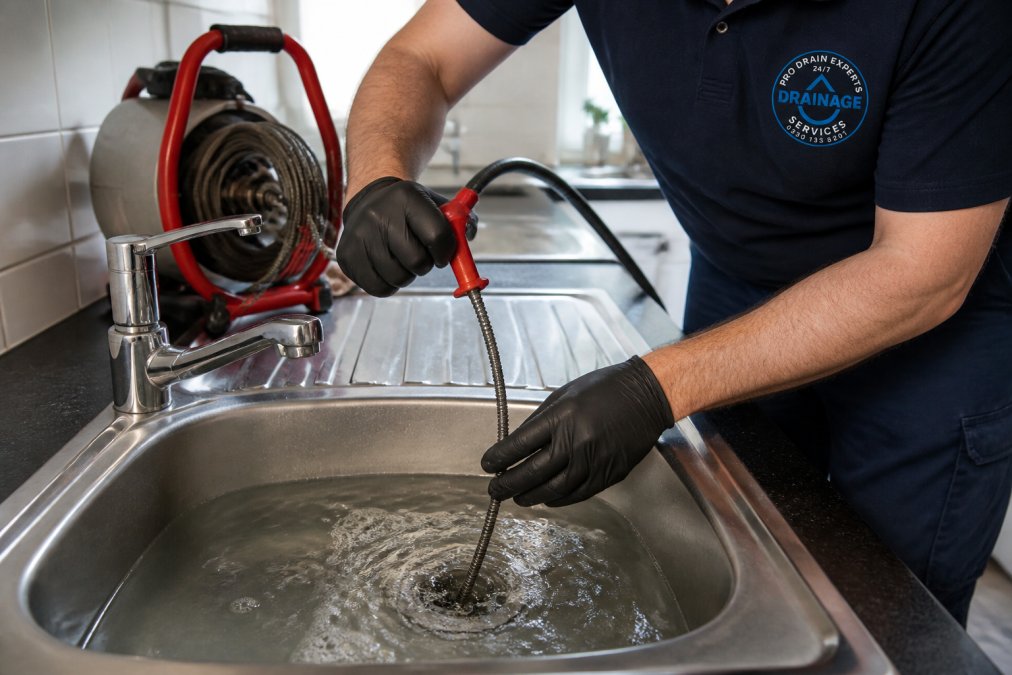
Using drain rods or a plumbing snake
Drain rods and plumbing snakes reach deeper blockages that plungers can't shift.
A plumbing snake is a flexible cable with a handle. Feed it down the drain while turning the handle. The rotating action breaks up blockages and the cable pushes debris through.
Drain rods work similarly but are longer and stiffer, designed for outdoor drains and main soil pipes.
Insert the snake or rod slowly. Don't force it, if you feel resistance, twist gently to break up the blockage rather than pushing harder. Once the blockage clears, run hot water through the drain for 30 seconds to flush debris away.
Both methods are effective for recurring drain blockages caused by grease, hair, or accumulated silt. However, they won't work if the blockage is caused by a collapsed pipe or tree roots, that requires professional help.
Drain Maintenance Tips for Homeowners
Prevention is far easier than dealing with recurring drain blockages repeatedly. Simple habits stop most blockages from forming.
Use drain guards. Install mesh screens over sink and shower drains to catch hair and debris before they enter the pipes. Empty them weekly.
Never pour grease down drains. Grease solidifies as it cools and builds up inside pipes. Let grease cool in a container and throw it in the bin instead.
Flush drains regularly. Once a week, pour boiling water down each drain. This clears minor buildup and prevents recurring drain blockages from developing.
Avoid flushing non-essentials. Toilets are designed for human waste and toilet paper only. Wet wipes, nappies, and sanitary products cause blockages even though they're marketed as flushable.
Clear gutters and outdoor drains. Leaves and debris block external drains and can lead to water backing up into your home.
Run hot water after use. After washing dishes or bathing, run hot water through the drain for 10-15 seconds. This helps clear grease and debris before they solidify.
These habits take minimal effort but prevent most recurring drain blockages.
| Maintenance Task | Frequency | Benefit |
|---|---|---|
| Empty drain guards | Weekly | Stops hair and debris entering pipes |
| Pour boiling water down drains | Weekly | Clears minor buildup |
| Check outdoor drains | Monthly | Prevents water backing up |
| Professional drain inspection | Every 2-3 years | Catches problems early |
Signs of a Collapsed Drain and When to Seek Help
Not all recurring drain blockages can be fixed with a plunger or snake. Some indicate a collapsed drain or serious structural damage.
Watch for these warning signs:
- Blockages that return within days or weeks despite clearing
- Multiple drains backing up at the same time
- Foul sewage smells inside or outside your home
- Cracks appearing in walls or foundations
- Soggy patches in your garden that don't dry out
- Rodent or insect problems linked to drainage
If your home is older and you've had recurring drain blockages for years, the pipes may be deteriorating. Clay pipes used in homes built before the 1970s are prone to cracking and root intrusion.
A professional drainage company can diagnose the problem accurately.
How a CCTV Drain Survey Ringmer Prevents Future Blockages
What a CCTV survey reveals:
- Blockages and their exact location
- Cracks, fractures, or collapsed sections
- Tree root intrusion
- Misaligned or offset pipe joints
- Grease or mineral buildup
- Pipe diameter and material
For homeowners in Ringmer and the surrounding areas, a CCTV drain survey is particularly valuable. The region has many older properties with clay pipes that are susceptible to root damage and cracking. A professional survey can identify these issues before they cause serious problems.
Common Mistakes to Avoid When Clearing Blockages
Even with the best intentions, homeowners often make mistakes that worsen recurring drain blockages or damage pipes.
When to Call a Professional Drainage Company
Some blockages are beyond DIY fixes. Knowing when to call for help saves time, money, and stress.
Call a professional if:
- The blockage affects multiple drains simultaneously
- DIY methods haven't worked after 24 hours
- You suspect a collapsed drain or tree root damage
- You see sewage backing up into your home
- You notice cracks in walls or soggy patches in your garden
- The blockage returns repeatedly (recurring drain blockages)
- You're buying a property and want a pre-purchase survey
Frequently Asked Questions
Why do my drains keep blocking even after I have cleared them?
Recurring blockages usually indicate an underlying issue beyond surface debris. Common causes include tree roots penetrating pipes, partial clogs that reform, grease buildup inside pipes, or structural damage like collapsed sections. A professional CCTV drain survey can identify the root cause and prevent repeated problems. Without addressing the underlying issue, you'll continue clearing the same blockage every few months.
What are the signs of a collapsed drain I should watch for?
Signs of a collapsed drain include persistent foul odours, multiple drains backing up simultaneously, patches of unusually lush grass or wet soil in your garden, cracks in your property's foundation, and drains that block frequently despite regular clearing. If you notice these signs, stop attempting DIY fixes and contact a professional immediately. A collapsed drain requires specialist repair and continuing to use the system can worsen structural damage.
How does a CCTV drain survey help prevent recurring blockages?
A CCTV drain survey uses a small camera to inspect the entire length of your pipes, revealing blockages, cracks, misaligned joints, tree root intrusion, and other damage invisible from above ground. This diagnostic clarity lets you address the actual problem, whether that's removing tree roots, repairing collapsed sections, or adjusting your habits, rather than treating symptoms. Most recurring blockages stop once the underlying cause is identified and fixed.
What household items should never go down the drain?
Never flush or drain cooking oils, fats, and grease, as they solidify inside pipes. Avoid putting nappies, wet wipes, sanitary products, cotton buds, and dental floss down toilets. Don't drain food scraps, coffee grounds, hair, or soap residue in large quantities. These items accumulate and trap other debris, creating blockages. Using drain guards and disposing of waste properly is the simplest way to prevent recurring problems and protect your drainage system.
Recurring drain blockages disrupt your home and your peace of mind. If you've cleared the same blockage multiple times, the root cause needs professional attention. Pro Drain Experts has over 20 years of experience diagnosing and fixing drainage problems across East Sussex, West Sussex, and Kent. We offer same-day response, detailed CCTV surveys, and transparent pricing. Contact Pro Drain Experts today for a professional assessment and permanent solution to your drainage issues.