 How-to
Is Drainage Repair Price Transparency Really Possible?
Quick Summary
Drainage repair price transparency means you can see what the work will cost before it starts, what that figure includes, and what could change it. Because the fault is underground, a fair quote shows likely scenarios and assumptions rather than one fixed number.
- A transparent quote lists call-out, labour, equipment, materials and reinstatement as separate lines.
- A CCTV survey shows the actual fault and helps you compare quotes on the same evidence.
- Ask each contractor to state their scope and assumptions in writing before comparing prices.
- Check the exclusions and ask what extra costs would apply if more damage is found on site.
- Confirm the diagnosis before agreeing a repair, since a misdiagnosed fault is usually revised upwards.
Table of Contents
- What Drainage Repair Price Transparency Actually Means
- What Affects Drain Repair Costs
- CCTV Drain Survey Cost and When You Need One
- Collapsed Drain Repair Cost: Why Estimates Vary So Widely
- What an Itemised Drainage Quote Should Include
- Drain Repair Quote Checklist: How to Verify an Estimate Step by Step
- Insurance, Landlord Duties and Consumer Protection
- Getting an Upfront Quote for Your Drain Repair in Ringmer
- Frequently Asked Questions
What Drainage Repair Price Transparency Actually Means
Last Updated: November 6, 2026
We know that cost is the first thing most people want to pin down when a drain fails. Drainage repair price transparency means you can see what the work will cost before it starts, what that figure includes, and what could change it. It does not mean every job has a fixed price, because a drain is buried and you cannot see the fault until someone looks.
That gap between what you can see and what is underground is the real source of confusion. A fair quote separates the parts you can predict from the parts you cannot. The predictable parts include the call-out, the labour rate and the method. The uncertain parts include how far the blockage runs and whether the pipe is cracked or collapsed.
Here is what a transparent quote should give you:
- A clear call-out charge, stated in pounds
- The labour and equipment costs, listed separately
- The repair method, and why it was chosen
- Any conditions that would change the price
- What happens if the team finds something worse on site
Most disputes come from the last point. A contractor who says "we'll see once we're in" without explaining the options leaves you exposed. We think the better approach is to set out the likely scenarios in writing before work starts, so you know the range rather than a single number that could fall apart.
Transparency is possible, but it depends on the quote being honest about its assumptions. Anyone promising one exact price for an unseen underground fault is guessing, and you should ask how they reached it.
What Affects Drain Repair Costs
Several factors decide the final figure, and most of them are fixed before a spade touches the ground. Knowing them lets you read a quote with confidence rather than suspicion.
The main drivers are:
- Depth and length of the affected run
- Access to the drain, including paving, patios and tight spaces
- Type of damage, such as a blockage, a crack or a collapse
- Repair method, whether dig-based or no-dig
- Time of day, since out-of-hours work carries a higher rate
- Reinstatement, meaning restoring the surface afterwards
A simple blockage usually costs less to clear than a cracked pipe under a driveway. When you compare quotes, make sure each one covers the same stages. A low figure that leaves out reinstatement is not cheaper if you end up paying for it later.
Minor blockages versus structural failures
A minor blockage is usually a matter of clearing debris, grease or roots from the line. Jetting or rodding often solves it in one visit, and the cost stays modest because little digging is needed.
A structural failure is different. A cracked, displaced or collapsed pipe needs the damaged section repaired or replaced, and that takes more time, more materials and often more excavation. The price rises accordingly.
Watch out: a quote that treats a structural fault as a simple blockage will almost always be revised upwards on site. Ask the contractor to confirm the diagnosis with a camera survey before agreeing the repair.
Access, excavation and no-dig options
Access shapes both cost and disruption. If the drain runs under a new patio, excavation means lifting it, storing the slabs and relaying them afterwards. That work adds labour and reinstatement costs that a clear garden lawn would not.
No-dig options, such as pipe relining, avoid much of that disruption. They are not always cheaper, because the equipment and materials cost more, but they can cut out the reinstatement bill entirely. The right choice depends on the pipe's condition and where it runs. A good quote explains which method it recommends and why, and what the alternative would cost.
CCTV Drain Survey Cost and When You Need One
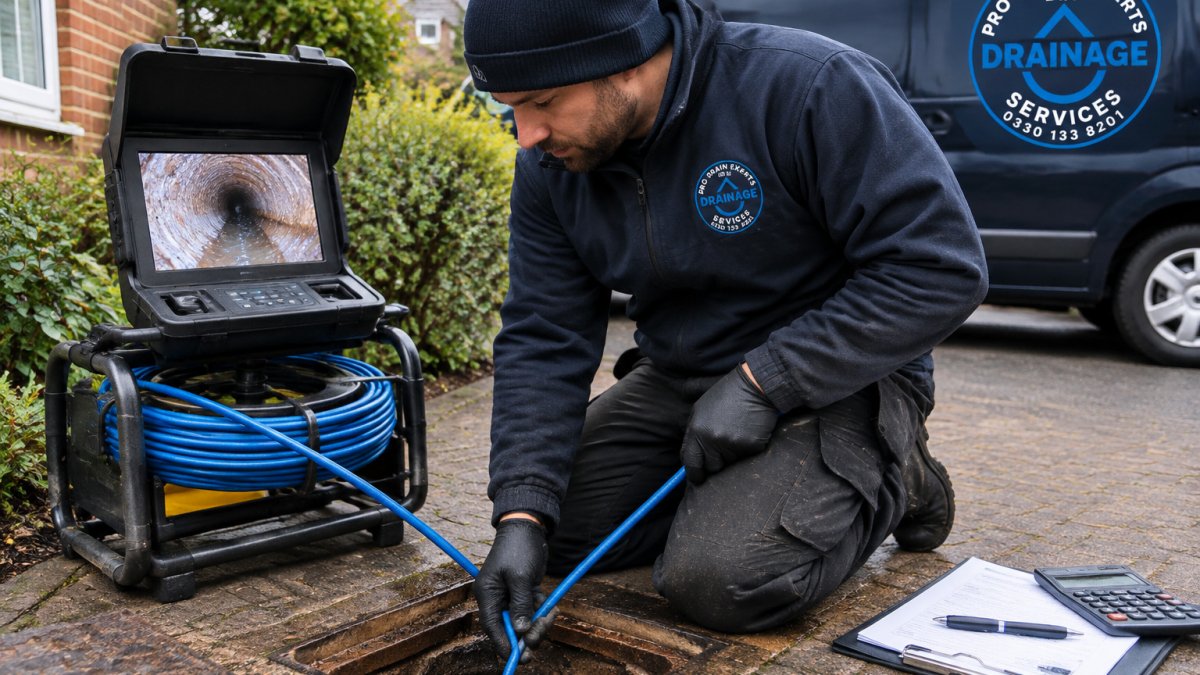
A CCTV drain survey sends a camera down the pipe to show the actual condition of the line. It is the most reliable way to find the fault before committing to a repair method, and it stops you paying to dig up the wrong section.
You usually need a survey when:
- A blockage keeps returning after clearing
- You are buying a property and want to check the drains
- Damp, subsidence or unexplained smells point to a leak
- A contractor's diagnosis is unclear or differs from another's
Ask for a written report with footage or stills, not just a verbal summary. The report is what lets you compare quotes fairly, because each contractor is working from the same evidence.
Pro Drain Experts provides detailed reports and recommendations from CCTV surveys, so you can see what the fault is before deciding what to do about it. For current survey prices, contact us for a quote.
Collapsed Drain Repair Cost: Why Estimates Vary So Widely
Two contractors can quote very different figures for the same collapsed drain, and both can be reasonable. The difference usually lies in what each has assumed.
A collapsed drain means the pipe has lost its shape or its section has fallen away. Repairing it can mean replacing a short length, or the whole run between two access points. The length, depth and ground conditions decide which applies. A quote for a short section in soft soil will differ sharply from one for a long run under concrete.
Common reasons for the gap include:
- Different assumptions about how far the collapse extends
- Different views on whether to dig or reline
- Whether reinstatement is included
- Whether the price allows for unexpected ground conditions
You can narrow the gap by asking each contractor to state their assumptions in writing. If one quote assumes a 2-metre repair and another assumes 8 metres, the difference is not about price but about scope. Ask for the scope to be agreed first, and then compare like with like.
What an Itemised Drainage Quote Should Include
An itemised quote breaks the job into parts you can check. Vague lump sums hide the details that matter, so ask for a breakdown before you agree. The table below shows the categories a transparent quote should separate, with a worked example based on a typical repair in Ringmer: a cracked 110mm PVC pipe under a block-paved driveway, roughly 3 metres long and 1.2 metres deep, found by CCTV survey after a repeat blockage.
| Item | What it covers | Example basis | Example amount (GBP) |
|---|---|---|---|
| Call-out and attendance | Van, crew, travel to site | Fixed charge per visit | 90 |
| CCTV survey and report | Camera run, footage, written report | Per run, up to 30m | 180 |
| Labour | Time on site for excavation and repair | Hourly rate, two-person crew | 55 per hour per person |
| Equipment | Jetting, excavation tools, dewatering pump | Per day or per job | 120 per day |
| Materials | Pipe, fittings, bedding, jointing | Per unit or per metre | 18 per metre of 110mm pipe |
| Excavation and access | Lifting and storing paving, digging, shoring | Per square metre or per cubic metre | 85 per square metre of paving |
| Reinstatement | Relaying paving, compacting, waste removal | Per square metre | 65 per square metre |
| VAT | Where applicable | Stated separately at the prevailing rate | 20% on taxable items |
A transparent quote does not just list these lines; it states the assumptions behind them. In the example above, the assumptions might be: the repair is a single 3-metre section, the paving is standard block and can be reused, the ground is firm and free of standing water, and the work is carried out on a weekday during normal hours. Each assumption is a condition that, if wrong, changes the price.
Exclusions matter just as much. The same quote should say clearly what is not included: making good to internal floors or walls if the drain runs under the house, tree root removal beyond the immediate repair section, traffic management or parking suspensions, and any repair to a shared drain that serves a neighbouring property. If an exclusion is listed, ask what it would cost if it turns out to be needed, so you have a range rather than a surprise.
Check the quote against this list. If a line is missing, ask whether it is included or excluded. A quote that shows a single lump sum for "drain repair" gives you nothing to compare against another contractor, and nothing to point to if the final bill differs. A quote that separates inspection, labour, materials, excavation, reinstatement and VAT lets you see where the money goes and challenge anything that looks out of step.
Also look for the terms that matter after the work. Does the quote say whether the repair is guaranteed, and for how long? Does it say what evidence you will receive, such as before-and-after footage and a completion report? These details matter as much as the price, because they are what you rely on if something goes wrong later.
Watch out: a quote that lists materials "as required" or labour "to complete" without a rate or a cap is not itemised in any useful sense, ask for the rate and the assumed quantity in writing before you approve.
Drain Repair Quote Checklist: How to Verify an Estimate Step by Step
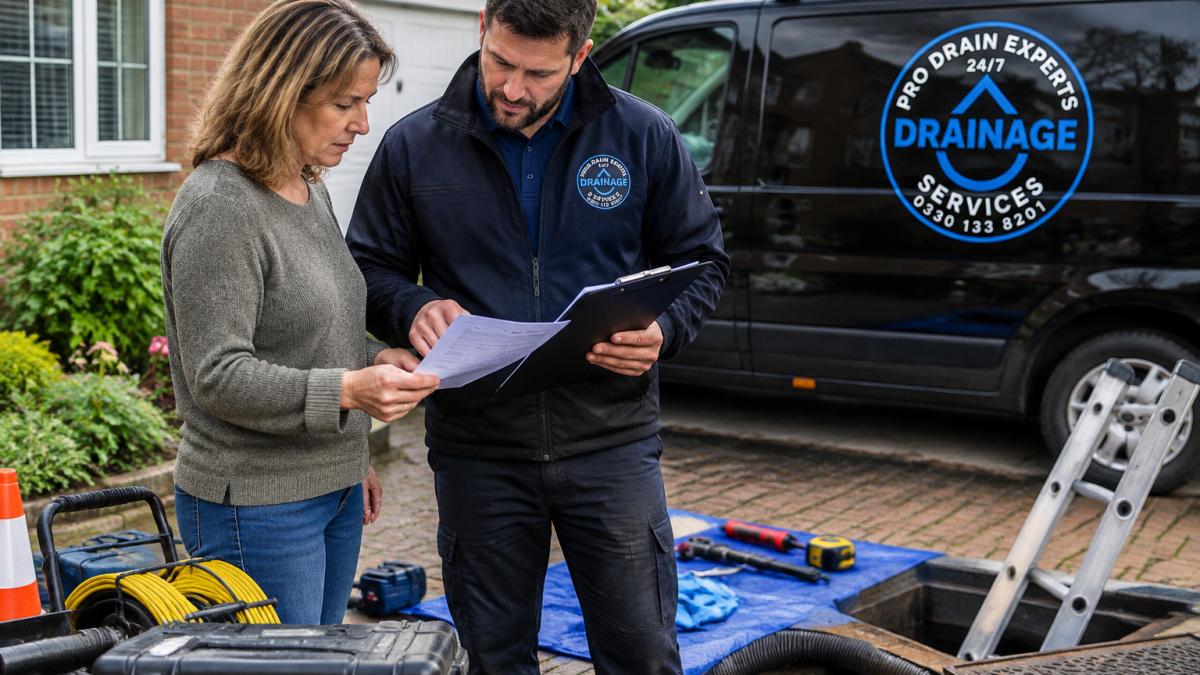
Use this checklist when a quote arrives. It takes a few minutes and can save you from an unexpected bill.
- Confirm the diagnosis. Has the fault been seen on camera, or is it a guess?
- Check the scope. Does the quote state the length and location of the work?
- Read the method. Is the repair dig-based or no-dig, and why?
- Look for itemisation. Are labour, equipment, materials and reinstatement listed separately?
- Find the exclusions. What is not included, and when would extra costs apply?
- Ask about variations. What happens if the team finds more damage on site?
- Compare like with like. Do the quotes cover the same stages and the same length?
- Check the written terms. Is everything agreed in writing before work starts?
Pro Drain Experts offers up-front pricing with no hidden fees. A good contractor will not object when you ask these questions.
Insurance, Landlord Duties and Consumer Protection
Who pays for a drain repair depends on who owns the property and what the policy covers. Landlords and tenants, and homeowners, each have different responsibilities.
Homeowners are usually responsible for drains serving only their own property, although shared drains can complicate matters. Buildings insurance sometimes covers sudden damage, but usually not wear, poor maintenance or blockages caused by tree roots. Check your policy wording before assuming cover.
Landlords generally must keep the drainage in a safe, working condition (Private renting: Repairs). Tenants should report problems promptly, and both sides benefit from a written record of the fault and the repair. If a repair goes wrong, put your complaint in writing and keep copies of the quote, the report and any photographs.
For disputes you cannot resolve directly, the contractor's complaints procedure is the first step. If that fails, you can seek help from trading standards or a consumer advice service. Keeping a clear paper trail makes every one of these routes easier.
Getting an Upfront Quote for Your Drain Repair in Ringmer
If you are comparing prices in and around Ringmer, it helps to know which parts of a quote are local and which are standard across the trade.
Access is often the biggest variable in a drainage job, since properties may have drives, gravel forecourts, mature gardens or shared access tracks. If the drain runs under a gravel drive, reinstatement means re-grading and re-compacting the surface, not simply relaying paving. If the only access is a narrow lane or a shared track, the crew may need a smaller excavation unit and more time, both of which appear in the labour and equipment lines. A quote that assumes pavement-side access when your drain is at the back of a long garden is not comparable to one that has allowed for it.
Property type and age matter too. Older cottages and converted farm buildings around Ringmer often have clay or pitch-fibre drains rather than modern PVC, and those materials change the repair method and the materials cost. A no-dig reline may be the better option for a clay run under a mature garden, but the equipment and resin cost more than a short dig. The right quote explains which method it assumes and why, and what the alternative would cost.
Travel and contractor availability are local realities. But out-of-hours and emergency call-outs carry a higher rate wherever you are, and in a rural area the travel time to a remote property can add to the bill. Ask whether the call-out charge is fixed or includes travel, and whether the rate changes at weekends or bank holidays.
A word on what local estimates can and cannot tell you. A Ringmer-specific range is useful for budgeting, but it is not a guaranteed price. The only figure that means anything is the one written on a quote after the fault has been surveyed. Treat any published range, including ours, as a starting point for the conversation, not a promise.
If you need a drain repair, the fastest way to get clarity is to start with an inspection. Pro Drain Experts works across East Sussex, West Sussex and Kent, and we provide 24/7 emergency call-out services, same-day response and fully equipped vans. Contact us for an up-front quote with no hidden fees.
Contact Pro Drain Experts to arrange a survey and a written quote. Ask us to set out the likely scenarios and the local access factors we have allowed for, so you know the range before work begins and can decide with confidence.
Frequently Asked Questions
What should a transparent drainage repair quote include?
A transparent drainage repair quote should list each element separately: the call-out or survey charge, labour, materials, equipment, and any excavation or reinstatement work. It should state the repair method proposed, the access assumptions behind the price, and whether VAT is included. It should also name the exclusions, such as work found to be needed only after the initial inspection, and state what happens if the scope changes. A quote that gives a single lump sum with no breakdown makes it hard to compare offers or see where extra charges might arise. Ask for the quote in writing before any work starts.
Do drainage companies charge for CCTV surveys?
Many drainage companies charge separately for a CCTV drain survey, while some include it in the repair quote if the survey is needed to diagnose the problem. Ask whether the survey fee is credited against the repair if you go ahead, and whether you receive a written report with footage and recommendations. A survey is often the most useful way to confirm the cause of a recurring blockage before committing to repair work, so it is worth asking for the cost upfront. Pro Drain Experts can advise on current survey pricing when you request a quote.
How can I check whether a drain repair quote is fair?
Compare at least two written quotes that describe the same scope of work, then check whether each one itemises labour, materials, equipment and access. Look for stated assumptions about pipe depth, length and ground conditions, because these drive most price differences. Ask each contractor what would change the price, and whether they will pay for or absorb any unexpected findings. A fair quote is clear about its assumptions and explains any difference from competing offers rather than simply being cheaper or higher.
What should I ask a drainage company before approving repairs?
Ask what the repair method is, whether it is excavation or a no-dig option such as relining, and what evidence you will receive afterwards, such as CCTV footage of the completed repair. Confirm the call-out and out-of-hours charges, whether VAT is included, and how any additional work will be priced and approved before it is carried out. Ask whether the work carries a guarantee and what the dispute process is if the problem returns. Get the answers in writing before you approve the job.