 ultimate-guide
Preventative Drainage Maintenance for Restaurants: A Guide
Last Updated: October 28, 2026
Quick Summary
Preventative drainage maintenance for restaurants means stopping grease, food solids and other waste from building up in pipes before they block. It centres on keeping the grease trap clean and recorded, using daily, weekly and monthly checks, training staff to keep fats out of sinks, and arranging professional cleaning on a schedule set by actual fill rates.
- Restaurant drains fail more often because hot grease cools and sets in pipes further along.
- Grease, food solids, starch and wet wipes are the main causes of kitchen blockages.
- Check the grease trap lid is sealed and not overflowing every day.
- Keep a written record of every grease trap clean for inspectors and planning.
- Consider a CCTV drain survey if blockages keep recurring in the same place.
Table of Contents
- Why Restaurant Drains Fail More Often Than Other Commercial Drains
- What Causes Blocked Drains in Commercial Kitchens
- Warning Signs of a Blocked Restaurant Drain
- Restaurant Grease Trap Maintenance: Cleaning and Record-Keeping
- How Often Should a Restaurant's Drains Be Cleaned?
- Commercial Kitchen Drainage Checklist for Daily, Weekly and Monthly Tasks
- How to Prevent Grease From Blocking Your Drains
- What a Restaurant Drainage Maintenance Plan Should Include
- Who Is Responsible for Drains in a Commercial Property
- When to Arrange a CCTV Drain Survey for Commercial Properties
- What Staff Should Do When a Restaurant Drain Blocks
- Preventative Drainage Maintenance and Health and Safety Auditing
- Common Mistakes Restaurants Make With Drain Maintenance
- Booking Your Next Drain Inspection With Pro Drain Experts
- Frequently Asked Questions
Restaurant drains fail far more often than most commercial drains, and the cause is rarely bad luck. Grease, food solids and heavy daily use build up in pipes that were rarely designed for kitchen waste. This guide sets out what preventative drainage maintenance involves in practice for kitchens across East Sussex, West Sussex and Kent.
We run a 24/7 emergency service. Below, we cover the common causes of blockage, the warning signs to watch for, a practical routine, and how to decide when a camera survey is worth booking.
Why Restaurant Drains Fail More Often Than Other Commercial Drains
Restaurant drains take a different load from almost every other commercial building. Office toilets and staff kitchens handle small volumes of water and very little solid matter. A busy kitchen pours hot fat, food scraps, starch and detergent into the same pipework for twelve or more hours a day.
The problem is temperature as much as volume. Hot grease stays liquid while it runs through the kitchen sink, then cools and sets once it reaches the cooler pipes further along. That is why a drain that seemed fine at close can be fully blocked by the next lunchtime service. Many restaurant owners find that the blockage appears suddenly, even though the build-up behind it was gradual.
Usage patterns make this worse. Peak service creates surges of water and waste that the pipework has to clear in a short window, and any slow section becomes the point where material settles.
What Causes Blocked Drains in Commercial Kitchens
Most kitchen blockages come from a small number of causes, and knowing them tells you where to focus your maintenance.
- Fats, oils and grease (FOG): Cooking oil and animal fat solidify inside pipes, coating the walls and catching other debris.
- Food solids: Scraps, rice, pasta, coffee grounds and vegetable peelings that go down the sink rather than into a bin or strainer.
- Starch and flour: These form a paste when mixed with water and grease, which hardens quickly in cooler sections.
- Wrong materials: Wet wipes, sanitary products, cloths and packaging can snag and trap everything else.
- Poor falls: Pipework laid with too little fall lets solids settle rather than wash through, and this is often a structural issue rather than a cleaning one.
- Tree roots and external damage: Less common in kitchens, but a real cause in older buildings with clay or cast-iron drains.
A common mistake is treating each blockage as a separate event.
Warning Signs of a Blocked Restaurant Drain
Early warning signs are easy to dismiss during a busy service, but they are the best chance to avoid a full closure.
- Water draining slowly from sinks, dishwashers or floor gullies, especially at peak times
- Gurgling noises from drains or toilets when another fixture is used
- Smells of drains or sewage in the kitchen or front-of-house areas
- Greasy residue or standing water around gullies and grease traps
- Water backing up into a second basin when the first is emptied
- A grease trap that fills faster than your cleaning schedule allows
If you see any of these, do not wait for the next scheduled clean.
Restaurant Grease Trap Maintenance: Cleaning and Record-Keeping
The grease trap, or grease interceptor, is your first line of defence. It holds back fat and solids before they reach the main drain, which is why its condition has such a large effect on everything downstream.
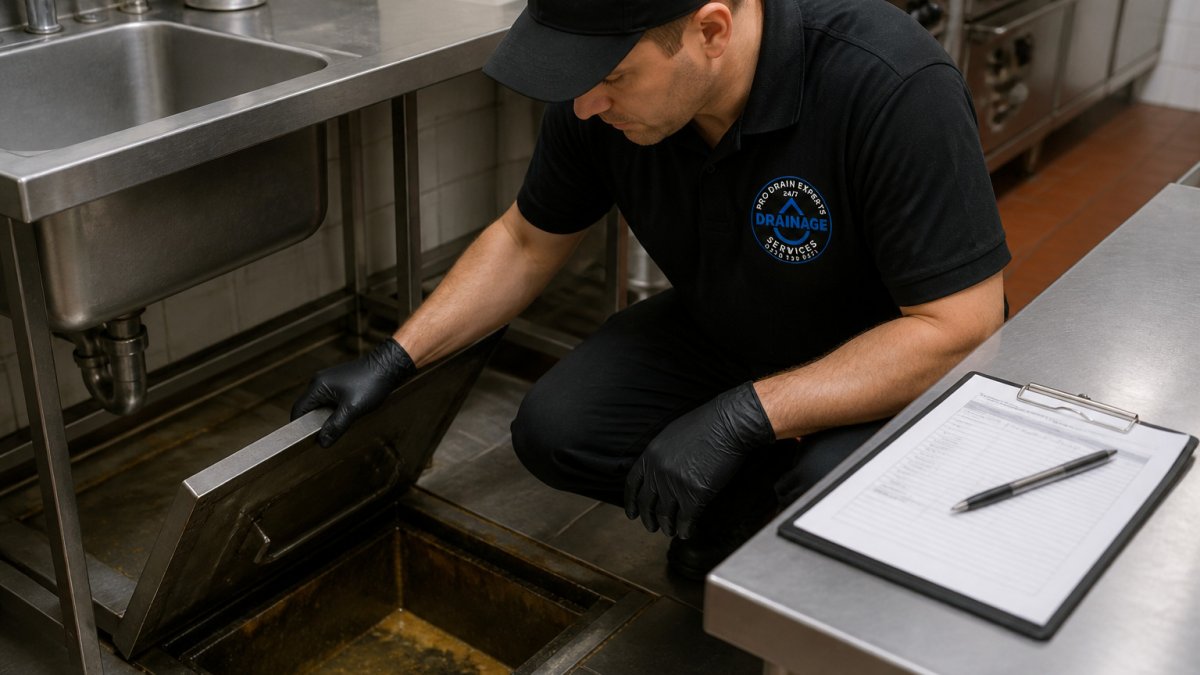
Regular cleaning means removing the accumulated fats, oils and solids, checking the baffles and outlet, and making sure the unit is not overfilled. Cleaning frequency depends on your kitchen's volume and menu. A high-output frying operation will fill a trap far faster than a café serving sandwiches.
Keep a written record of every clean. Note the date, the contractor, what was removed and any faults found. This record protects you if an inspector asks questions, and it gives you a clear pattern to work from when deciding whether to clean more often.
How Grease Trap Cleaning Fits Into Your Routine
A grease trap should never be left to a single annual visit. Kitchen staff can do simple checks each day, such as confirming the lid is sealed and the trap is not visibly overflowing. Professional cleaning then runs on a schedule set by actual fill rates, not a calendar date chosen at random. Tie the cleaning to your records, and adjust it when your menu or covers change.
The grease trap is the first line of defence, and its upkeep follows a simple daily-to-scheduled pattern.
| Task | Frequency | Purpose |
|---|---|---|
| Check the lid is sealed | Daily | Stops odours and spills |
| Check trap is not overflowing | Daily | Catches build-up early |
| Professional cleaning | Set by fill-rate records | Removes fats, oils and solids |
| Keep a written record of each clean | Every clean | Evidence for inspectors |
How Often Should a Restaurant's Drains Be Cleaned?
There is no single correct answer, because frequency depends on how much grease and solid waste your kitchen produces. A heavy-frying takeaway may need its trap and drains cleaned far more often than a restaurant with a light menu.
Commercial Kitchen Drainage Checklist for Daily, Weekly and Monthly Tasks
A simple checklist makes maintenance a routine rather than a reaction. Adapt it to your premises, and make sure someone is named as responsible for each task.
Daily
- Scrape plates and pans into the bin before washing up
- Use strainers in every sink and empty them into the waste bin
- Check the grease trap lid is sealed and the trap is not overflowing
- Run hot water through the sinks at the end of service
- Note any slow drainage in the log
Weekly
- Clean floor gullies and drain covers
- Inspect the grease trap for odours, leaks and visible build-up
- Check the dishwasher filters and drain connections
- Review the maintenance log for repeated issues
Monthly
- Arrange professional grease trap cleaning on your schedule
- Check external manholes and inspection chambers for debris
- Test drainage under load during a quiet period
- Review the cleaning frequency against the records
How to Prevent Grease From Blocking Your Drains
Prevention is about stopping grease entering the drain in the first place, rather than fighting it afterwards.
Collect used cooking oil in sealed containers and arrange for it to be collected, rather than pouring it down any sink or drain (Disposal of fats and oils). Wipe pans and grills into the bin before they go to the wash area. Scrape grease from plates and trays with a spatula so it does not enter the sink. Train staff on these habits, because a single shift of careless pouring can undo weeks of good maintenance.
Consider the temperature of your wash water as well. Very hot water can help move grease through the first section of pipe, but it does not clear grease that has already cooled further along. Pair hot flushing with proper trap maintenance rather than relying on it alone.
What a Restaurant Drainage Maintenance Plan Should Include
A written plan turns the advice above into something your team can follow and an inspector can review. It should cover:
- A named person responsible for drainage in the kitchen and in each front-of-house area
- The daily, weekly and monthly checklist tasks, with who does each one
- A grease trap cleaning schedule, set by the fill-rate records
- Planned professional drain jetting, at least annually
- A logbook of cleans, repairs, defects and contractor visits
- A clear escalation route for slow drainage or a suspected blockage, including out-of-hours contact details
- A review date, at least once a year, to update the plan as your menu or covers change
Who Is Responsible for Drains in a Commercial Property
Responsibility can be split, which is one reason drains get neglected. In many commercial properties the tenant is responsible for the drains serving only their unit, while the landlord or managing agent may be responsible for shared or external drainage. The lease or tenancy agreement usually sets out the division, and it is worth checking before a problem arises.
Where responsibility is unclear, agree it in writing with your landlord or managing agent. Keep records of who was told about a fault and when. If you are unsure whether a problem is yours or theirs, a CCTV survey can show where the blockage or defect sits.
When to Arrange a CCTV Drain Survey for Commercial Properties
A CCTV drain survey uses a camera to look inside the pipework. The survey produces a report with recommendations.
Consider a survey if you have repeated blockages in the same place, if drainage is slow despite regular cleaning, if you are buying or leasing a commercial property, or if the drain history is unclear.
Transparent pricing matters when you are deciding whether a survey is worth it. Our article on CCTV drain survey reports: transparent pricing explained sets out how these surveys are priced. If you are ready to book, our CCTV drainage surveys service page describes what we offer.
What Staff Should Do When a Restaurant Drain Blocks
When a drain blocks during service, the first priority is to stop the water getting worse. Staff should stop using the affected sink, toilet or dishwasher, and avoid pouring anything further down it. If water is backing up onto the floor, move customers and staff away from the area and clear the floor for safety.
Next, tell the manager and log the time and location of the problem. Call your drainage contractor, and keep the area closed until the drain is confirmed clear.
Preventative Drainage Maintenance and Health and Safety Auditing
Drainage problems are not only an operational headache. Keeping a clean record of your drainage maintenance gives you evidence that the premises are being looked after.
When preparing for an audit, check that your grease trap records are up to date, that the logbook shows regular checks, and that any defects found have been repaired or are scheduled.
Common Mistakes Restaurants Make With Drain Maintenance
- Cleaning only after a blockage: Reactive cleaning treats the symptom, while the grease keeps building up. To learn how repeat failures are avoided, read How to Prevent Recurring Sewer Line Blockages.
- Using chemical drain cleaners repeatedly: These can damage pipes and rarely clear grease that has set further down the line.
- Overlooking the grease trap: It is often the most neglected part of the system until it overflows.
- Relying on hot water alone: Hot flushing helps, but it does not replace proper trap cleaning and jetting.
- Not training staff: One careless habit repeated across every shift can undo a good plan.
- Ignoring slow drainage: Small symptoms are the cheapest point to act, and the easiest to dismiss.
Booking Your Next Drain Inspection With Pro Drain Experts
Preventative maintenance works best when it is planned, and that starts with knowing where your drains stand today. If you are not sure whether your kitchen's drainage is on track, a professional inspection can help assess the pipework.
We cover commercial kitchens across East Sussex, West Sussex and Kent, and we offer a 24/7 emergency service when a blockage cannot wait. Please request a quote for current prices rather than relying on estimates.
If a blockage has already happened and you need help now, call our emergency line. We aim to respond the same day.
Frequently Asked Questions
How often should a restaurant's drains be cleaned?
Request a quote from Pro Drain Experts for current pricing.
What causes blocked drains in commercial kitchens?
The most common cause is fats, oils and grease poured or washed down sinks, which cool, solidify and coat pipe walls. Food scraps, coffee grounds and starchy waste add bulk, while wipes and sanitary items cause blockages in shared lines. Damaged or undersized pipework and tree roots can also restrict flow. A grease trap that is full or poorly maintained lets fats pass into the drains. Identifying which of these applies to your site is the first step in preventing repeat blockages.
How can restaurants prevent grease from blocking drains?
Scrape plates and pans into food waste bins before washing, and never pour cooking oil down sinks. Use strainers on every sink and floor drain, and empty them into the bin. Train staff to recognise which waste belongs in the grease trap and which does not. Keep the grease trap cleaned on a fixed schedule and record each visit. Good habits at the sink prevent most grease-related blockages before they start.
When should a restaurant arrange a CCTV drain survey?
Pro Drain Experts provides CCTV surveys with detailed reports and recommendations; contact them for current pricing.