 how-to
How to Fix Blocked Drain Outside House
Last Updated: October 23, 2026
Quick Summary
A blocked drain outside can be fixed by locating the blockage at the inspection chamber, clearing surface debris with gloved hands, using a plunger or drain rods to dislodge the obstruction, and flushing the drain with water. Most blockages respond to these simple methods, though deep or damaged drains may require professional help.
- Use a cup-style plunger or drain rods as your first tools to clear most blockages
- Push drain rods slowly and twist clockwise; never force them or you risk damaging the pipe
- Flush thoroughly with water after clearing to remove remaining debris and confirm drainage works
- Call a professional if the blockage is deep, water backs up into your home, or the drain is damaged
Table of Contents
- Signs Your Outside Drain Is Blocked
- What You'll Need: Tools and Materials
- Who Is Responsible for a Blocked Drain
- Step-by-Step: How to Fix a Blocked Drain Outside
- How to Use Drain Rods Safely
- Outside Drain Blocked with Mud: Causes and Solutions
- How to Prevent Outside Drain Blockages
- Common Mistakes to Avoid
- When to Call a Professional
- Frequently Asked Questions
Signs Your Outside Drain Is Blocked
A blocked drain outside your house shows itself in several ways. Water pools around outdoor grates or drains after rain. You notice slow drainage from outdoor pipes. Foul smells come from the drainage area, especially near Ringmer properties where clay soil can trap debris.
Inside your home, you might see water backing up into sinks, toilets, or showers. Gurgling sounds come from pipes when you run water. These are clear signs your outside drain needs attention.
The ground around the drain may feel soft or soggy. Patches of grass near the drainage point might be unusually green or wet. In winter, ice can form over blocked drains, making the problem worse.
Don't ignore these warning signs. A blocked drain outside gets worse quickly. What starts as slow drainage becomes a full backup. Acting fast prevents water damage to your property and foundation.
What You'll Need: Tools and Materials
Fixing a blocked drain outside requires basic tools. You probably have most of these at home already.
Essential tools:
- Plunger (a cup-style plunger works best for drains)
- Drain rods or a drain snake
- Bucket
- Spade or shovel
- Rubber gloves
- Hose or watering can
Optional but helpful:
- Drain camera (for viewing inside the pipe)
- Jet wash (for flushing after clearing)
- Wire brush
- Plumbing tape
You don't need expensive equipment to fix a blocked drain outside. Start with what you have. A plunger and drain rods handle most blockages. If those don't work, that's when you call a professional.
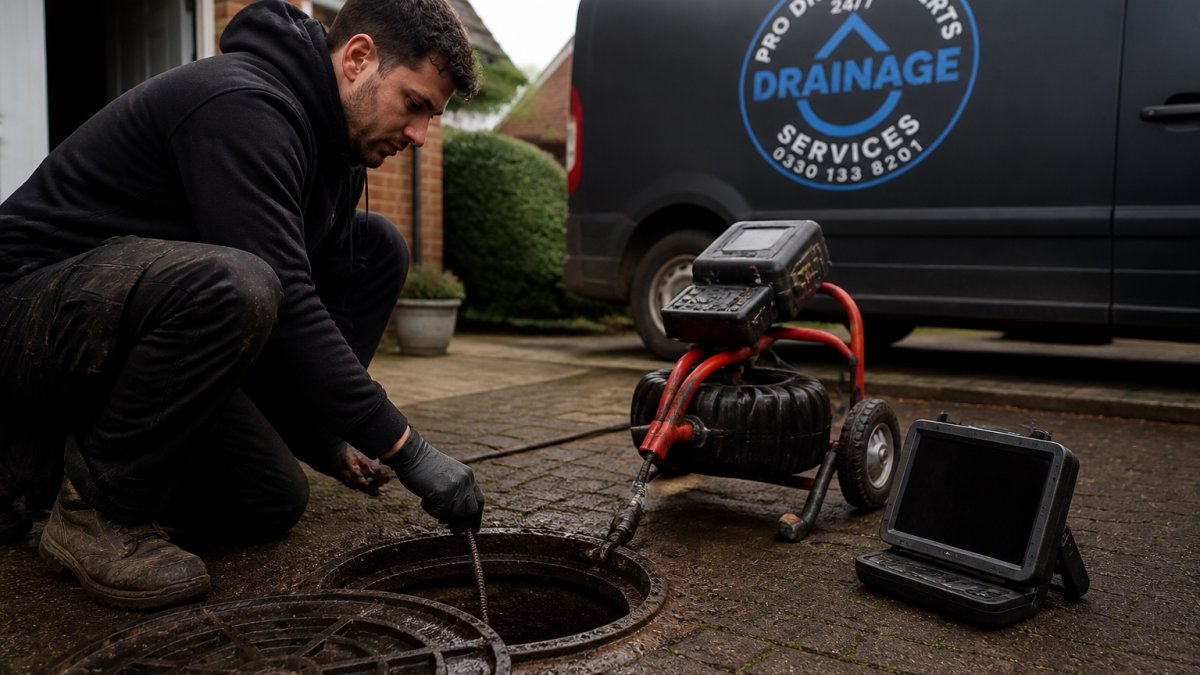
Pro Drain Experts keeps fully equipped vans ready for jobs across East Sussex, West Sussex, and Kent. Our team brings the right tools for any blockage.
Who Is Responsible for a Blocked Drain
Understanding responsibility matters before you start work. In most cases, you're responsible for drains on your property.
Your responsibility:
- Drains within your property boundary
- The section from your house to the public sewer connection point
- Maintenance and clearing of these pipes
The local authority's responsibility:
- The public sewer system after it leaves your property
- The main sewers in the street
If your blocked drain outside connects to a shared drain (common in some areas), responsibility splits. Check your property deeds or contact your local council to confirm. In Ringmer and surrounding areas, the local authority can tell you where your responsibility ends.
Shared drains complicate things. If multiple properties use one drain, you might share costs for repairs. Neighbours should split the bill fairly. Get this in writing before work starts.
When you're unsure, call your local council drainage department. They can identify which section belongs to you. This saves arguments later and protects your wallet.
Step-by-Step: How to Fix a Blocked Drain Outside
Fixing a blocked drain outside follows a logical process. Work through these steps methodically. Stop if you hit resistance or feel unsafe.
Step 1: Locate the Blockage
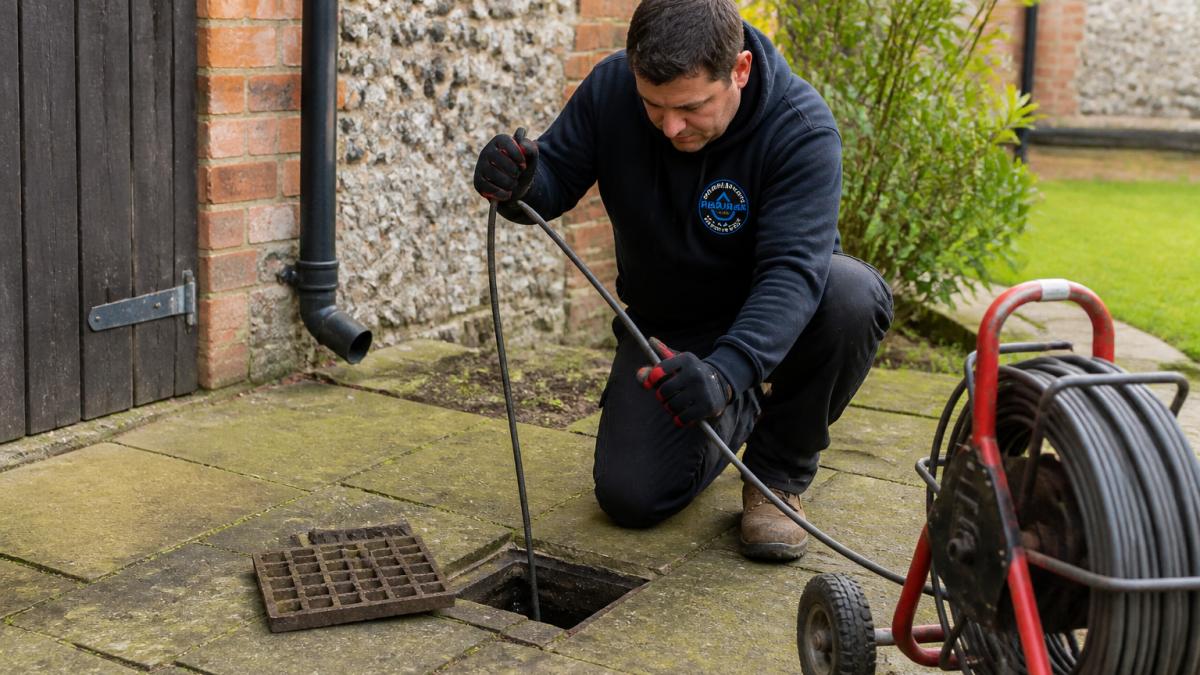
Find where the blockage sits. Look for the inspection chamber or access point nearest your house. These are usually round plastic or concrete covers in the garden.
Lift the cover carefully. You might need a spade to dig around it first. Look inside to see if water is backing up. If the water level is high, the blockage is further down the pipe.
Trace the drain line from your house. Follow the slope of the ground. Blockages often occur where the pipe changes direction. Mark these spots as you go.
In Ringmer, many properties have clay soil that settles around old pipes. Roots also grow into cracks. Knowing what caused your blocked drain outside helps you prevent it next time.
Step 2: Clear Surface Debris
Remove loose debris from the drain opening. Use your hands (with gloves on) to pull out leaves, moss, and dirt.
Check the grate or grid at the drain opening. These catch leaves and twigs. Clean them thoroughly. A wire brush works well for stubborn buildup.
Look inside the pipe for obvious blockages. You might see a ball, cloth, or pile of leaves. Reach in and remove what you can safely grab.
This simple step clears many minor blockages. You'd be surprised how often surface debris causes slow drainage. Spend five minutes here before moving to stronger methods.
Step 3: Use a Plunger or Drain Rods
Using a plunger:
Fill the drain area with water. Place the plunger over the drain opening. Push down and pull up rapidly. Do this 15-20 times. The suction and pressure can dislodge blockages.
Listen for a gurgling sound. That means water is moving. Repeat if needed.
Using drain rods:
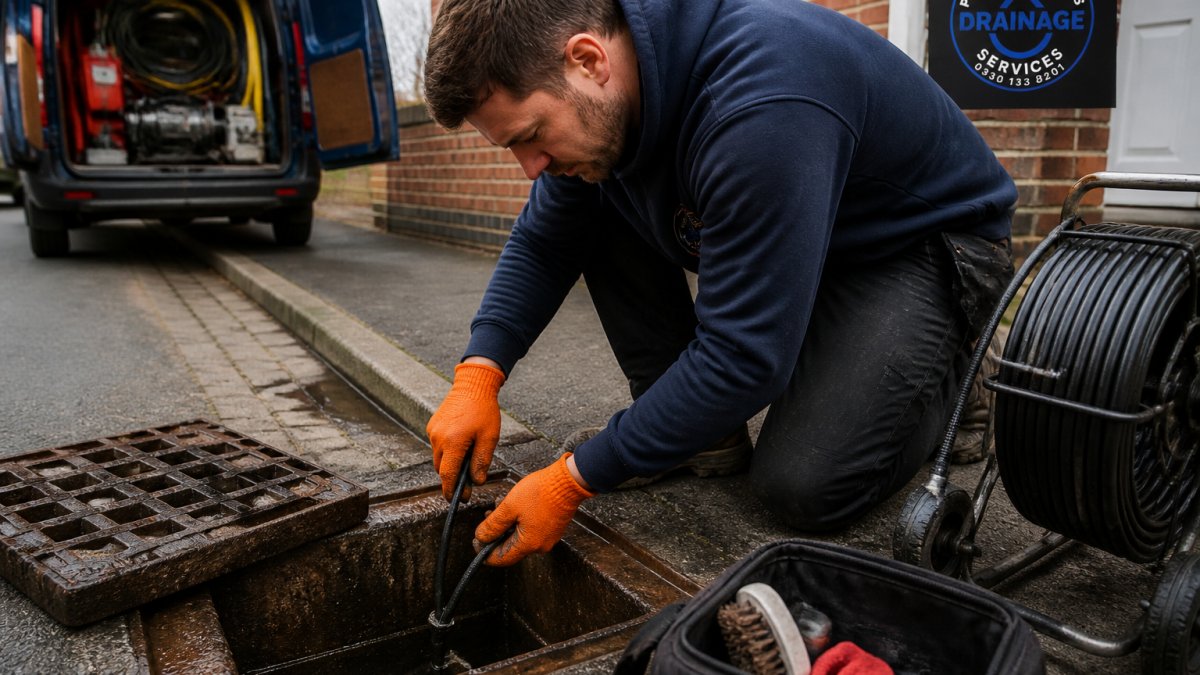
Attach the first rod to the plunger head. Push down into the drain slowly. Twist clockwise as you push. This screws the rods together and drives them deeper.
Add another rod when you reach the end of the first. Keep twisting and pushing. You'll feel resistance when you hit the blockage.
Twist hard against the blockage. The rods will break it up or push it through. Pull the rods back up slowly. They're heavy, so get help if you need it.
Step 4: Flush the Drain
Pour water down the drain after clearing the blockage. Use a hose or bucket of water. Watch how it flows.
Water should drain away quickly. If it still pools, the blockage isn't fully cleared. Repeat the plunger or rod process.
Once water drains freely, flush with more water. This clears remaining debris. Run water for at least a minute.
Check the inspection chamber again. The water level should drop. If it stays high, the blockage is further down. You might need professional help at this point.
Work through these steps in order to clear your blocked drain outside.
| Step | What to do | Key signs of progress |
|---|---|---|
| 1 | Locate the blockage by finding the inspection chamber | Water level is high in the chamber |
| 2 | Clear surface debris with gloved hands and wire brush | Loose leaves and moss are removed |
| 3 | Use plunger or drain rods to dislodge blockage | Gurgling sound or resistance felt |
| 4 | Flush the drain with water from hose or bucket | Water drains away quickly and freely |
How to Use Drain Rods Safely
Drain rods are powerful tools. Misuse causes injury or pipe damage. Follow these safety rules strictly.
Wear protective gear:
- Heavy-duty gloves
- Safety glasses
- Closed-toe boots
- Long trousers
Never rush. Push the rods in slowly. Twisting too hard breaks the rods or damages the pipe. Steady pressure works better than force.
Get help. Drain rods are heavy and awkward. A second person steadies the rods while you push. They can also watch for hazards.
Don't twist while pulling. Rods can jam if you twist and pull together. Pull straight up. Twist only when pushing down.
Stop if you feel extreme resistance. You might have hit a solid object or damaged pipe. Pushing harder causes damage. Call a professional instead.
Keep hands clear of the connection points. The rods can pinch fingers when twisting. Watch where your hands are at all times.
Pro Drain Experts uses professional-grade drain rods. For blocked drains outside in East Sussex, West Sussex, and Kent, we handle the heavy work safely.
Outside Drain Blocked with Mud: Causes and Solutions
Mud blockages are common in areas with clay soil. Ringmer properties often face this problem. Understanding why helps you prevent it.
Why mud blocks drains:
Heavy rain washes soil into the drain. Clay soil is sticky and settles in pipes. Roots disturb the soil around the drain. Cracks in old pipes let soil seep in.
The older your pipes, the more likely this happens. Victorian and Edwardian properties in the area often have clay pipes that crack easily.
How to clear mud blockages:
Use a jet wash if you have one. High-pressure water breaks up mud and flushes it through. Aim the jet carefully to avoid damaging the pipe.
Drain rods work but require more effort. The mud is heavy and sticky. Twist firmly and push steadily. Don't rush.
After clearing, flush thoroughly. Mud leaves residue behind. Running water for several minutes clears the pipes completely.
Preventing mud blockages:
Fix cracks in pipes before they worsen. Install a drain cover or grate to catch debris. Clear gutters regularly so leaves don't wash into drains. Keep tree roots away from drain lines.
How to Prevent Outside Drain Blockages
Prevention is easier than fixing a blocked drain outside. Simple habits keep your drains clear.
Keep gutters and downpipes clean. Leaves and moss wash into drains during rain. Clean gutters twice a year. More often if you have trees nearby.
Use drain covers. These catch leaves and debris before they enter the pipe. Clean the cover regularly.
Don't pour grease down drains. Grease solidifies in cold pipes. It traps other debris. Wipe grease into the bin instead.
Watch what goes down the drain. Wipes, nappies, and sanitary products block pipes. Throw these in the bin.
Trim tree roots. Roots grow toward moisture. They crack pipes and cause blockages. Trim roots away from drain lines.
Fix cracks quickly. Small cracks become big problems. Soil and roots enter through cracks. Professional repairs prevent blockages.
Inspect drains regularly. Look at the inspection chamber every few months. High water levels mean trouble is coming. Act before a full blockage happens.
UK government guidance on drainage and sewerage explains your rights and responsibilities for drains. Understanding these rules helps you maintain your system properly.
For recurring blockages in Ringmer and the surrounding region, read how to clear recurring drain blockages to understand long-term solutions. If you're serious about prevention, explore 7 ways to prevent blocked drains in East Sussex for local strategies tailored to our area's soil and climate.
Common Mistakes to Avoid
People make predictable mistakes when fixing a blocked drain outside. Learning from them saves time and money.
Don't ignore early warning signs. Slow drainage is a warning. Act fast before it becomes a full blockage. A quick fix now prevents a costly emergency later.
Don't force drain rods. Pushing too hard breaks the rods or damages the pipe. Steady pressure works better. If you hit resistance, stop and reassess.
Don't use chemical drain cleaners. These damage pipes, especially old clay pipes. They're also dangerous to handle. Avoid them completely.
Don't assume the blockage is near the surface. It might be deep in the line. Spend time locating it properly before starting work.
Don't mix tools without thinking. Using a plunger after drain rods can cause problems. Finish one method completely before trying another.
Don't work alone. Drain work is heavy and awkward. A second person helps and keeps you safe.
Don't skip the flushing step. Flushing clears remaining debris. Skipping this step means the blockage returns quickly.
Don't attempt repairs beyond your skill. If the drain is damaged or deeply blocked, call a professional. Attempting complex repairs causes more damage.
When to Call a Professional
Some blocked drains outside need professional help. Recognising when to call saves money and prevents damage.
Call a professional if:
The blockage is deep in the line. You can't locate it or reach it with rods.
Water backs up into your home. This means the blockage is serious. Professional equipment clears it faster.
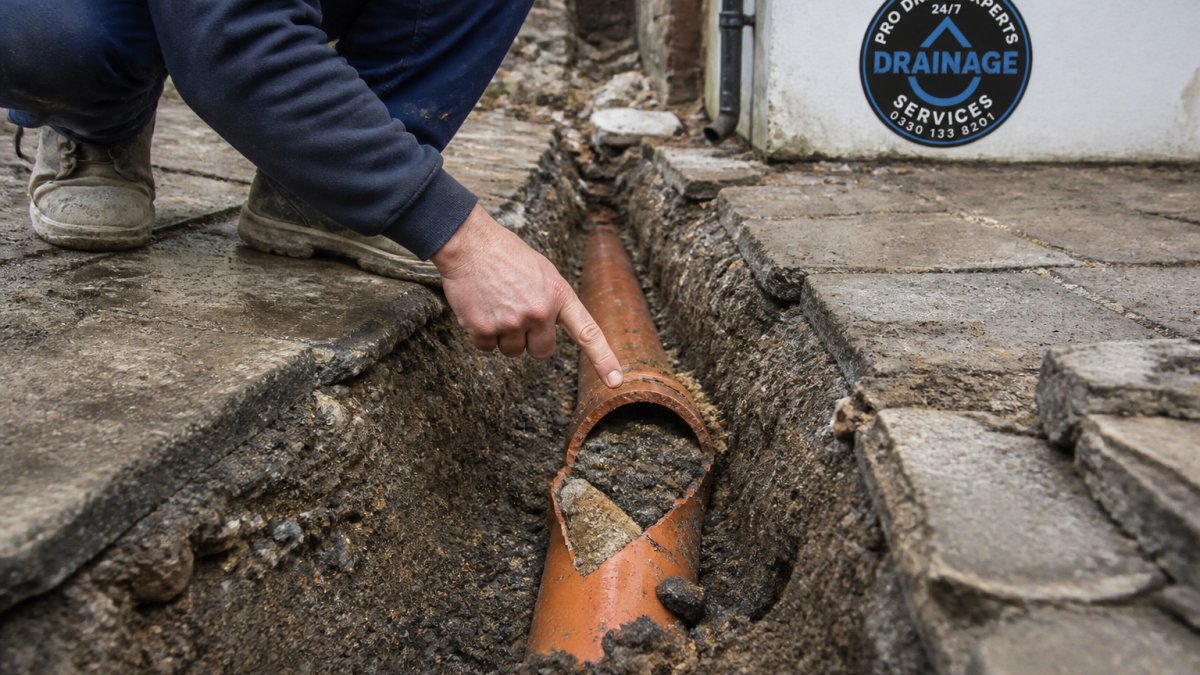
The drain is damaged. Cracks or collapsed sections need repair, not clearing.
You've tried fixing it and failed. Continuing makes things worse.
The blockage returns repeatedly. This suggests a deeper problem like tree roots or a damaged pipe.
You're unsure about responsibility. A professional can identify who should pay for repairs.
7 signs you need professional drain repair outlines when DIY methods won't work. Professional drainage companies have equipment and expertise homeowners don't have.
Pro Drain Experts provides same-day response for blocked drains outside across East Sussex, West Sussex, and Kent. Our team uses CCTV cameras to locate blockages precisely. We then clear them with drain snakes or high-pressure jetting. For emergency blocked drains outside in Ringmer, call us immediately. We handle urgent problems fast and give up-front pricing with no hidden fees.
Professional drainage work costs less than water damage to your property. Check what professional drain repair involves to understand the process before calling.
A blocked drain outside disrupts your life and threatens your home. Most blockages respond to simple fixes: clearing debris, using a plunger, or deploying drain rods. But some require professional expertise and equipment.
Pro Drain Experts has cleared blocked drains outside for over 20 years across East Sussex, West Sussex, and Kent. Our same-day response and transparent pricing mean you get help fast without surprise bills. When your DIY efforts fail or the problem is complex, we're ready to restore your drainage system.
Frequently Asked Questions
How do I know if the blockage is in my drain or the public sewer?
If only one drain in your property backs up, the blockage is likely in your private drain. If multiple drains or toilets are affected simultaneously, the problem is probably in the public sewer beyond your property boundary. You're responsible for your private drain; the water authority handles the public sewer. A professional CCTV survey can pinpoint the exact location and confirm responsibility.
Can I use boiling water or drain chemicals to clear a blocked drain outside?
Boiling water may provide temporary relief for grease blockages but rarely solves the root cause of outside drain blockages, which are typically caused by debris, mud, or tree roots. Chemical drain cleaners can damage pipes and harm the environment. Drain rods or a plunger are safer first options. For persistent blockages, professional high-pressure water jetting won't damage your drainage system.
Why does my outside drain keep blocking?
Recurring blockages often stem from tree roots invading pipes, poor gradient in the drainage line, or persistent debris accumulation. Mud and silt naturally settle in outside drains, especially if the pipe isn't steep enough for water to flow freely. Regular maintenance, such as clearing gullies and inspecting pipes with CCTV, identifies the underlying cause. A professional survey reveals whether you need pipe repairs, root removal, or improved maintenance routines.
When should I call a professional for a blocked outside drain?
Call a professional if DIY methods fail after one or two attempts, the blockage recurs within weeks, you suspect tree root damage, or multiple drains are affected. If water backs up into your home, call immediately, this indicates a serious blockage or structural damage. Professionals have CCTV cameras and high-pressure jetting equipment that safely clear stubborn blockages and identify underlying issues you can't see yourself.