 how-to
7 Steps to Dry Out Water Damaged Drywall Properly
Last Updated: November 1, 2026
Quick Summary
To dry out drywall, first stop the water source, then remove standing water and open the wall to let moisture escape. Run air movers and a dehumidifier continuously, and check moisture levels daily until the board is dry. Replace any plasterboard that stays soft or wet.
- Turn off the water supply at the stopcock before drying anything.
- Mark the edges of the damp area in pencil to track whether it spreads.
- Point air movers across the wet surface, not straight at it.
- Place the dehumidifier in a closed room and empty its tank regularly.
- Replace plasterboard that crumbles, swells or grows mould that will not clean off.
Table of Contents
- Stop the Water Source and Assess the Damage
- Tools and Materials You Will Need to Dry Out Drywall
- How Long Does Plasterboard Take to Dry After a Leak?
- Step-by-Step: Drying Out Water Damaged Drywall
- Using a Dehumidifier for Damp Walls
- Signs of a Leaking Pipe Behind a Wall
- When to Replace Water-Damaged Plasterboard
- Common Mistakes That Lead to Mould and Rot
- Booking an Emergency Call-Out for Hidden Leaks
- Frequently Asked Questions
Stop the Water Source and Assess the Damage
A common mistake is starting to dry out drywall before the leak has been stopped. Drying a wall that is still getting wet wastes time and can hide a problem that keeps growing.
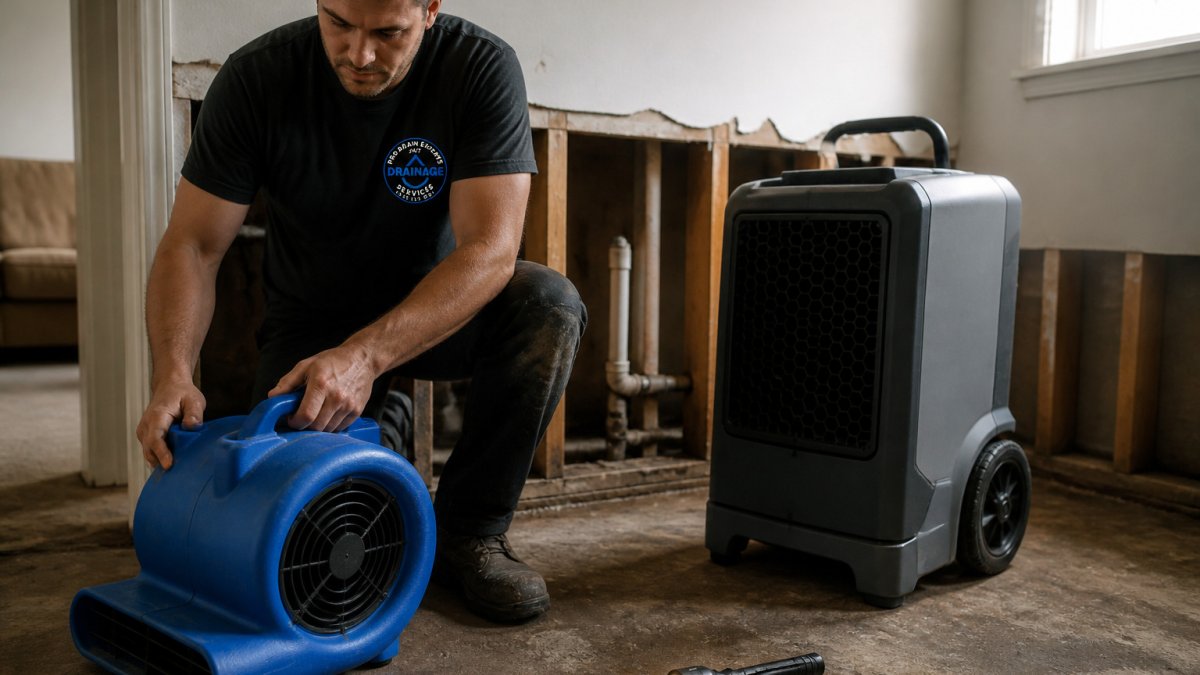
Turn off the water supply at the stopcock first. Then look at the wall. Check for staining, bubbling paint, soft patches and a damp smell. Press gently on the plasterboard with a finger. If it feels spongy or crumbles, it has taken on too much water.
A common mistake is judging the damage by what you can see on the surface. Water travels down inside the wall cavity, so the wet area is often much larger than the stain. Mark the edges of the damp area in pencil so you can track whether it spreads.
Tools and Materials You Will Need to Dry Out Drywall
You do not need specialist kit for a small leak, but a few items make the job faster and safer:
- Dehumidifier suited to the room size
- Air movers or fans to push air across the wet surface
- Moisture meter to check the plasterboard
- Torch for looking inside cavities
- Dust sheets and plastic sheeting to protect the floor
- Protective gloves, mask and eye protection
- Bucket, sponge and wet vacuum for standing water
If you plan to take off a section of plasterboard, you will also need a utility knife, a padsaw and a masonry bit for testing.
How Long Does Plasterboard Take to Dry After a Leak?
Plasterboard that has only been splashed or lightly wetted often dries within a few days once the air is moving and the room is dehumidified. Plasterboard that has soaked up water, especially behind a wall, can take much longer and may need to come out.
Drying time depends on how wet the board is, how long it was wet, the room temperature and how well the air is moving. Keep checking with a moisture meter rather than relying on how the surface feels.
Step-by-Step: Drying Out Water Damaged Drywall
Work through these steps in order.
- Stop the water source and confirm the leak has stopped.
- Remove standing water with a wet vacuum or sponge.
- Open the wall where needed to let moisture escape.
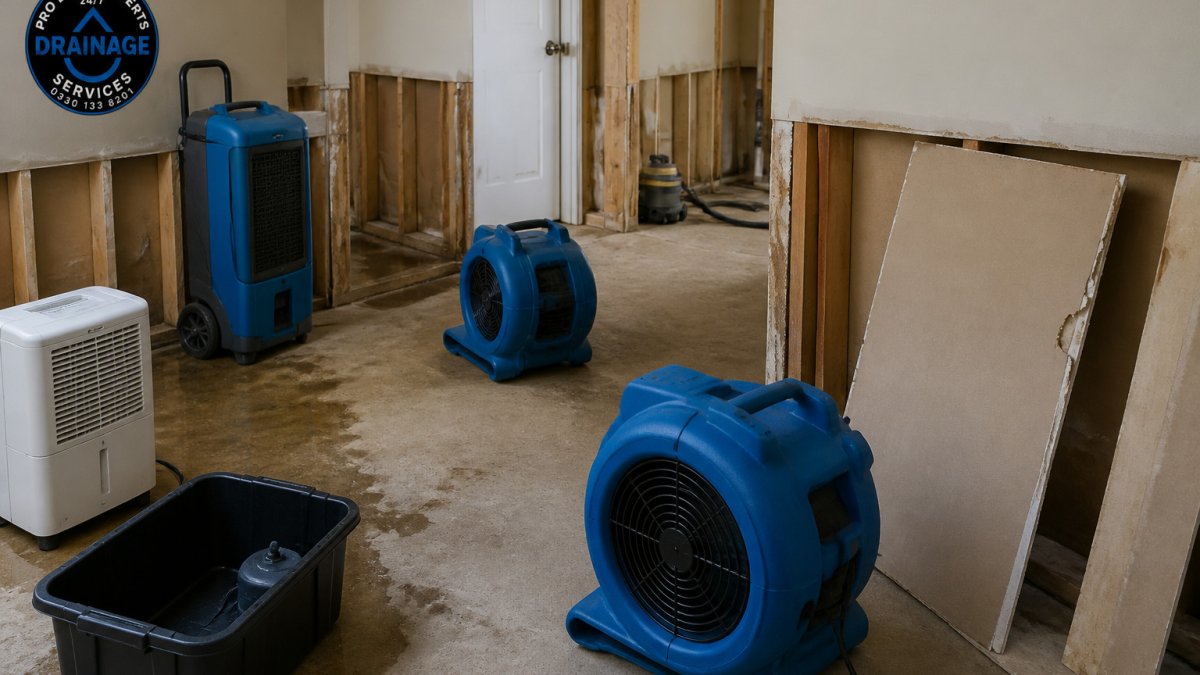
- Set up air movers and a dehumidifier.
- Monitor moisture levels daily until the board is dry.
- Remove any plasterboard that stays wet or soft.
- Check for mould before you repaint or re-plaster.
Removing Water and Opening the Wall
Start by clearing any water from the floor and skirting. If the plasterboard is saturated, cut a small inspection hole low down so moisture can drain and air can reach the cavity. Keep the cut small at first. You can always enlarge it.
Setting Up Air Movers and Dehumidifiers
Point air movers across the wet surface, not straight at it. Place the dehumidifier in the room with the doors and windows closed so it can pull moisture from the air. Run the equipment continuously and empty the dehumidifier's water tank regularly.
The seven steps below summarise the drying process in the order the article recommends.
| Step | What to do | Time or frequency |
|---|---|---|
| 1. Stop the water source | Confirm the leak has stopped | Before anything else |
| 2. Remove standing water | Use a wet vacuum or sponge | Immediately |
| 3. Open the wall | Cut a small inspection hole low down | Enlarge only if needed |
| 4. Set up equipment | Place air movers and a dehumidifier | Run continuously |
| 5. Monitor moisture | Check levels until the board is dry | Daily |
| 6. Remove wet plasterboard | Take out boards that stay wet or soft | If still wet or soft |
| 7. Check for mould | Inspect before repainting or re-plastering | Before finishing |
Using a Dehumidifier for Damp Walls
A dehumidifier is the most useful tool for drying a room. It takes moisture out of the air, which stops the wall from pulling more water back out into the room. Choose a unit sized for the room. An undersized machine runs all day and achieves little.
Keep the room warm enough to help evaporation, but avoid direct heat on the plasterboard, which can crack the surface.
Signs of a Leaking Pipe Behind a Wall
Hidden leaks often show up before anything else does:
- A damp patch that keeps coming back after drying
- A musty smell with no obvious source
- Peeling wallpaper or bubbling paint with no visible leak
- A sudden rise in your water meter reading
- The sound of running water when no taps are on
If you suspect a leaking pipe behind a wall, stop drying and get the source found first. Our emergency pipe repair guide shows how a local leak of this kind is handled. Drying a wall that is still wet from an active leak will not solve anything. Pro Drain Experts can help you locate the problem. Our emergency pipe repair guide explains what to do step by step.
When to Replace Water-Damaged Plasterboard
Replace plasterboard when it stays soft after drying, crumbles when pressed, shows swelling or grows mould that will not clean off. Boards that were wet for a long time, or that were contaminated by dirty water, usually need replacing rather than saving.
A common mistake is trying to save a board that has lost its strength. Once it is weak, it will not hold a fixing or a finish properly.
Common Mistakes That Lead to Mould and Rot
Most mould and rot problems come from a few avoidable errors:
- Painting or papering before the wall is fully dry
- Sealing the room too early, which traps moisture
- Ignoring the cavity behind the wall
- Stopping the dehumidifier before readings are stable
- Missing a second leak that is still running
Check the wall again a few days after you think it is dry. Mould often appears once the surface has seemed fine for a while.
Booking an Emergency Call-Out for Hidden Leaks
If the leak is hidden, spreading or you cannot find the source, call a professional. Pro Drain Experts offers 24/7 emergency call-outs with same-day response across East Sussex, West Sussex and Kent. For a clear picture of what emergency drain and pipe work involves, see our emergency drain repair guide.
Frequently Asked Questions
Can water-damaged plasterboard be dried out?
Plasterboard that has been wet by clean water can often be dried out if it is done promptly. Remove any standing water, open the wall where possible, and run dehumidifiers and air movers until the board and framing are dry. Plasterboard that has swollen, crumbled, or lost its shape generally cannot recover its strength and should be replaced. Where the water came from a sewage or contaminated source, the board should usually be removed rather than dried, because bacteria can remain in the porous material.
How long does it take for wet plasterboard to dry?
Drying time depends on how much water was absorbed, the temperature in the room, humidity levels and how much air movement is provided. Lightly wet board in a well-ventilated room can dry within a few days with dehumidifiers and air movers running. Heavily saturated board, or board inside a closed wall cavity, can take considerably longer. Check moisture levels with a meter before closing the wall again, and do not rely on the surface feeling dry.
Should I cut out wet plasterboard to prevent mould?
Cutting out wet plasterboard is often the safer choice when it has been soaked for more than a short period, when it is visibly swollen, or when mould has already started to grow. Leaving saturated board in place can allow mould to spread into insulation and timber. Cut the board back to a sound edge, check the framing for damage, and dry the exposed cavity fully before fitting new board. If mould covers a large area, seek professional advice before disturbing it.
Can I use a dehumidifier to dry a water-damaged wall?
Yes, a dehumidifier helps remove moisture from the air and from damp surfaces, and it works best alongside air movers that push air across the wall. Place the dehumidifier in the room with doors and windows closed, and keep it running until moisture readings show the wall is dry. A dehumidifier alone is slow for a saturated wall, so it should be used as part of a drying setup rather than as the only measure.