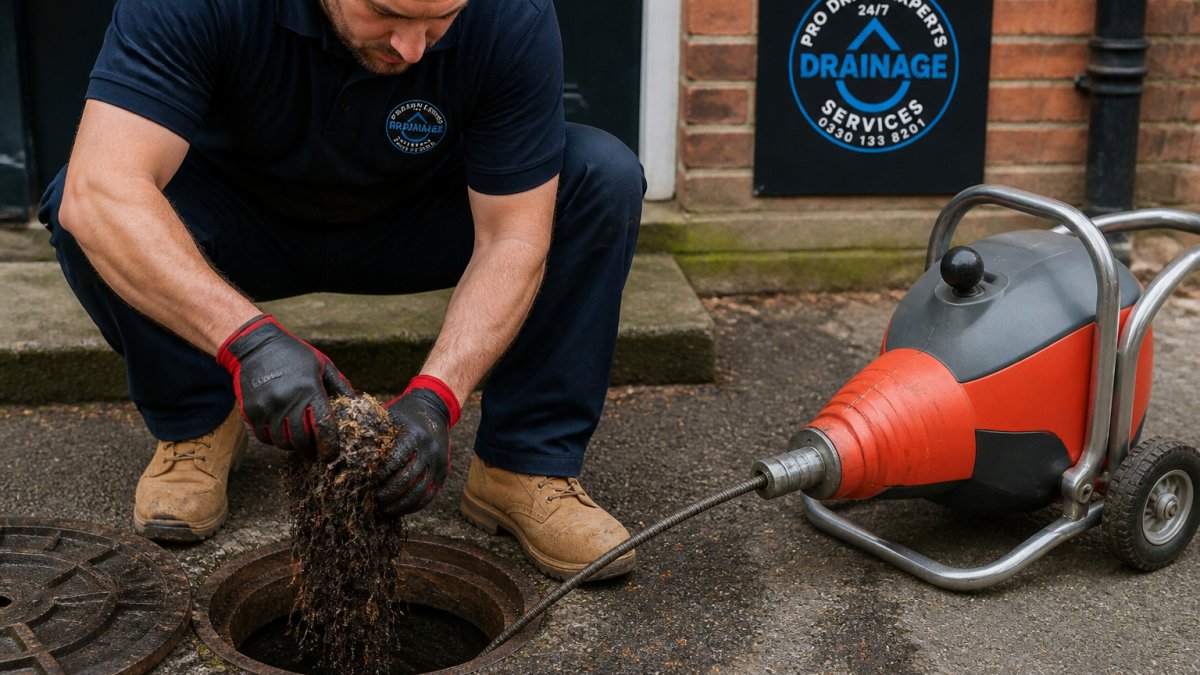
 how-to
How to Identify the Root Cause of Recurring Blockages
Last Updated: October 30, 2026
Quick Summary
Recurring blockages usually come from a fault in the pipe, not bad luck, so the fix is to find the root cause blockages rather than repeatedly clearing the symptom. Keep a log of each blockage, check whether one drain or the main line is affected, look for tree roots, and use a CCTV drain survey to see the fault.
- Record the date, fixture, unusual use and clearing details for every blockage.
- If several fixtures back up at once, the main line is more likely the cause.
- Tree roots entering through cracks or loose joints are a common reason blockages return.
- A CCTV drain survey shows cracks, displaced joints, root ingress and sags inside the pipe.
- Repeated chemical drain cleaner use can damage older pipes, so avoid relying on it.
Table of Contents
- Why a Drain Keeps Blocking in the Same Place
- Step 1: Record the Pattern of Each Blockage
- Step 2: Work Out Whether One Drain or the Main Line Is Affected
- Step 3: Check for Tree Roots in Drains
- Step 4: Use a CCTV Drain Survey to See the Fault
- Step 5: Rule Out Damaged, Misaligned or Aged Pipework
- Common Mistakes That Hide the Root Cause
- How to Prevent Blocked Drains From Coming Back
- Booking a Diagnostic Visit From Pro Drain Experts
- Frequently Asked Questions
Recurring blockages are rarely bad luck. A drain that blocks in the same place every few months is telling you something, and the fix is usually not another quick clear, because finding the root cause blockages requires looking past the symptom. Repeat blockages are best treated as a diagnostic problem first. The goal is to find the underlying fault, not just the symptom. This guide walks through how to identify the root cause of recurring blockages in practical steps, so you can stop paying for the same job over and over.
A root cause is the underlying failure that keeps producing the blockage. Clearing the drain removes the symptom but leaves the cause in place, which is why root cause blockages keep coming back after every quick fix. Root cause analysis (RCA) is a structured process for finding that cause rather than just treating the effect. A widely cited review from the National Institutes of Health research on root cause analysis describes RCA as a way to identify underlying system failures, though it works best when supported by disciplined record keeping.
Why a Drain Keeps Blocking in the Same Place
A drain that blocks in the same spot usually has a physical reason for it. For a full walkthrough of stopping these repeat problems, see prevention guide for recurring sewer line blockages. Common causes include a fault in the pipe itself, a build-up of waste at a bend or a change in gradient, or a root that has worked its way into a joint. Pipes that are old, badly laid or slightly out of line collect debris where the flow slows.
The key point is that the location of the blockage is a clue. If the same section fails each time, the problem is almost certainly in that section, not in the rest of the system.
Step 1: Record the Pattern of Each Blockage
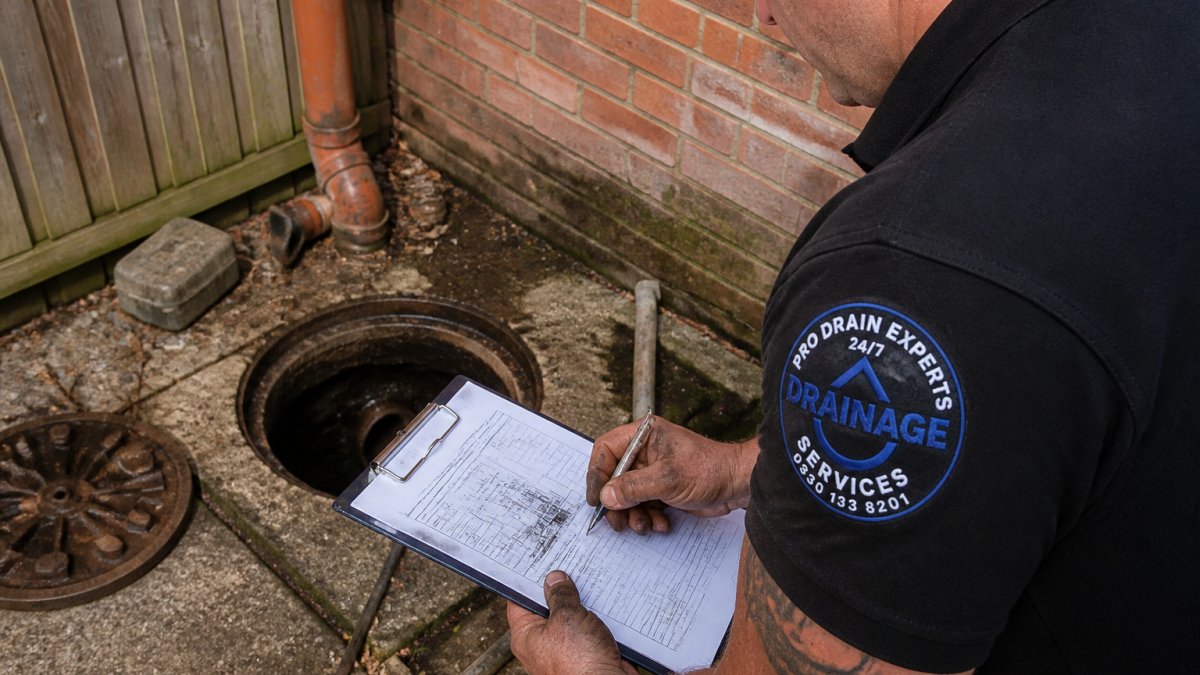
Start a simple log the next time a drain blocks. Note the date, the time, and which fixtures were affected. Write down what was going down the drain before the problem started.
A useful log includes:
- The date and time of each blockage
- Which sink, toilet, shower or outdoor gully blocked
- Any unusual use, such as grease, wet wipes or leaves
- How long the drain took to clear and what cleared it
After a few months, the pattern becomes clear. Repeated blockages on the same date each year may point to seasonal leaf fall. Blockages after heavy use may point to capacity problems.
Keeping a simple log makes repeat blockages easier to diagnose. Note these details each time a drain blocks:
| Log item | What to record | Why it helps |
|---|---|---|
| Date and time | Each blockage | Reveals seasonal or timing patterns |
| Fixture affected | Which sink, toilet, shower or gully | Shows whether the fault is local or shared |
| Unusual use | Grease, wet wipes or leaves | Points to likely build-up sources |
| Clearing details | How long it took and what cleared it | Shows how severe each blockage was |
Step 2: Work Out Whether One Drain or the Main Line Is Affected
Next, check whether the fault is local or in the shared drainage system. If only one sink blocks, the problem is likely in the branch pipe serving that fixture. If several fixtures back up at once, the main line is more likely to be the cause.
A quick test helps. Run water in a basin while watching a nearby toilet or shower. If the water level rises in one of those fittings, the blockage sits in the main line.
Knowing where the blockage sits makes every later step faster. If you are weighing up clearing methods, comparing drain snaking and hydro jetting can help you choose a proper fix.
Step 3: Check for Tree Roots in Drains
Tree roots are one of the most common reasons for repeat blockages. Roots seek water and enter pipes through small cracks or loose joints. Once inside, they catch paper, grease and debris, and the blockage grows back quickly after each clear.
An open-data analysis of sewer blockage causes found that tree root intrusion and the average age of pipes are significant factors in drainage failure. Older pipes are more vulnerable, so a drain near a large tree in an older property deserves a closer look.
Signs That Roots Are Entering the Pipe
Look for these warning signs:
- Blockages that return within weeks of clearing
- Slow draining across several fittings at once
- Gurgling sounds from drains or toilets
- Lush, unusually green growth above a drain run
- Damp or soggy ground along the pipe route
If you see several of these signs, roots are a strong suspect and should be checked before you spend more on clearing.
Step 4: Use a CCTV Drain Survey to See the Fault
A CCTV drain survey is the most reliable way to see inside a pipe. A small camera on a cable travels through the drain and records the condition of the pipe walls and joints. The footage shows cracks, displaced joints, root ingress, sags and build-up, and often pinpoints the exact location of the fault.
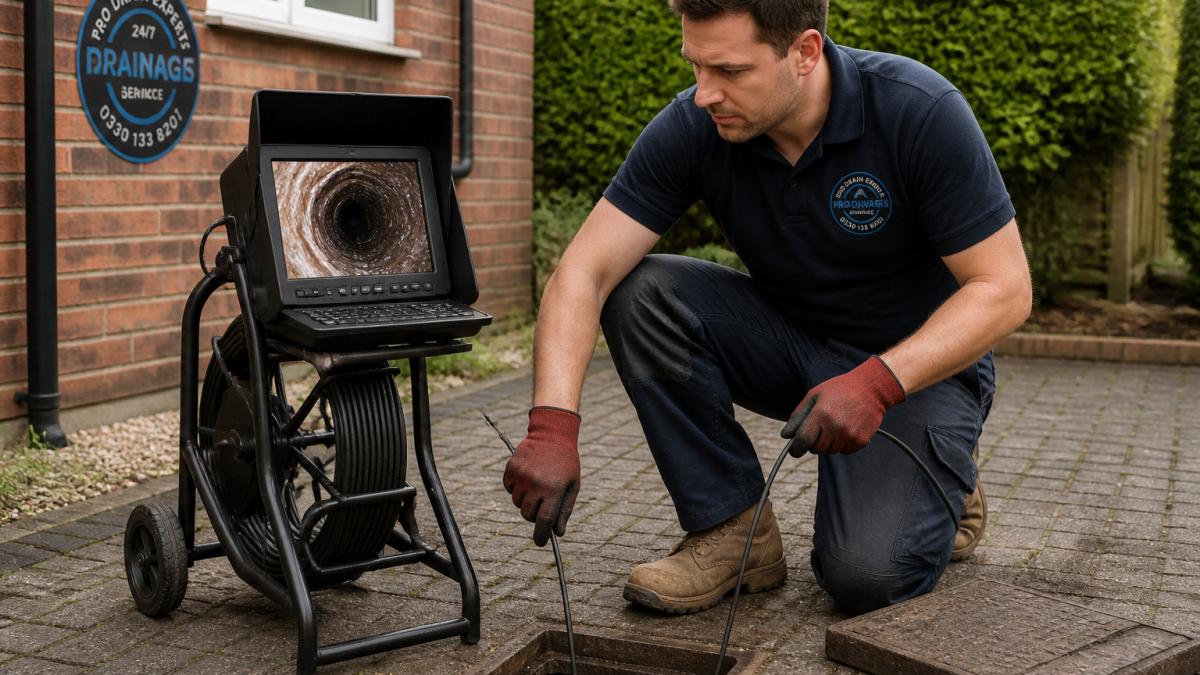
Surveys can also give you a written report and recommendations, which helps turn a guess into evidence.
Step 5: Rule Out Damaged, Misaligned or Aged Pipework
If the survey does not show roots, check for structural damage. Cracked pipes, broken joints and pipes that have dropped out of line all trap waste. A pipe with a sag or a reverse fall will hold water and solids even when it looks clear on the surface.
Pipe age matters too. Older clay and cast iron pipes can wear, corrode or lose their smooth lining.
Ask the surveyor to note the gradient and any displacement in the report. These details decide whether the answer is repair, relining or a new run.
Common Mistakes That Hide the Root Cause
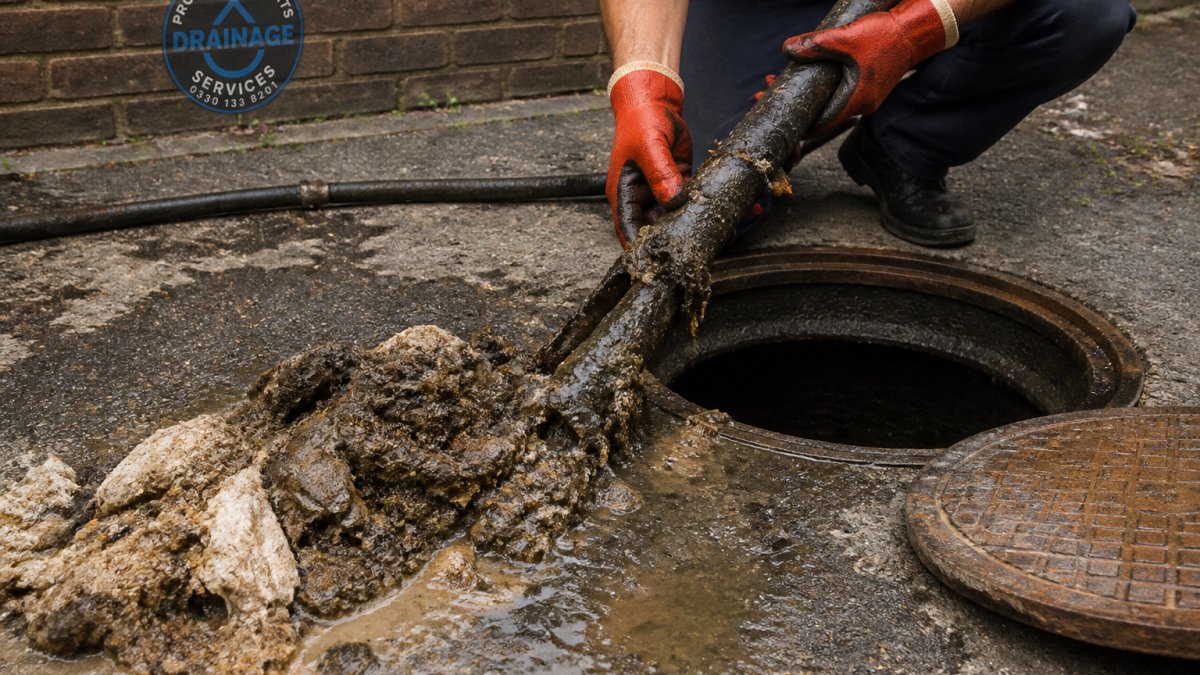
A common mistake is treating each blockage as a separate event. Clearing the drain with a rod or a jet works in the short term, but it leaves the cause untouched, so the problem returns.
Other mistakes include:
- Using chemical drain cleaners repeatedly, which can damage older pipes
- Ignoring the first signs of slow draining
- Assuming a fixed blockage means the fault is fixed
- Skipping the log, so the pattern never becomes visible
The fastest route to a lasting fix is to gather evidence before you repair anything.
How to Prevent Blocked Drains From Coming Back
Once you know the cause, prevention becomes much easier. If roots are the problem, the fix may involve root removal, cutting back the tree or relining the pipe. If the cause is build-up, better waste habits can help keep the pipe clear.
Simple habits help in most homes:
- Keep fats, oils and grease out of the sink
- Bin wet wipes, cotton pads and sanitary products
- Use a drain guard to catch hair and debris
- Flush the drain with hot water once a month
- Book a survey if blockages return after a repair
Routine checks can help catch small faults early. A survey every few years can be a useful way to keep an eye on a drain that has blocked before.
Booking a Diagnostic Visit From Pro Drain Experts
If the same drain keeps blocking, a diagnostic visit is the fastest way to find the root cause. CCTV surveys can show what is happening inside the pipe, and the survey can include a written report and recommendations.
Pro Drain Experts offers 24/7 emergency call-out, a same-day response and up-front pricing with no hidden fees. Our team has more than 20 years of experience across East Sussex, West Sussex and Kent, Before you call us, the [Before You Call Us page | prodrainexperts.co.uk] explains what to prepare and what to expect.
If you are dealing with a blockage right now, call our emergency line. Same-day response is part of our service. For a recurring problem, a survey can help identify a lasting answer.
Frequently Asked Questions
Why does the same drain keep blocking?
A drain that blocks in the same spot usually has a fault at that point rather than bad luck. Common causes include tree roots entering a joint, a sagging or misaligned section of pipe where waste settles, a broken pipe, or a build-up of grease and debris at a bend. Because the blockage returns to the same place, clearing it only removes the symptom. Recording where and when each blockage occurs, then inspecting that section with a CCTV drain survey, is the most reliable way to find the underlying cause before it fails again.
Can tree roots cause a drain to keep blocking?
Yes. Tree roots are attracted to moisture and can grow into cracks or open joints in drainage pipes. Once inside, roots form dense mats that catch paper, wipes and grease, so blockages return within weeks or months even after clearing. Signs include slow drains, gurgling, and repeated blockages at the same point. A CCTV drain survey will show roots inside the pipe, and the affected section usually needs cutting out and repair rather than repeated clearing.
When should I arrange a CCTV drain survey?
Arrange a CCTV drain survey when a blockage recurs in the same place, when clearing gives only temporary relief, or before buying a property where the drainage condition is unknown. The camera records the inside of the pipe, showing cracks, root intrusion, displaced joints and sagging sections. Pro Drain Experts provides detailed reports and recommendations from its CCTV surveys. For current prices or to book, contact Pro Drain Experts directly for a quote.
When should I call a drainage specialist for a recurring blockage?
Call a drainage specialist as soon as a blockage returns after you have cleared it yourself, or if you notice flooding, foul smells, or water backing up into sinks, baths or toilets. These are signs the fault lies inside the pipework, where household tools cannot reach. Pro Drain Experts offers 24/7 emergency call-out, a same-day response promise and up-front pricing with no hidden fees, so you know the cost before work begins.