 How-to
Why Do My Drains Keep Blocking? Causes and Fixes
Last Updated: November 8, 2026
Quick Summary
Drains keep blocking because the clog you clear is only the top layer, while the cause underneath stays in place. Most often that cause is fat and grease, hair and soap residue, or wet wipes building up inside the pipe. Removing those materials and, if the problem returns, getting a CCTV survey usually fixes it.
- Pour cooled cooking fat into a sealed container, never down the drain.
- Clean hair and soap residue from plugholes once a week.
- Put wet wipes and sanitary items in the bin every time.
- Call a professional if the blockage returns within days or weeks.
- A CCTV drain survey shows the actual cause of a recurring blockage.
Table of Contents
- The Most Common Causes of Blocked Drains in Homes
- Diagnosing Where the Blockage Is: A Step-by-Step Decision Tree
- Safe DIY Troubleshooting and When to Stop
- Blocked Outside Drains and Gullies: Why They Clog Repeatedly
- How to Prevent Blocked Drains Around Your Home
- When a Recurring Blockage Needs a CCTV Drain Survey
- Who Is Responsible for the Drain and What to Do Next in Ringmer
- Frequently Asked Questions
If your drains keep blocking, the clog is probably not the whole problem. A blockage that clears for a few weeks and then returns usually points to a cause that was never removed, not bad luck. Blockages of this kind are a common reason homeowners call a drainage specialist. Drains keep blocking for a small set of reasons, and most of them can be found and fixed with a clear method. Below, we explain the usual causes, how to tell them apart, and when a DIY fix is enough. We also cover when a camera survey is the right next step.
A drain is not a single pipe. It is a network of branches that carry waste from sinks, showers, toilets and outside gullies into a main line. When one part of that network is narrowed or damaged, debris catches on it and builds up over time. Clearing the visible blockage removes the top layer only. The narrowing underneath stays in place, so the next load of waste catches on it again. That is why drains keep blocking even after a fix.
The Most Common Causes of Blocked Drains in Homes
Most household blockages come from a short list of materials that should never reach the drain. The same items appear again and again in the pipes we clear. Knowing them makes it easier to spot the source in your own home.
The main culprits are:
- Fat, oil and grease from cooking
- Hair and soap residue
- Wet wipes and sanitary products
- Food scraps that were not caught by a strainer
- Mineral scale and debris building up inside older pipes
Each of these builds up slowly. Some stick to the pipe wall and shrink the space the water can use. Others catch and hold anything that follows. Over weeks or months, the narrowing becomes a full blockage. This is why a recurring problem is often a gradual one, not a sudden event.
Fat, Oil and Grease Build-Up in Kitchen Sinks
Grease is the most common reason a kitchen sink keeps blocking. Hot fat poured down the drain looks like a liquid while it is warm. Once it cools, it sets on the inside of the pipe and traps food and other debris. Over time, this layer thickens into a hard lining that slows the flow.
A common mistake is running hot water after pouring fat down the sink. The hot water clears the fat for a moment, but the fat cools and sets further down the pipe. The problem moves rather than disappears. Instead, wipe pans and plates into the bin before washing, and pour cooled fat into a container for disposal.
Hair, Soap Residue and Wet Wipes in Bathroom Drains
Bathroom drains block in a different way. Hair does not dissolve. It tangles around the lip of a plughole and catches soap residue, which forms a sticky mat. That mat traps more hair and slowly closes the pipe. Wet wipes are worse, because they do not break down like toilet paper. They are one of the most frequent causes of a blocked toilet or shower drain we attend.
Check the plughole or drain cover regularly. Remove hair and residue by hand before it builds up. Put wet wipes in the bin every time, even if the packet says they are flushable.
The usual culprits behind recurring household blockages are listed below, with how each one builds up.
| Cause | How it builds up | Prevention |
|---|---|---|
| Fat, oil and grease | Sets on pipe walls as it cools | Pour cooled fat into a sealed container |
| Hair and soap residue | Tangles and forms a sticky mat | Clean plugholes once a week |
| Wet wipes and sanitary items | Do not break down like toilet paper | Put them in the bin every time |
| Food scraps | Not caught by a strainer | Fit a strainer or plughole cover |
| Mineral scale and debris | Builds up inside older pipes | Schedule a periodic drain check |
Diagnosing Where the Blockage Is: A Step-by-Step Decision Tree
Finding the source tells you what to do next. Work through a detailed step-by-step method for pinpointing the cause of a blockage before you touch the pipes. The steps below help you narrow it down before you touch the pipes.
- Check how many fixtures are slow. If only one sink or shower drains slowly, the blockage is likely in that fixture's branch. If several fixtures drain slowly, or a toilet gurgles when another tap runs, the blockage is probably in the shared main line.
- Look at the outside gully. Lift the grate and check the water level. Standing water in the gully points to a blockage downstream, often in the outside drain.
- Note the pattern. Gradual slowing over weeks suggests grease or residue build-up. A sudden stop often means a single large object.
- Check the drain cover and trap. Remove the cover and look at the visible section. Hair and sludge here are a clear sign of build-up.
- Stop if the problem reaches more than one fixture or returns quickly. This pattern usually means a structural issue further down the line, and it needs a professional inspection.
This process will not confirm every cause, but it will show you whether the problem is local or shared. That distinction matters a lot for who should fix it and how much work it will take.
Safe DIY Troubleshooting and When to Stop
You can often clear a simple blockage safely at home. Read more on clearing recurring blockages safely before deciding to call a professional. Start with the least risky method and move up only if needed. Never mix chemical cleaners, and never use a chemical product in a drain you are about to open by hand.
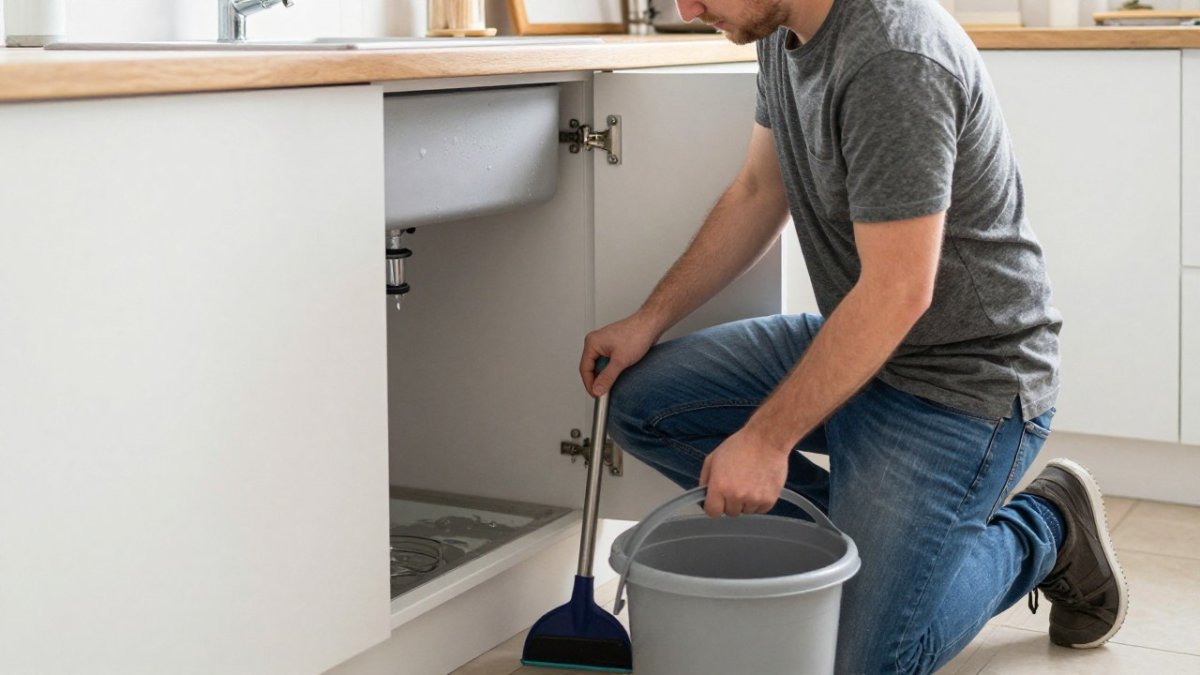
Work in this order:
- Clear the visible part first. Remove the cover and pull out any hair, debris or residue you can reach.
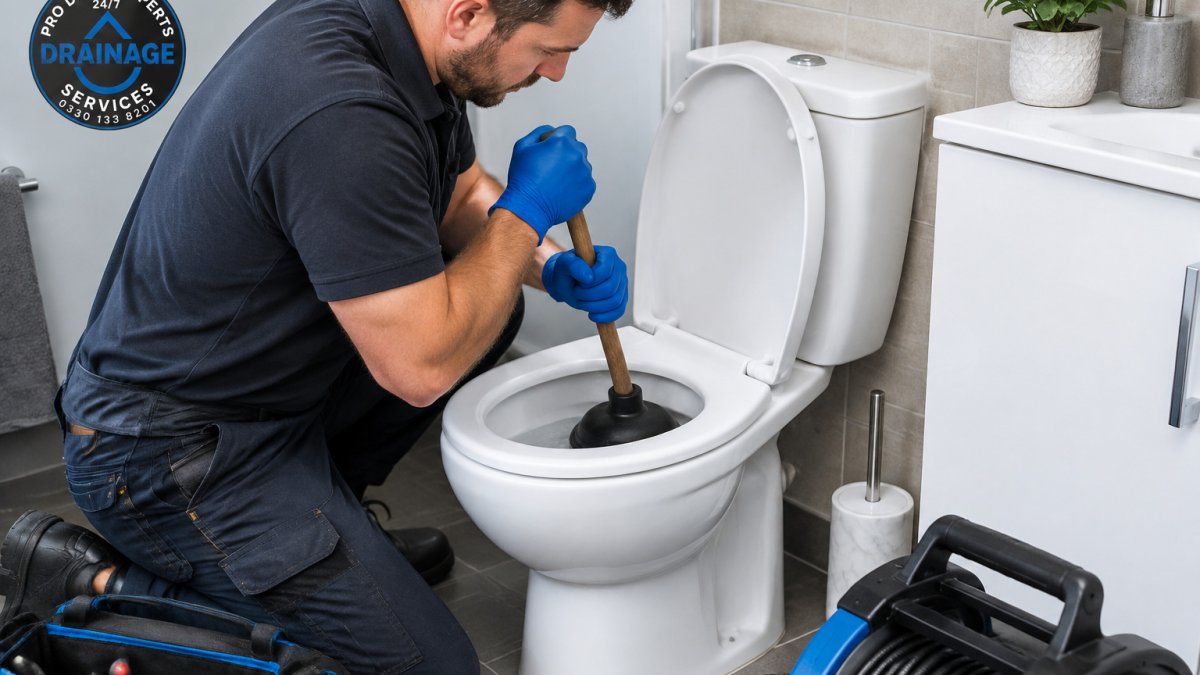
- Use a plunger. A sink plunger on a filled basin works well for many sinks and basins.
- Try hot water and a mild detergent for light grease build-up only. Do not pour boiling water into plastic pipes.
- Use a hand auger for blockages you cannot reach by hand. Feed it slowly and turn it steadily.
Stop and call a professional if you see any of these signs:
- The blockage returns within days or weeks
- More than one fixture drains slowly
- Water rises in a shower or toilet when another fixture is used
- You smell sewage or see damp patches in the home
- You have tried the steps above without success
Stopping early avoids damaging the pipe further. It also gives a professional a clearer picture of the cause.
Blocked Outside Drains and Gullies: Why They Clog Repeatedly
Outside drains and gullies collect leaves, soil, grit and debris from the surface. They also catch whatever is washed down from the house. A gully that clogs repeatedly is often full of silt and organic matter that settles faster than it washes through. Leaves from nearby trees speed this up in autumn.
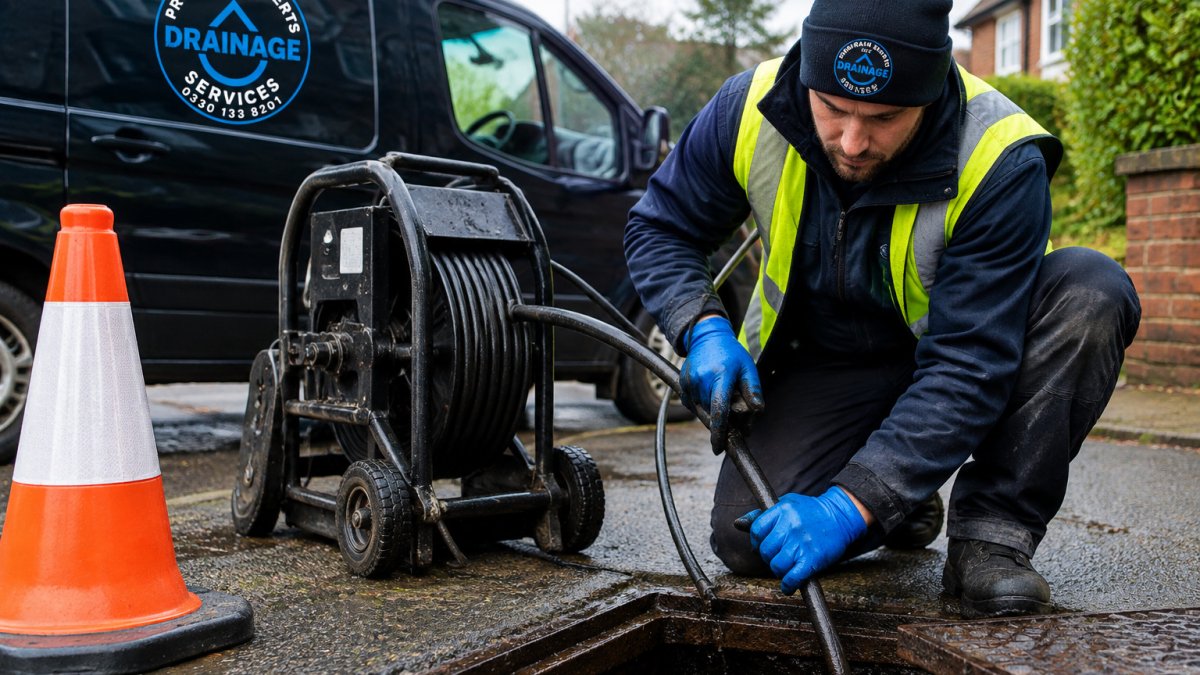
The cause is usually simple: the gully is not cleaned often enough, or the pipe beyond it has a fall that is too shallow to carry debris away. Regular cleaning of the gully and grate keeps most surface blockages under control. If the same gully fills again soon after cleaning, a camera inspection can show what lies further along the pipe.
Learn more about how to fix blocked drain outside house problems, including gully cleaning steps and when to call in help.
How to Prevent Blocked Drains Around Your Home
Prevention works better than repeated clearing. A few habits cut most household blockages before they start. Good prevention also gives you early warning when something is building up.
- Fit a strainer or plughole cover in every sink, shower and bath
- Scrape plates and pans into the bin before washing
- Pour cooled cooking fat into a sealed container, never down the drain
- Put wet wipes, cotton buds and sanitary items in the bin
- Clean hair and residue from plugholes once a week
- Run hot water after using the sink, to keep the pipe clear
- Clean outside gullies and grates each season, especially in autumn
For homes with older pipes or a history of recurring blockages, a periodic drain check helps. It catches narrowing and damage before it becomes an emergency.
When a Recurring Blockage Needs a CCTV Drain Survey
A CCTV drain survey is the right step when the blockage keeps coming back and simple fixes have not solved it. A small camera passes along the pipe and records the inside. The footage shows build-up, cracks, displaced joints, root intrusion or sagging sections. This tells us the cause, not just the symptom.
We recommend a survey when:
- The same drain blocks again within weeks of being cleared
- Several fixtures are affected at once
- The cause is unclear after your own checks
- You are buying or selling a property and need to know the drain condition
A CCTV drain survey uses a camera to inspect the inside of a drain and identify blockages or damage. See the CCTV drainage survey service and how it is carried out. A good survey report should set out what was found and what it means. For current prices or to book, contact Pro Drain Experts for a quote.
Some homebuyers ask whether a survey is worth the cost. Find out whether a CCTV survey is worth it for home buyers. In many cases, the answer depends on the age of the pipes and the history of the property. A survey can reveal a defect that would otherwise cost far more to repair later.
What a CCTV Survey Can and Cannot Establish
A CCTV survey is a diagnostic tool, not a repair. It can confirm the location and nature of a defect, such as a crack, a root intrusion or a section of pipe that has lost its fall. It can also show whether a blockage is caused by a structural problem or by a build-up of debris that has not been cleared properly. However, it cannot tell you how long a defect has been there, and it cannot always show the full extent of damage if the pipe is partially full or if the camera cannot pass a certain point. In those cases, a follow-up survey or a different inspection method may be needed.
How a Survey Fits Into the Repair Decision
If the survey shows a localised defect, the next step might be a targeted repair, such as a patch liner or a section replacement. If the problem is widespread or the pipe has collapsed, a larger repair or replacement may be needed. The survey report should give you a clear recommendation, and it is worth asking the surveyor to explain what they found and what the options are. This helps you avoid paying for a repair that does not address the underlying cause.
High-Pressure Water Jetting and Other Methods
A CCTV survey is often combined with high-pressure water jetting, which clears debris and scale from the pipe walls before the camera goes in. Jetting can remove grease, silt and roots, but it does not fix a structural defect. If the same drain blocks repeatedly after jetting, the survey will show why. In some cases, a drain may need to be descaled or lined to prevent future build-ups. These methods are more involved than a simple clear, so they are usually recommended only when the survey shows a specific problem that warrants them.
What to Expect During a Survey
The surveyor will need access to the drain, usually via a manhole or a rodding eye. They will feed the camera along the pipe and record the footage. The survey can take anywhere from 30 minutes to a few hours, depending on the length and complexity of the drain. You should receive a report with the footage and a summary of findings. If you are buying a property, it is worth arranging the survey before you exchange contracts, so you can factor any repairs into your negotiations.
Watch out: a survey that is not accompanied by a clear report and recommendations may leave you no better off than before. Always ask for a written summary of what was found and what it means.
Who Is Responsible for the Drain and What to Do Next in Ringmer
Responsibility for a drain depends on where the blockage sits. In the UK, the private drain that serves only your property is usually your responsibility, from the building to the point where it joins a public sewer. Shared drains serving several properties can involve neighbours, and the public sewer is the responsibility of the water company, which you can report to if a blockage affects the public system.
If you are unsure who is responsible, check your property deeds, speak to your neighbours if the drain is shared, and contact your water company if the problem lies in the public sewer. A survey report can also help establish where the defect sits.
For homes in Ringmer, the next steps are straightforward. Start with the checks in this guide. If the blockage returns, or you cannot find the cause, book a CCTV survey. Pro Drain Experts offers 24/7 emergency call-out, so you can get help quickly when a drain fails. Get started with Pro Drain Experts and get your drains running clear again.
How to Confirm Who Is Responsible
The first step is to establish whether the drain is private, shared or public. A private drain serves only your property. A shared drain serves two or more properties and is often the responsibility of the homeowners who use it, unless it has been adopted by the water company. A public sewer is the responsibility of the water company. You can check your property deeds or contact your local water company to find out which category your drain falls into. In some cases, a CCTV survey can show where your drain connects to the public sewer, which helps clarify responsibility.
What to Do If the Blockage Is in a Shared Drain
If the blockage is in a shared drain, you and your neighbours may need to share the cost of clearing or repairing it. It is worth discussing the problem with them early, as a joint approach is often quicker and less expensive than each household arranging separate work. If the shared drain is blocked and causing problems for several properties, you can report it to your water company, who may investigate whether the drain has been adopted.
Reporting a Blockage in a Public Sewer
If the blockage is in a public sewer, you should report it to your water company. They are responsible for clearing and maintaining public sewers. You can find the contact details for your water company on your bill or on their website. When you report a blockage, give as much detail as possible, including the location and any symptoms you have noticed, such as standing water or sewage smells.
Local Context for Ringmer Residents
Ringmer is a village in East Sussex with a mix of older properties and newer developments. Older properties may have drains that were not designed for modern volumes of waste, and some may have shared drains that serve several homes. If you live in an older property, it is worth checking the age and condition of your drains before a problem arises. A periodic drain check can catch issues early. For newer properties, the drains are likely to be private and serve only your home, but it is still worth knowing where your responsibility ends and the public sewer begins.
When to Escalate
If you have followed the steps in this guide and the blockage keeps returning, or if you suspect a structural problem, it is time to escalate. A CCTV survey will confirm the cause, and a professional drainage company can advise on the next steps. If the problem is in a public sewer, report it to your water company. If it is in a private or shared drain, you will need to arrange for a contractor to carry out the work. Pro Drain Experts can help with both diagnosis and repair, and we can advise on responsibility if you are unsure.
Watch out: do not assume the water company is responsible for every blockage. If the problem is in your private drain, you will need to arrange and pay for the work yourself.
Frequently Asked Questions
Why do my drains keep blocking in the same place?
A blockage that returns in the same spot usually points to a fault at that point rather than bad luck. Common culprits include a sagging or misaligned pipe that traps debris, a poorly fitted joint, or a build-up of fat and soap on the pipe wall that gradually narrows the bore. Clearing the blockage removes the debris but not the cause, so if it returns within weeks, the pipe itself should be inspected. A CCTV drain survey will show whether the pipe has a fault that a plunger or drain unblocker cannot fix.
Can tree roots cause repeated drain blockages?
Yes. Tree roots are drawn towards moisture and can grow into cracked or open pipe joints, where they form a mesh that catches toilet paper, wipes and grease. The blockage often returns quickly after clearing. If you notice slow drainage across several fixtures, or a blockage close to a large tree or hedge, ask for a CCTV survey to confirm whether roots have entered the pipe. Root removal and pipe repair are usually needed rather than repeated clearing.
What should I do if plunging does not clear a blocked drain?
Stop plunging after a few attempts. Forcing repeated pressure can damage old pipe joints or push the blockage further down the line. Check whether other fixtures on the same drain are also slow, which suggests a problem further along the pipe. If a chemical cleaner has been used and the water is still standing, avoid mixing it with other products and do not reach into the drain. Call a drainage professional for a same-day response, and mention any chemicals you have used.
When should I call a drainage professional for a recurring blockage?
Call a professional if a blockage has returned two or more times within a year, if more than one fixture is draining slowly, if you notice smells, damp patches or gurgling, or if the water rises in a shower or toilet. Pro Drain Experts offers a 24/7 emergency call-out service, a same-day response promise and up-front pricing with no hidden fees. Ask for a quote before work starts and a CCTV survey report with recommendations if the cause is not obvious.