 How-to
Signs of a Collapsed Drain Pipe and What to Check First
Last Updated: November 16, 2026
Quick Summary
A collapsed drain pipe usually shows up as slow drains that keep returning, gurgling or sewage smells, and damp or sunken ground over the pipe line. Several drains slowing at once, or a blockage that comes back within weeks, is a stronger sign of a collapse than a single slow sink. A CCTV drain survey is the only reliable way to confirm it.
- Blockages that return within weeks suggest the root cause has not been found.
- Several slow drains at once point to a problem further along the main line.
- Gurgling toilets or sinks can signal a restriction somewhere along the drain run.
- Damp patches, unusually green grass or sunken ground above the pipe may indicate a collapse.
- A CCTV drain survey shows the inside of the pipe and the exact location of any fault.
Table of Contents
- Why Collapsed Drain Pipes Are Hard to Spot Early
- Recurring Blockages and Slow Drains That Keep Coming Back
- Foul Smells, Gurgling Noises and Air Bubbles
- Damp Patches, Black Damp and Unwanted Visitors
- Sunken Ground and Ground Movement Outside
- Safe Checks You Can Carry Out Before Calling for Help
- How to Tell a Collapsed Drain From a Simple Blockage
- What Happens During a CCTV Drain Survey
- Booking Your Collapsed Drain Repair in Ringmer Today
- Frequently Asked Questions
Why Collapsed Drain Pipes Are Hard to Spot Early
A collapsed drain pipe is a serious problem, and it often hides out of sight until the damage is well underway. Homeowners often first notice trouble through a slow sink or a damp patch in the garden. By then, the pipe may have been failing for months.
A collapsed drain pipe is a section of underground pipe that has cracked, sagged, or caved in, so waste water can no longer flow away freely. Most of these pipes sit under the lawn, the drive or the patio, where you cannot see them.
Symptoms alone do not prove a collapse. Backups, gurgling drains and wet patches can also come from a simple blockage or from tree roots growing into the pipe. Arrow Sewer guidance on collapsed sewer line signs and repairs makes this point clearly, which is why a proper inspection matters before you spend money on repairs.
Keep the early signs in mind as you read on. The sections below explain what to look for, what to check yourself, and when to call a professional.
Recurring Blockages and Slow Drains That Keep Coming Back
A blockage that clears for a few weeks and then returns is one of the most common warning signs. Find out how to identify the root cause of recurring blockages instead of repeatedly clearing the symptom. Clearing it again only treats the symptom. The cause is often still there.
Watch for these patterns:
- Sinks, baths or showers that drain slowly again within weeks
- The same drain blocking every few months
- Several slow drains in the house at the same time
- A toilet that gurgles or drains slowly after you flush
When one drain blocks, it is usually a local problem. When several drains slow down together, the problem is likely further along the main line, where a collapse or a displaced joint can catch waste.
A common mistake is treating each blockage as a separate event. If the same drain keeps blocking, the root cause has not been found. Ask a professional to check the pipe with a camera rather than repeating the same fix.
Watch out: Pouring chemical drain cleaner into a slow drain can damage an already weakened pipe and make the problem worse. Avoid it when you suspect a collapse.
Foul Smells, Gurgling Noises and Air Bubbles
Drains should carry waste away quietly. When a pipe has collapsed, waste can pool and trap air, and that air has to go somewhere.
Common signs include:
- A sewage smell inside the house, especially near sinks, floor drains or the toilet
- A sewage smell outside, around inspection covers or the lawn
- Gurgling from toilets, sinks or baths when water drains elsewhere in the house
- Air bubbles rising in the toilet bowl or the shower tray after water has been used
Gurgling is caused by air being forced through water in the trap. A sudden or repeated gurgle when you run another tap suggests a restriction or a blockage somewhere along the line.
Smells are not something to ignore. Sewage gas can be unpleasant and, in some cases, a health concern. If the smell is strong or persistent, get the drain checked promptly.
Damp Patches, Black Damp and Unwanted Visitors
Water escaping from a damaged pipe does not always stay underground. It can soak into the soil, the walls and the floors above.
Check for:
- Damp or soft patches in the lawn or driveway, especially after rain
- Patches of unusually green or lush grass above the pipe line
- Damp patches on walls at ground level, particularly near the drain run
- Black damp or mould in corners, skirting boards or under sinks
- Signs of rodents, such as droppings, gnaw marks or nesting material near drain covers
Rodents are attracted to leaking waste water and damp soil. If you find signs of them near a drain, a collapse is worth investigating. Do not handle droppings with bare hands.
Sunken Ground and Ground Movement Outside
When a drain pipe collapses, the soil above it can settle. This is one of the more visible signs and should be taken seriously.
Look for:
- A dip or hollow in the lawn, patio or driveway over the drain line
- Cracks or uneven slabs along the path of the pipe
- Soil that feels soft or gives way underfoot
- Water pooling in the same spot after rain
Ground movement can also cause other damage, including cracked paving and problems with nearby structures. If you suspect a hidden leak under the slab, check for hidden slab leaks at home to see what signs to look for. Do not dig into the ground yourself to investigate. Report the movement to a professional who can locate the pipe safely.
Safe Checks You Can Carry Out Before Calling for Help
You can do a few simple checks yourself. None of them confirm a collapse, but they help you describe the problem clearly and decide how urgent it is.
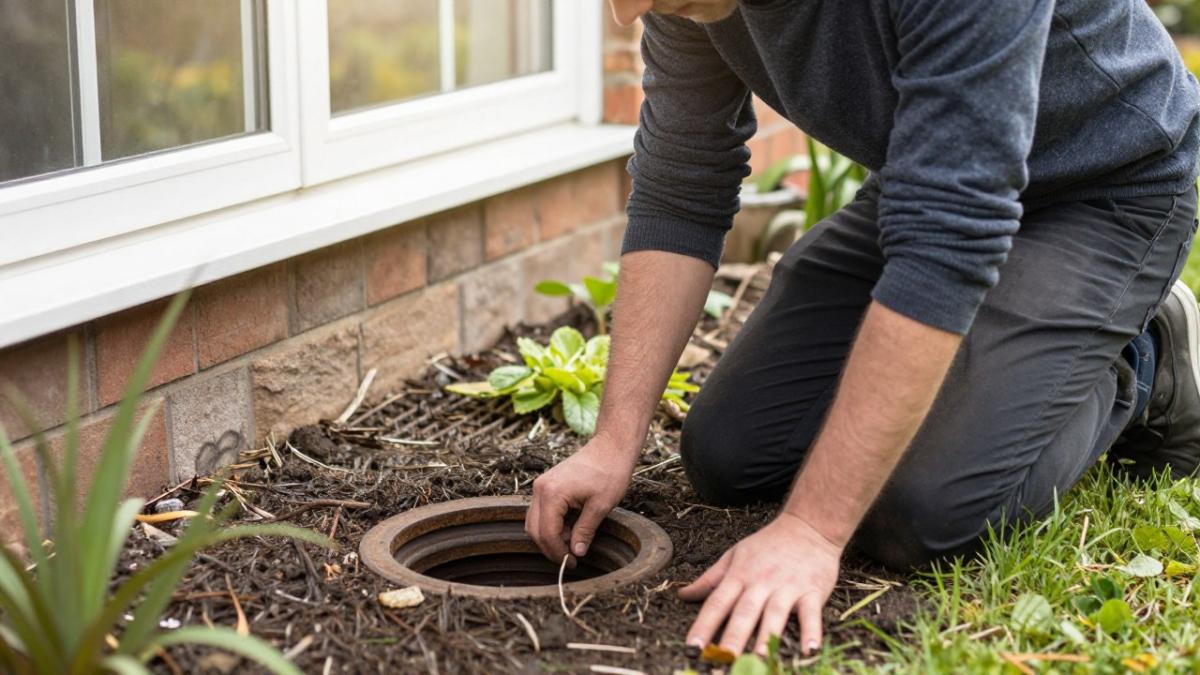
Try this diagnostic checklist:
- Note which drains are slow: one drain or several?
- Check whether the problem happens after using a particular fixture or after rain
- Look at the inspection covers outside for standing water or a sewage smell
- Walk the line of the drain and note any dips, damp or unusually green patches
- Record when each symptom started and how often it happens
- Check that no one is using water heavily during your tests
- Take photos of any sunken ground, cracks or damp areas
Keep the cover lids closed and do not force open any sealed chamber. If the blockage is outside, see how to clear a blocked drain outside your house for practical steps. Stop straight away if you smell strong gas or see sewage backing up into the home.
These notes give a professional a clear starting point and can shorten the time needed to find the fault.
How to Tell a Collapsed Drain From a Simple Blockage
A simple blockage is usually local, sudden and fixable with clearing. A collapse tends to show up across several drains, returns quickly and comes with other signs such as ground movement or damp. The table below is a starting point, but the real skill is reading the pattern of symptoms together rather than any single one.
| Symptom | Likely simple blockage | Possible collapse |
|---|---|---|
| One drain slow | Yes | Less likely |
| Several drains slow | Less likely | Possible |
| Blockage returns within weeks | Possible | Likely |
| Sunken ground or damp patches | Unlikely | Possible |
| Sewage smell outside | Possible | Likely |
Use the pattern, not the single symptom. A single slow sink that clears with a plunger and stays clear for months is usually a local blockage. The same sink slowing again within a few weeks, especially if a bath or toilet on the same run also gurgles, points to a restriction further along the line where a collapse or displaced joint can catch waste.
Ask yourself three questions:
- How many fixtures are affected? One fixture suggests a local trap or branch; several fixtures on the same side of the house suggest the main run.
- How quickly does the problem return? A blockage that comes back within weeks has not been fixed at source.
- Are there non-drain symptoms? Sunken ground, damp patches, unusually green grass over the pipe line or rodents near a cover all raise the suspicion of a structural problem rather than a simple clog.
A useful rule of thumb is that a blockage which clears and stays clear is probably just a blockage. A blockage that keeps returning, or that arrives with ground movement or damp, is worth a camera survey before you spend more money on clearing.
Watch out: do not assume a collapse because one drain is slow, and do not assume a simple blockage because the water eventually drains away. Only a camera inspection can show what is happening inside the pipe. Treat this guide as a way to decide whether to get the drain surveyed, not as a diagnosis.
What Happens During a CCTV Drain Survey
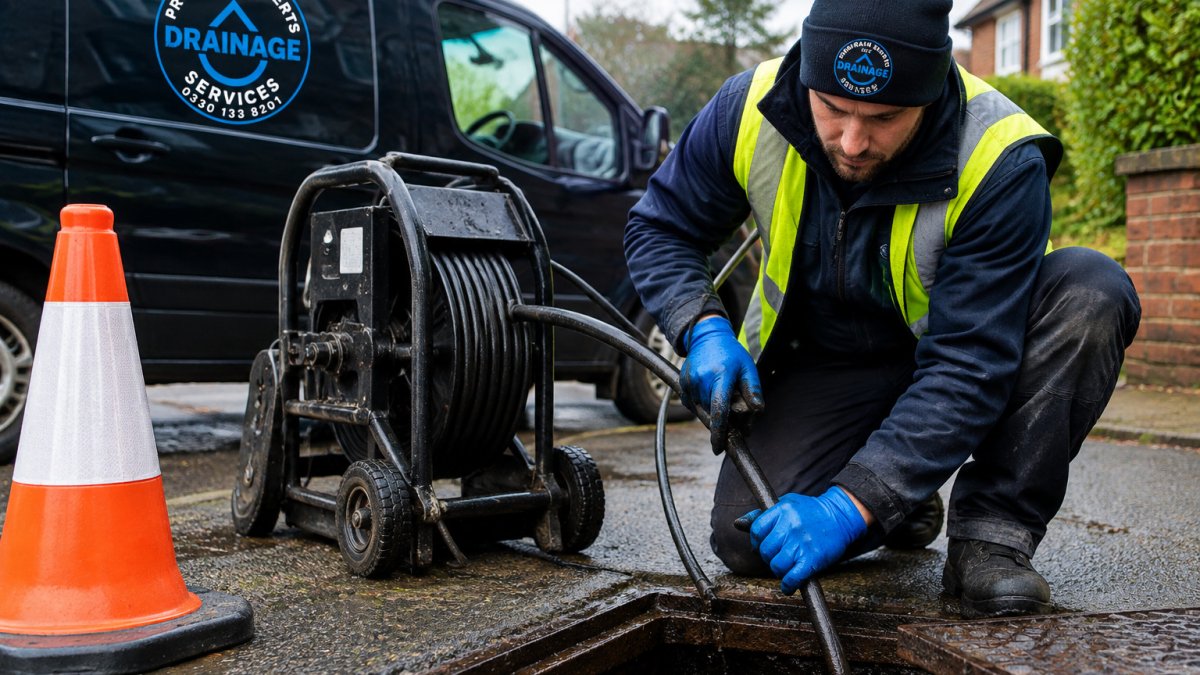
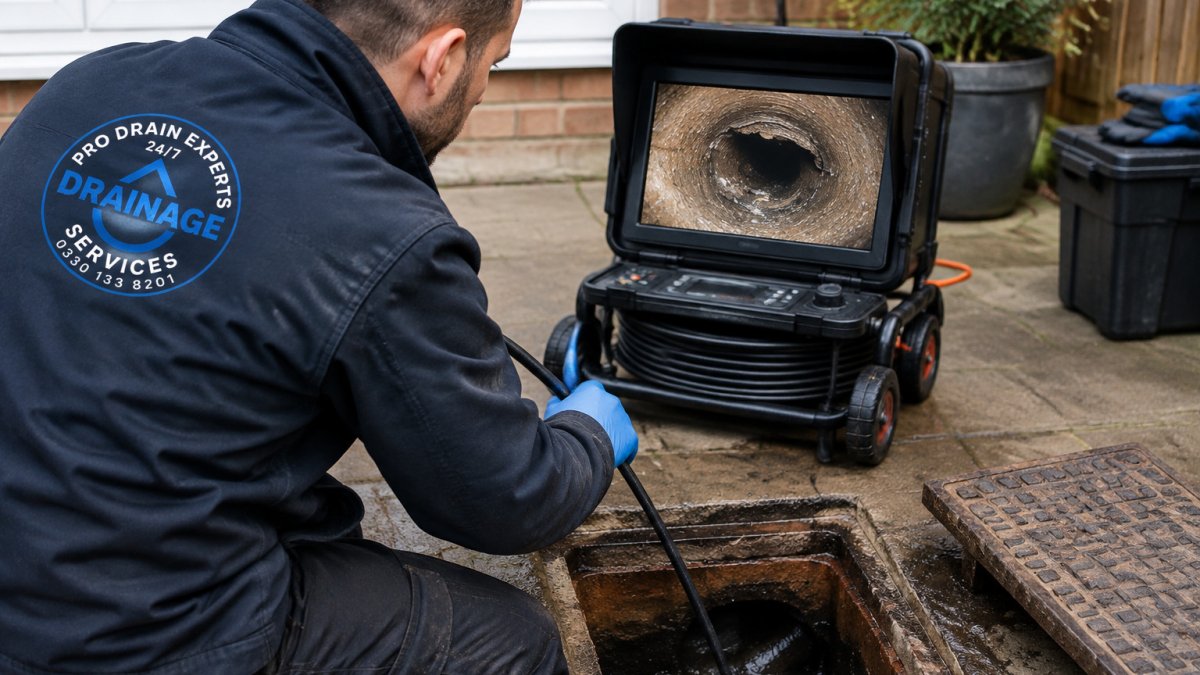
A CCTV drain survey is a common way to confirm a suspected collapse, and it is worth knowing what the process involves before you book one. A small camera on a flexible cable is fed into the drain through an access point such as an inspection chamber or a rodding eye. The operator watches a live feed on a monitor and records the inside of the pipe as the camera travels along the run.
A typical survey follows a set sequence:
- The engineer locates and lifts the relevant inspection covers, then checks the chamber for standing water or debris that might block the camera. Read a step-by-step walkthrough of a CCTV drain inspection to see each stage in detail.
- The pipe is cleaned if necessary, because silt, grease or roots can hide defects from the lens.
- The camera is pushed along the run, often from the property towards the main sewer, and the footage is recorded.
- The engineer notes the location and depth of any fault, usually by measuring the distance travelled along the cable.
- A written report is produced, often with still images or video clips of the key defects.
During the survey, the team looks for:
- Cracks, breaks or displaced joints
- Sags or dips where water pools
- Root intrusion or other build-up
- The exact location and depth of any fault
- Collapsed sections where the pipe profile has closed in
It is just as important to understand what a camera survey cannot establish. Learn how to prepare your property for a CCTV drain survey so the inspection can give a clear view. The camera shows the inside of the pipe, but it cannot measure the structural strength of the surrounding ground, confirm whether a pipe has moved since the footage was taken, or assess damage hidden behind silt that was not fully cleared. A survey is a snapshot, not a guarantee. If the footage is unclear or the pipe is heavily silted, ask whether a second pass or a different access point would give a better view.
Most surveys end with a recorded video and a written report. Pro Drain Experts provides detailed reports and recommendations from CCTV surveys, so you know what has been found and what options exist. The report helps you decide between a repair, a partial replacement or further monitoring.
Ask for the footage and the report, not just a verbal opinion. You should be able to see the problem for yourself. A useful report will identify the defect type, its location along the run, and whether the pipe is still serviceable. If you are comparing quotes for repair, ask each contractor whether the price includes a survey and a copy of the footage, because a repair quoted without a survey may be based on guesswork.
Watch out: a survey carried out in heavy rain or with a partially blocked pipe can give a misleading picture, so ask the engineer whether conditions were suitable for a clear inspection.
Booking Your Collapsed Drain Repair in Ringmer Today
If you recognise several of the signs above, do not wait for the next backup. Early action can limit the damage to the pipe, the ground and your home.
Pro Drain Experts offers 24/7 emergency call-out, same-day response and fully equipped vans. We carry out CCTV surveys, provide detailed reports and recommendations, and offer up-front pricing with no hidden fees. For a drain issue, call our team for an emergency call out and get the problem checked properly.
Frequently Asked Questions
What are the signs of a collapsed drain pipe?
The most common signs are recurring blockages, slow drainage across several fittings at once, foul sewage smells, gurgling noises and air bubbles in sinks or toilets, damp patches on walls or floors, and sunken ground above the drain run. Several of these together make a collapse more likely. However, these symptoms can also come from a simple blockage or root intrusion, so a CCTV drain survey is the only reliable way to confirm the cause. If you notice more than one sign, arrange an inspection rather than relying on repeated clearing.
Can a collapsed drain cause repeated blockages?
Yes. When a pipe collapses or its joints displace, waste collects in the sagging section and cannot flow freely. Clearing the blockage provides temporary relief, but the problem returns once solids build up again in the same low point. If you have had repeated drain blockages in the same fitting, particularly within a few months of clearing, ask for a CCTV drain survey to check whether the pipe itself is damaged. Repeated clearing without a diagnosis often masks the underlying cause.
Can you confirm a collapsed drain without a CCTV survey?
Not reliably. Symptoms such as backups, gurgling and wet patches can have several causes, including blockages and root intrusion, so they do not prove a collapse on their own. A CCTV drain survey uses a camera fed down the pipe to show its condition, displaced joints, cracks and any obstruction. A camera inspection gives you a clear record of what is happening underground, which helps you choose between clearing, patch repair and full collapsed drain repair.
What should you do if you suspect a drain pipe has collapsed?
Stop flushing or pouring water into the affected drains to avoid making a backup worse, and keep an eye out for sewage smells or wet ground. Carry out the safe checks described above, note when the symptoms occur and which fittings are affected, and then contact a drainage specialist. Pro Drain Experts offers a 24/7 emergency call-out service and a same-day response promise across East Sussex, West Sussex and Kent. Visit the Pro Drain Experts website for current arrangements or to request a quote.